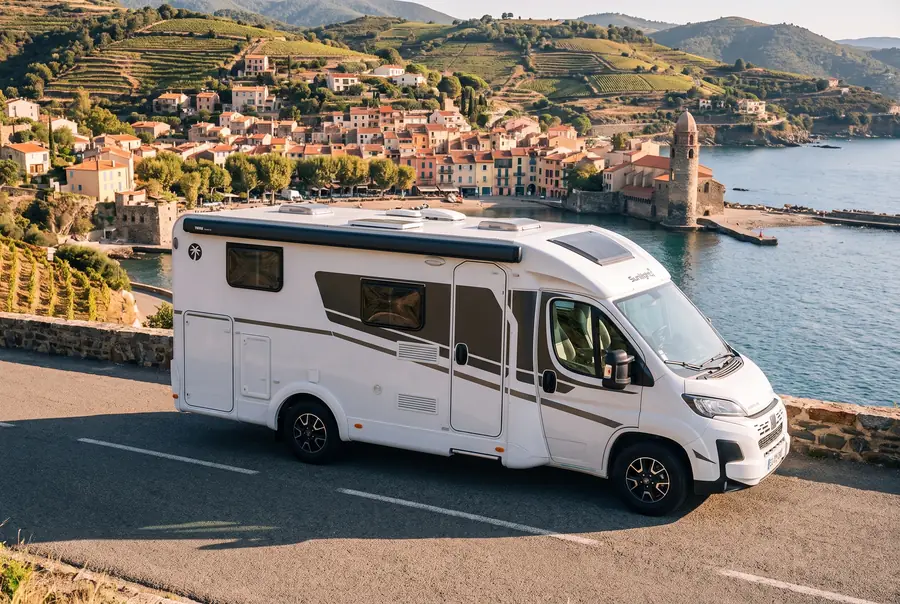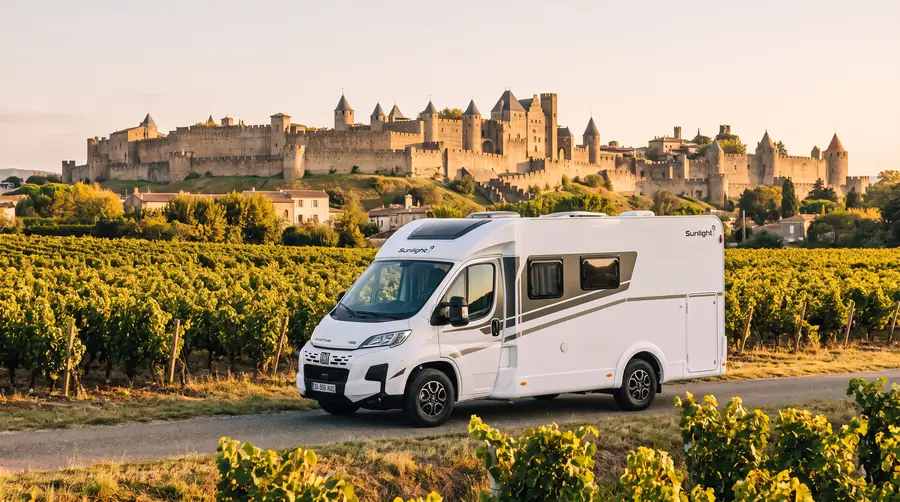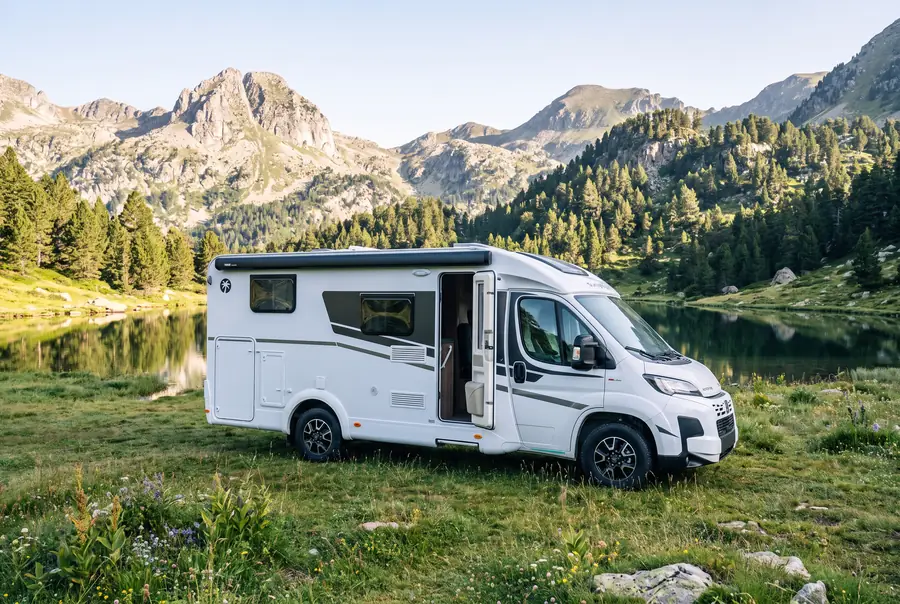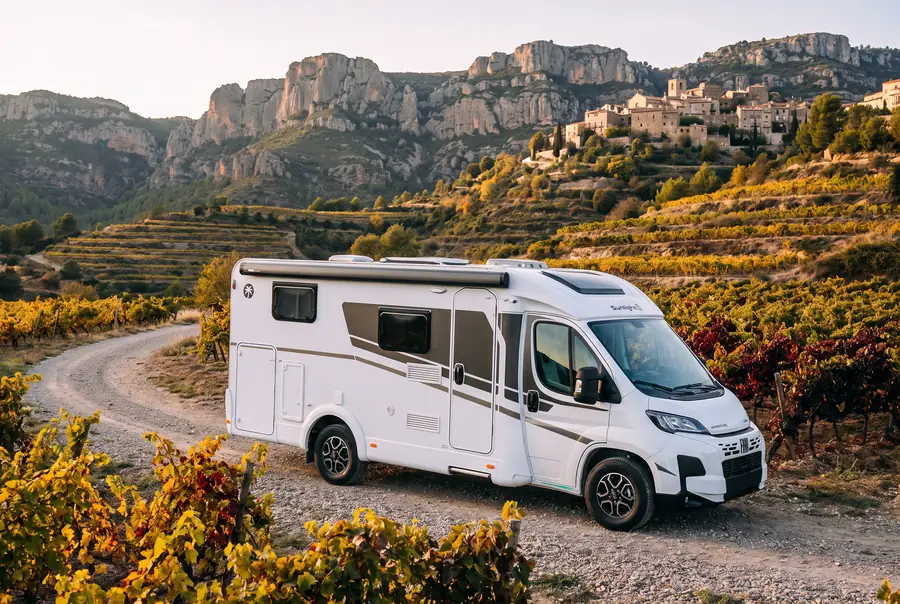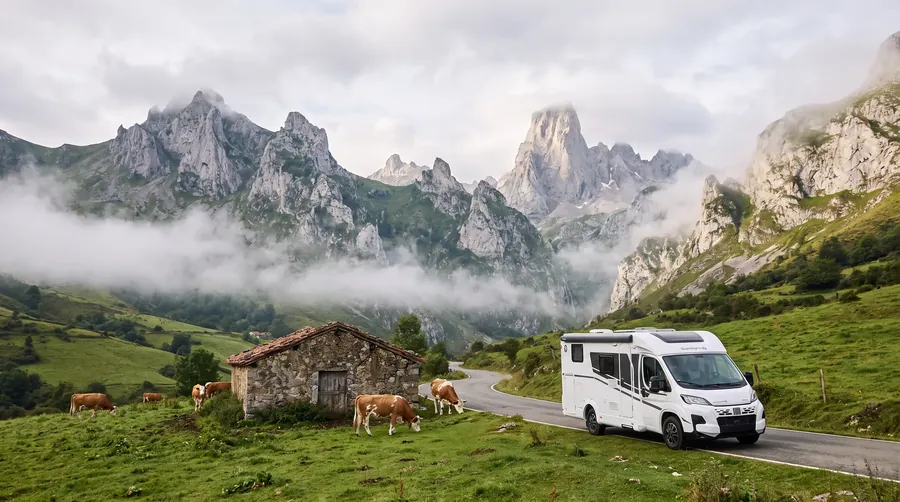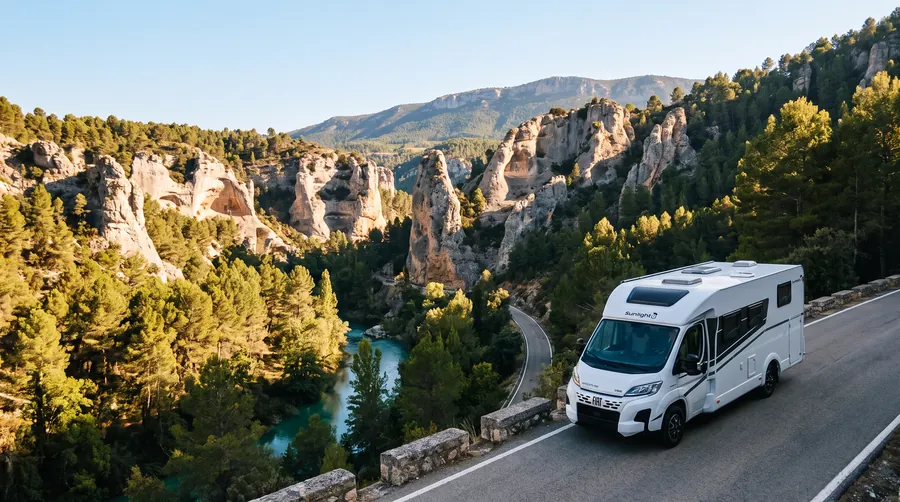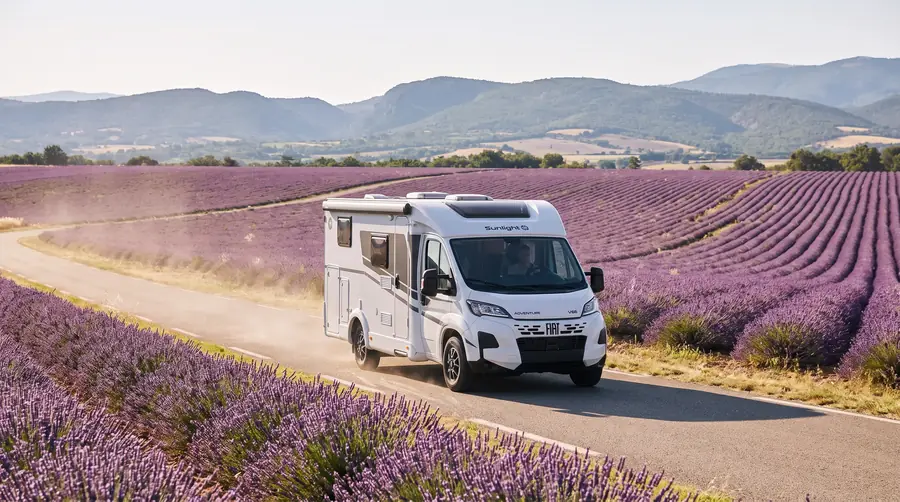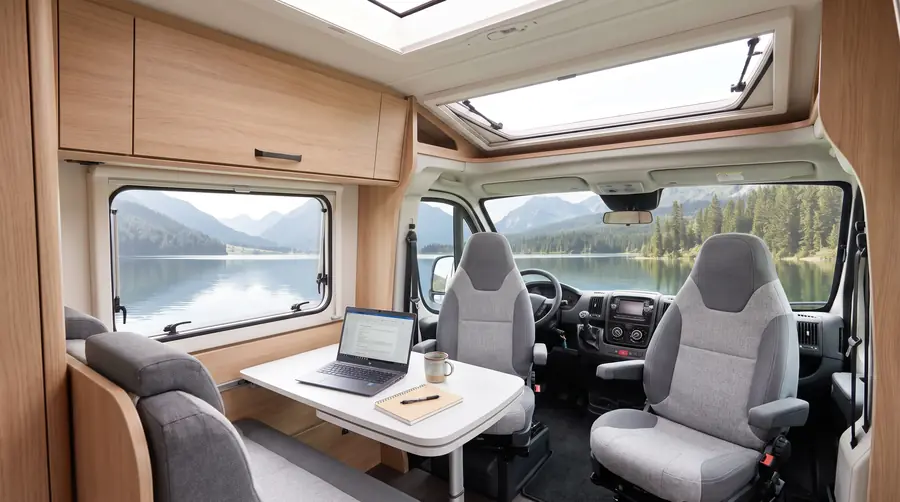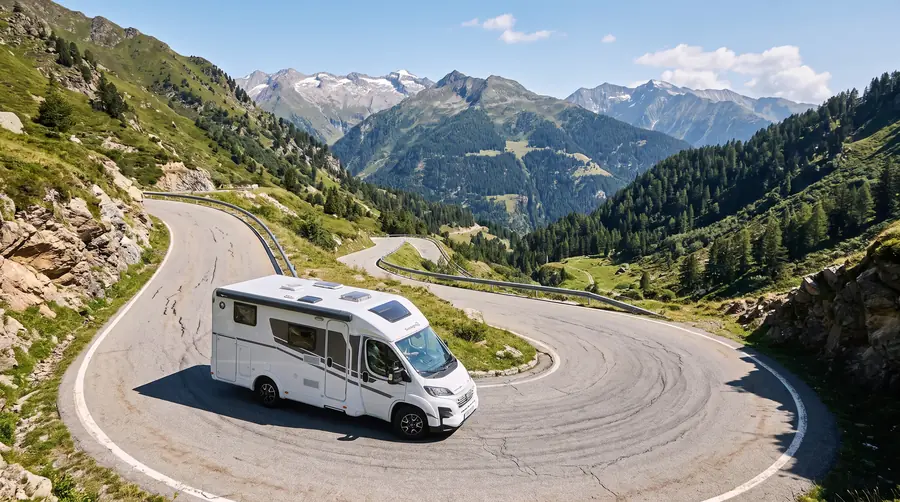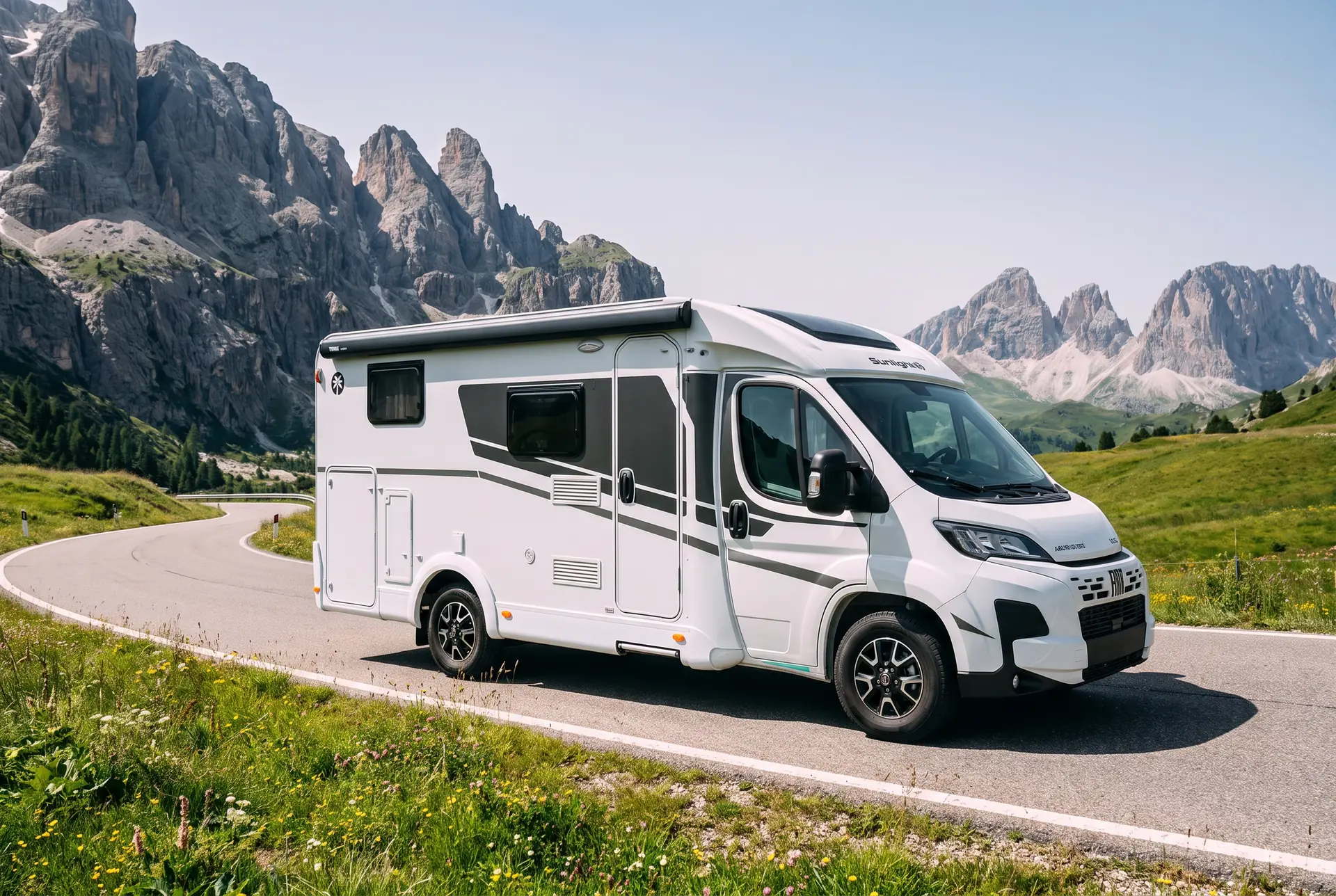
This is the classic long journey: Provençal gorges, turquoise lakes, glaciers in view from the road and the Dolomites to finish. It crosses France, Switzerland and Italy and is designed for 10 to 14 days: the full plan is 14 nights, returning on the morning of day 15, with sensible driving stages and whole days when the motorhome stays put.
At Segimon Rental, rentals of 7 days or more come with unlimited mileage, so distance is not a problem; if this is your first long trip, read our guide to long motorhome trips. Let us know before pick-up that you are travelling abroad so we can confirm insurance cover for each country. You set off from next to Granollers, five minutes from the AP-7 and without crossing Barcelona.
Route plan
Route map
Tap a day or a stop to see it on the map, or press "Follow the route" to travel it stage by stage.
Approximate line between stops, not a navigation itinerary. Check road conditions and restrictions for large vehicles before you set off.
What you will see
Day-by-day itinerary
Days 1-3 · Provence and the Gorges du Verdon
On day 1 you collect the motorhome in the afternoon, between 16:00 and 19:00, so keep it to a short stage to the border or Roussillon. On day 2 continue on the French motorways towards Provence, with a night near Nîmes or Arles, and on day 3 you reach the Verdon. The Gorges du Verdon are among Europe's most spectacular canyons, with Lac de Sainte-Croix at their mouth. The canyon roads are narrow with tight bends, and some sections restrict larger vehicles: follow the signs and take your time.
Days 4-5 · Annecy
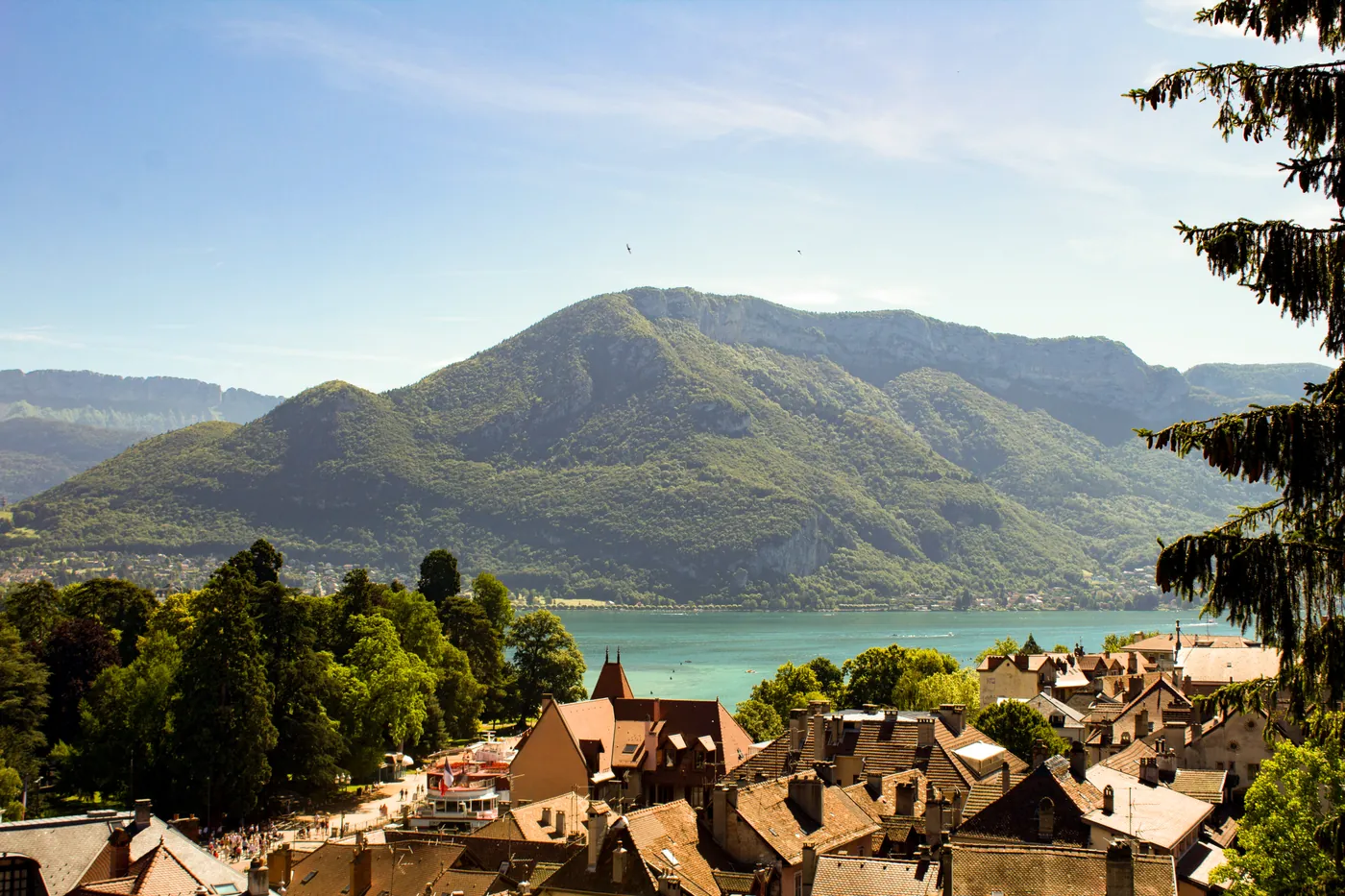
Heading north through the southern Alps or via Grenoble brings you to Annecy, with its canal-lined old town and remarkably clear lake. The centre is no place for a motorhome: park outside and go in on foot or by bike, using the cycle path that runs along much of the lake shore. Some French cities have low-emission zones requiring a Crit'Air sticker, so order one before you leave.
Days 6-7 · Chamonix and Mont Blanc
Chamonix is just over an hour from Annecy. The Mont Blanc glaciers are visible from the valley floor, and the Aiguille du Midi cable car climbs to over 3,800 metres; book ahead in summer and bring warm layers. There are walks for every level. To continue into Switzerland, take the Col des Montets and Col de la Forclaz to Martigny, a mountain road but well surfaced.
Days 8-9 · Lake Geneva and Zermatt
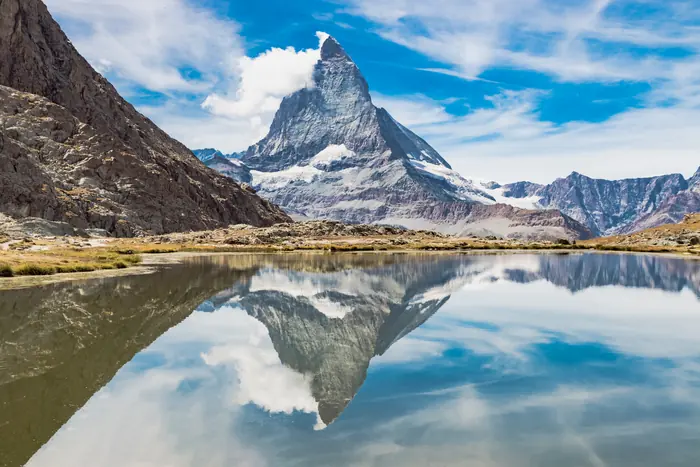
Drop down to Lake Geneva and follow the shore at Montreux, with Chillon Castle right on the water. Then climb the Rhône valley towards Zermatt. The village is car-free: the motorhome stays in Täsch and a shuttle train takes you up in a few minutes. On a clear day the Matterhorn is the picture of the trip. Remember that a vignette is compulsory on Swiss motorways; it covers vehicles up to 3.5 t, such as the V66.
Days 10-11 · Dolomites
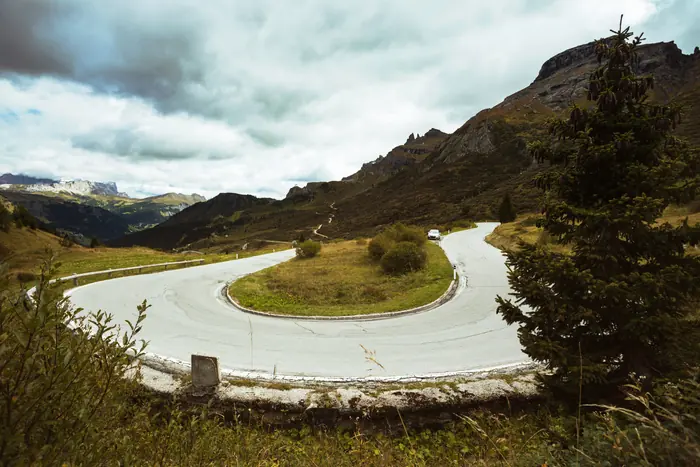
Cross into Italy over the Simplon Pass, open almost all year, and continue by motorway to South Tyrol. In the Dolomites, Val Gardena, the Sella Pass and the Pordoi Pass offer some of Europe's finest mountain roads, with hairpins and plenty of motorbikes and cyclists in summer. Start early, use low gears on the descents and plan two nights in one place so you can head out on foot.
Days 12-14 · Lake Garda and return
Descend to Lake Garda, Italy's largest, with towns such as Sirmione, Malcesine and Riva del Garda. The lakeside road is narrow in places and has tunnels, so take it easy. From here it is just over 1,000 km home via Genoa, the Riviera and southern France: on day 13 leave the lake at midday, on day 14 do the long stage and spend the last night in Roussillon or the Alt Empordà, so you can return the motorhome on the morning of day 15, between 9:00 and 12:00. Italian historic centres usually have camera-enforced ZTL (limited traffic zones): keep the motorhome out.
Where to sleep
France has a very extensive network of aires de camping-car and campsites; Italy has aree di sosta and campsites in almost every valley; in Switzerland campsites are the norm, as overnight parking elsewhere depends on each canton and municipality. In July and August, book campsites in Chamonix, Zermatt-Täsch, the Dolomites and around Garda, as they fill up.
Use Park4Night or Campercontact to find areas with fresh water and waste disposal. Always follow local signs: in many Alpine valleys overnight stays in mountain car parks and on passes are banned, and fines can be steep.
Where to sleep with a motorhome in Catalonia
Practical tips
- Check mountain pass conditions before setting off: even in summer they can close temporarily for snow, roadworks or rockfall.
- On long descents use engine braking and low gears to avoid overheating the brakes; the V66 has a maximum permitted weight of 3,500 kg.
- Carry the Swiss vignette (compulsory on motorways), a Crit'Air sticker for France and a card or cash for French and Italian tolls.
- At 2.74 m high and 2.14 m wide you fit the main tunnels and passes, but avoid tracks and minor roads signed as unsuitable.
- Nights at altitude are cold even in August; the V66's Truma heating keeps you warm without fuss.
- Bring a valid passport or national ID for Switzerland, which is in Schengen but not the EU, and check insurance cover with us.
Frequently asked questions
How many days do you need for an Alps motorhome trip?
With 10 days you can do the route at a brisk pace, with long stages and hardly any rest days; with 14, as in this plan (14 nights, returning on the morning of day 15), there is no rush. Either way, mileage is unlimited. Bear in mind that the drive out to Provence and the drive back from Italy each take about two days.
Do you need a vignette to drive a motorhome in Switzerland?
Yes. Swiss motorways require the annual vignette, which covers vehicles up to 3.5 t such as our motorhome. You can buy it online or at the border.
Can you drive a motorhome to Zermatt?
No. Zermatt is car-free: you park in Täsch and take the shuttle train, which takes a few minutes.
Where can you stay overnight with a motorhome in the Alps?
At aires de camping-car in France, aree di sosta in Italy and campsites in Switzerland. Book ahead in high season and respect overnight bans on passes and mountain car parks.