What you need
- A valid category B driving licence
- The dimensions noted down: 6.66 m long, 2.14 m wide and 2.74 m high
- A passenger to help with manoeuvres, if possible
Step by step
Adjust the seat and mirrors
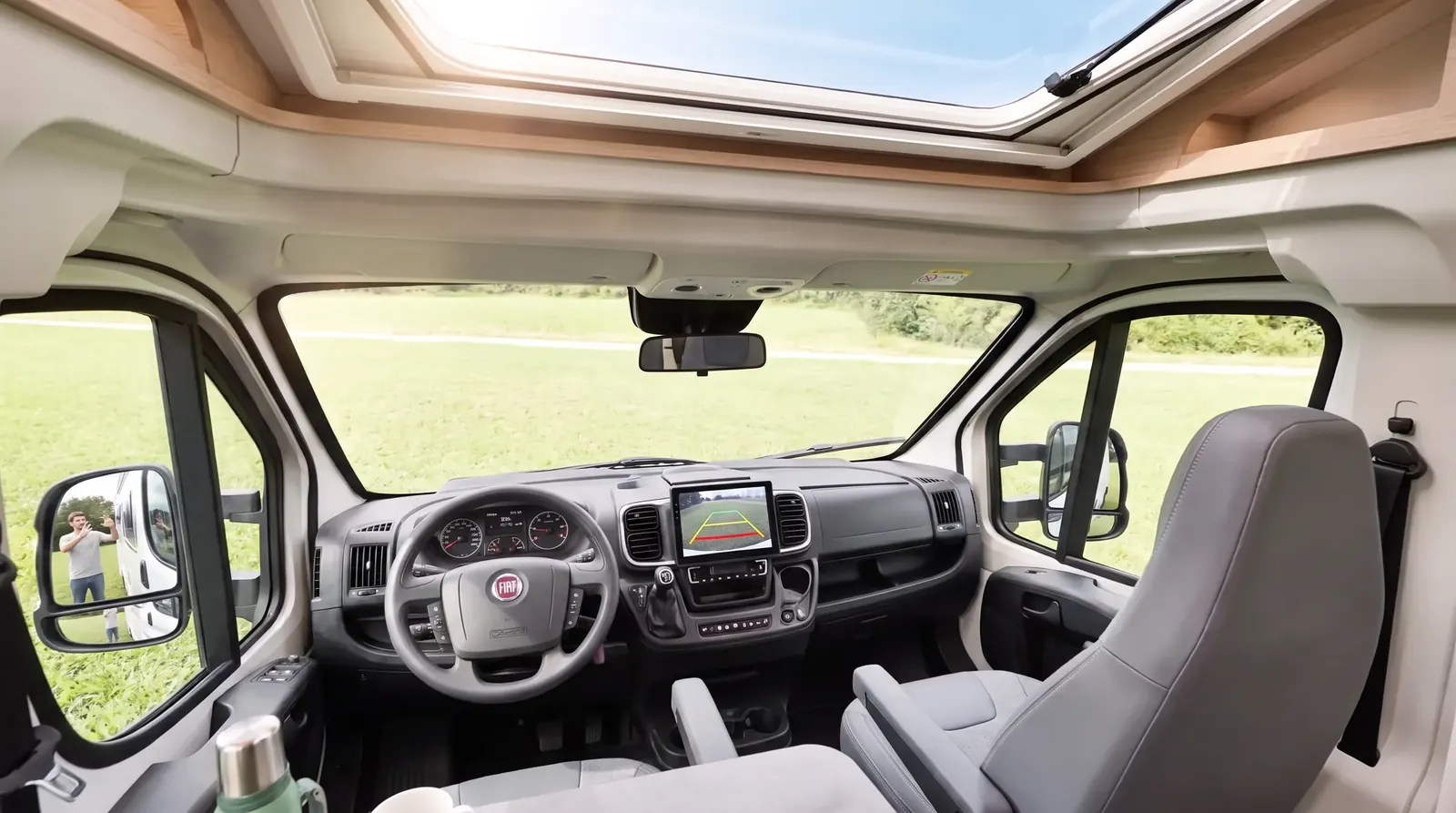
Before setting off, adjust the seat and the door mirrors so you can see the side of the vehicle and the next lane. Together with the reversing camera, these mirrors will be your eyes behind you. Set up your phone with CarPlay or Android Auto before you leave, not on the move.
Start somewhere quiet
Spend the first few minutes getting used to it: a quiet road, a wide roundabout and an empty car park are enough. Feel how it brakes with the extra weight, how the steering responds and where the corners are. The 140 hp engine has plenty of power; take your time with the gears.
Take turns wide
At junctions and tight bends, pull further forward before turning than you would in a car, so the rear wheels do not clip the kerb. Watch the rear overhang too, which swings outwards as you turn: mind posts and parked cars.
Remember the height
At 2.74 m high, always look out for height restriction signs: car park barriers, petrol stations with low canopies, tunnels and old bridges. On minor roads, watch for branches and balconies. If in doubt, do not go in: find another way or park outside.
Adapt to crosswinds
On bridges, viaducts and open stretches, crosswinds are felt more than in a car. Slow down, keep both hands on the wheel and expect a gust when overtaking lorries or leaving a tunnel. Leave a longer braking distance too: it is heavier and stops more slowly than a car.
Reverse with the camera and a helper
The reversing camera helps a lot, but it does not see everything. If someone is with you, have them stand behind and to one side, always visible in your mirror. Agree on simple signals (keep coming, stop, turn) and if you lose sight of them, stop. Manoeuvre slowly.
Park sensibly
Look for large car parks or motorhome bays and avoid old town centres: park outside and walk in. If you use two spaces end to end, check it is allowed. Where possible, park so you can drive out forwards; once stopped, apply the handbrake and leave it in gear.
Mind the caps when refuelling
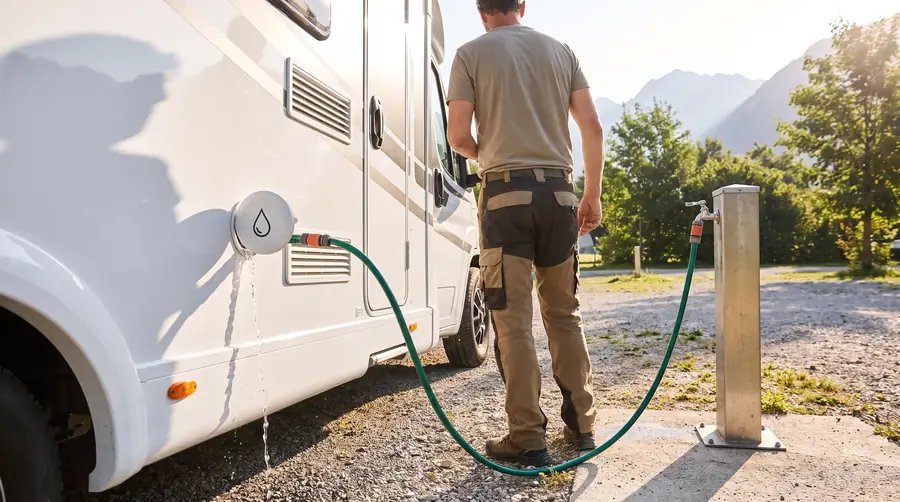
It runs on Euro 6 diesel and also uses AdBlue, which has its own filler cap. Do not mix them up with each other or with the water filler, which is marked with a water symbol. At petrol stations, check the canopy height and switch off gas appliances before refuelling.
Frequently asked questions
Do I need a special licence?
No. With a 3,500 kg maximum authorised mass it can be driven on a category B car licence. Minimum age and years of driving experience depend on the insurance conditions.
Is it hard to drive if I have never driven one?
The first few miles feel a little daunting, but most drivers get used to it within an hour or two. More tips in our guide to driving a motorhome.
How fast can I go?
In Spain, motorhomes up to 3,500 kg generally follow the same limits as cars; always obey the signs and check the rules if you are travelling to other countries. Driving a little slower cuts fuel use and the effect of the wind.