Car licence and your first miles
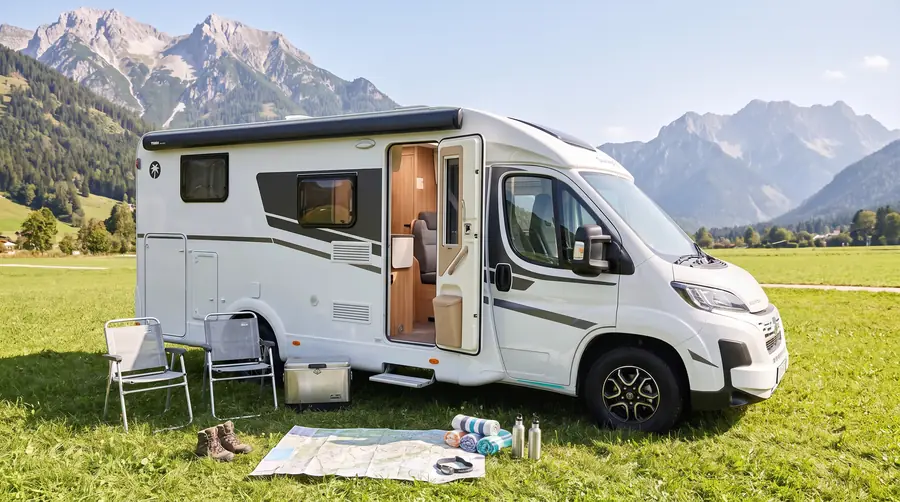
The motorhome we rent, a Sunlight V66 Adventure, has a maximum authorised mass of 3,500 kg, so you can drive it on a standard category B car licence. No special permit is needed. Minimum age and how long you must have held your licence depend on the insurance terms, so check them when you book.
It is a Fiat Ducato with a manual gearbox, and the driving position is high and comfortable. What changes compared with a car is the size and the momentum. Use the first few kilometres to get used to it: a quiet road, a wide roundabout and a couple of manoeuvres in an empty car park are enough to build confidence.
Driving 6.66 metres: the dimensions to remember
Write three figures on a sticky note by the steering wheel: 6.66 m long, 2.14 m wide (not counting mirrors) and 2.74 m high. Height is what catches people out: car park barriers, petrol stations with low canopies, old tunnels, bridges and overhanging branches on minor roads.
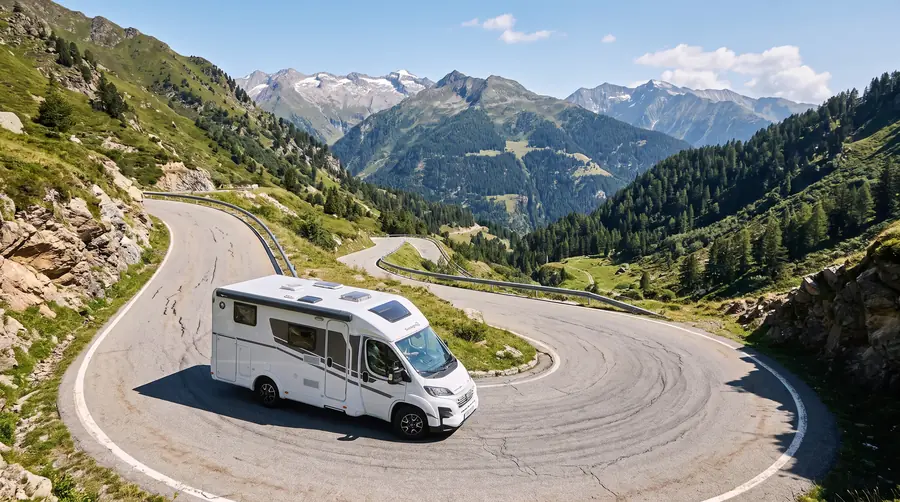
On tight bends, swing wider than you would in a car and watch the rear overhang, which sweeps outwards as you turn. The reversing camera helps a lot when parking, but if you are travelling with someone, ask them to guide you from outside for tricky manoeuvres.
On speed: in Spain, motorhomes up to 3,500 kg generally follow the same limits as cars; always obey the signs and bear in mind that rules may differ in other countries. Beyond the limit itself, driving a little slower cuts fuel use, noise and the effect of crosswinds, which you will notice on bridges and open stretches.
- Avoid driving into old town centres: park outside and walk in.
- Leave a longer braking distance than in a car.
- Look out for maximum height, width and weight signs.
- In strong wind, slow down and keep a firm grip on the wheel.
Planning your route and mileage
The most common first-trip mistake is trying to see too much. A motorhome is slower than a car and every stop takes time: finding a place to park, filling up with water, emptying tanks. Stages of 150 to 250 km a day leave room to actually enjoy where you are.
At Segimon Rental, 3 to 6 day rentals include 300 km per day, and from 7 days mileage is unlimited; extra kilometres cost €0.40 each. As we are based in Les Franqueses del Vallès, next to Granollers and 5 minutes from the AP-7 and C-17, the Costa Brava is an hour away and the Pyrenees an hour and a half, without crossing Barcelona.
Before setting off, decide where you will sleep at least on the first night, and book if it is high season. Arriving somewhere new in daylight makes everything easier.
Fresh water and grey water
The fresh water tank holds 116 litres. You fill it with the hose and adaptors supplied, at campsites and motorhome service areas with a drinking water tap. Always fill up at designated points, not at public fountains or cemetery taps, where it is usually not allowed.
Water from the sink and shower goes into the 92-litre grey water tank. With short showers and a bit of care when washing up, water lasts longer than you might think. Water is heavy: if you know you can fill up at your destination, there is no need to always travel with a full tank.
Chemical toilet and emptying the tanks
The chemical toilet uses a removable cassette with an additive that breaks down waste and controls odours; the products are included with the rental. Use toilet paper that dissolves easily and empty the cassette before it is full: an indicator will tell you.
Empty the cassette at the disposal points of campsites and motorhome areas, never in the countryside or down an ordinary drain. Grey water should also only be emptied at these points, usually a drain grid you park over. Wear gloves, rinse the cassette well and the whole job takes about five minutes.
Electricity: lithium battery, solar panel and campsite hook-up
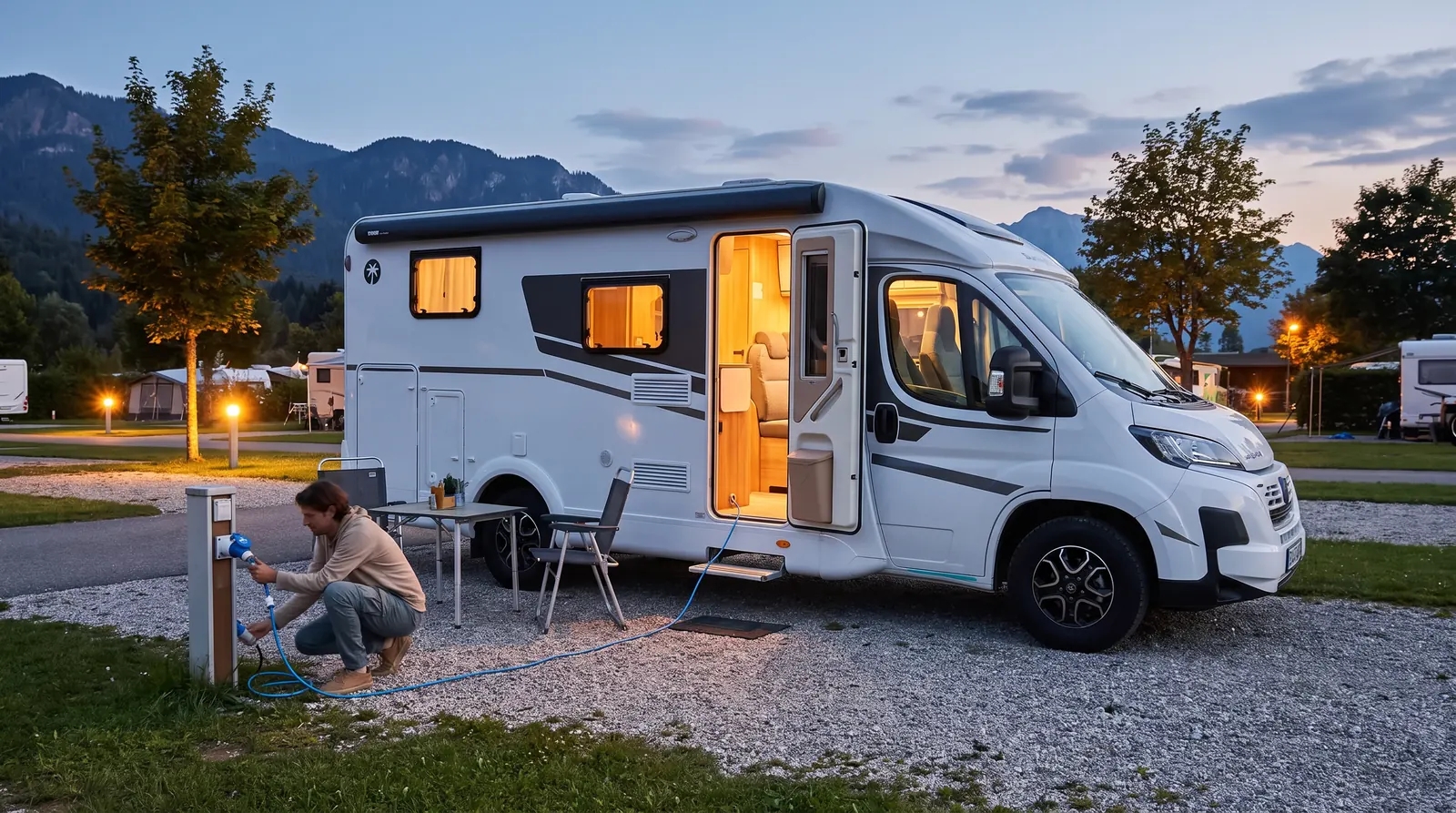
The motorhome has a 300 Ah LiFePO4 lithium battery, a 2,000 W inverter and a 100 W solar panel. The battery charges while you drive, from the sun, and when you plug into a campsite or service area supply using the CEE cable and adaptors included.
With this set-up you can spend several days off-grid under normal use: lights, fridge, water pump, charging phones and laptops. Autonomy is not unlimited and depends on usage, sunshine and season. Anything that heats, such as hairdryers or electric kettles, draws a lot of power; use it sparingly or when you are hooked up. The control panel shows the charge level at all times.
Gas, heating and levelling
The Truma Combi 4 heating and hot water run on gas. We hand over the bottles full; return them full or the gas used will be charged. The motorhome is winter-ready, with frost protection and a heated grey water tank, but in very cold weather gas consumption rises, so allow for it in your plans.
To sleep well and for the fridge and drains to work properly, the motorhome should be level. Use the levelling chocks supplied under the lower wheels and check with a spirit level or a phone app. Remember that if you are simply parked rather than at a campsite or motorhome area, putting out chocks or the awning may count as camping.
Handover and return checklist
Collections are by appointment in the afternoon and returns in the morning. At handover we calmly walk you through power, water, gas, heating and the toilet, and we go through the inventory together with photos.
- Handover: bring the driving licence and ID card or passport of every driver.
- Handover: check the inventory and photograph any existing marks.
- Handover: ask about anything that is unclear and try the control panel yourself.
- Return: empty the toilet cassette and the grey water.
- Return: bring the gas bottles back full, or the gas used will be charged.
- Return: leave the interior tidy and check cupboards and the rear locker for belongings.
- Return: arrive with time to spare and review the terms of your contract.
Frequently asked questions
Do I need a special licence to drive a motorhome?
No. A motorhome with a maximum authorised mass of up to 3,500 kg, like ours, can be driven on a category B car licence. Minimum age and licence history depend on the insurance terms.
Is it hard to drive a motorhome for the first time?
It takes a few kilometres to adjust to the length, height and momentum, but most drivers feel comfortable after the first hour. Avoid old town centres, take bends wider and watch for maximum height signs.
How many days will the battery last?
It depends on usage, sunshine and time of year. With a 300 Ah lithium battery and solar panel you can manage several days off-grid with normal use, but autonomy is not unlimited: appliances that heat use a lot of power.
Where do I empty the chemical toilet?
At the disposal points of campsites and motorhome service areas. Never in the countryside, in street drains or in the toilet of a bar or petrol station.