Why a motorhome works so well with a dog
Travelling with a dog by car and hotel often means compromises: places that won't take pets, meals where they wait alone, long drives with too few breaks. In a motorhome their bed, food and routine come with you, and you stop when they need to.
Dogs also settle into their new “home” quickly. Having the same space every night, with familiar smells and their own blanket, many dogs travel more calmly than in a car heading somewhere unknown.
Pets in our motorhome: how it works
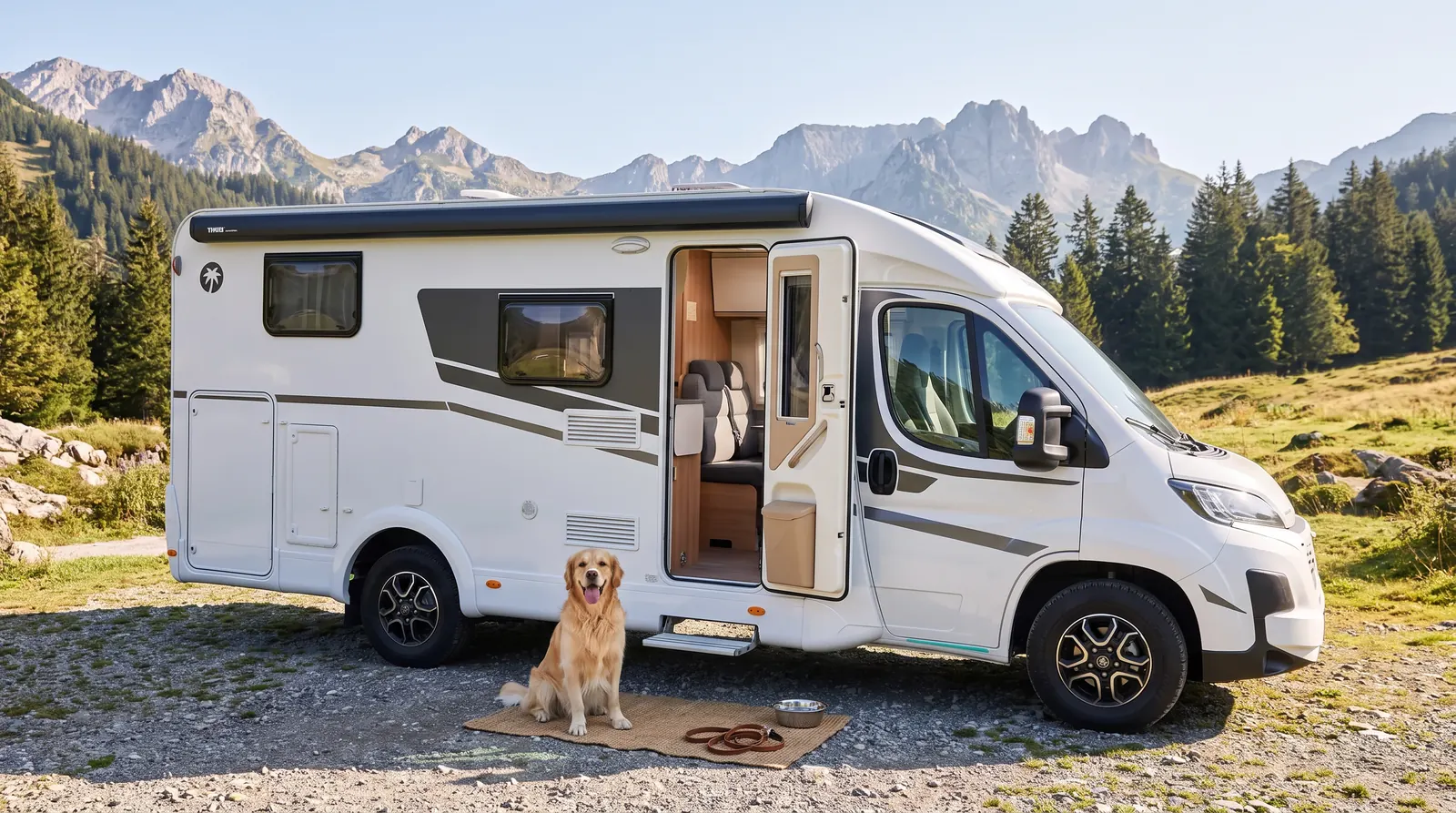
At Segimon Rental pets are welcome on request. Let us know when you book so we can confirm: the pet supplement is €65 per rental and includes a special clean of the motorhome when you return it.
We do still ask you to look after the interior. A throw over the upholstery and their sleeping spot keeps hair and claw marks at bay, and saves you work at the end of the trip.
Heat: the rule with no exceptions
Never leave your dog inside the motorhome in hot weather, not even “for a minute”. A vehicle in the sun heats up very quickly, even with windows ajar or roof vents open, and heatstroke can kill a dog in a short time.
In summer, plan each day around this rule: short visits or places your dog can join you, walks early in the morning and in the evening, and parking in the shade whenever possible. If the plan includes a museum or a restaurant that doesn't allow dogs, find an alternative or take turns.
- Always carry fresh water and a collapsible bowl.
- Avoid hot tarmac and sand in the middle of the day: they burn paw pads.
- Learn the signs of heatstroke (heavy panting, drooling, lethargy) and see a vet straight away if they appear.
Safety on the road
Spanish traffic rules require animals to be placed so they cannot interfere with the driver. A loose dog can distract you and, under hard braking, become a dangerous projectile for itself and your passengers.
The safest options are a crash-tested harness clipped to the seatbelt on one of the travel seats, or a crate secured so it cannot slide. Don't let your dog sit in the driver's footwell or roam the living area while you're moving.
Stop roughly every two hours so they can drink, relieve themselves and stretch their legs. If your dog gets travel sick, speak to your vet before the trip and avoid feeding them just before setting off.
Where to stay with a dog: campsites and aires
Many campsites accept dogs, but terms vary: some charge a fee, others limit the number or size of dogs, and nearly all require them to be on a lead with mess picked up. In high season, check when you book.
Authorised motorhome areas are often a good option too. Apps such as Park4Night or Campercontact let you filter and read reviews from other travellers with dogs. Remember that wild camping is generally not permitted in Catalonia, and natural parks have extra restrictions.
Beaches and natural areas
Rules on dogs at beaches are set by each municipality and vary widely. As a general rule, many beaches don't allow dogs during the bathing season, while some towns set aside specific dog-friendly beaches or zones. Check the town council's website or the signs at the beach entrance before heading down.
In natural parks and mountain areas dogs usually need to be on a lead, especially around livestock or protected wildlife. Follow the signs and always carry bags.
Documents: Spain, France and Andorra
Within Spain, carry your dog's health record or pet passport with vaccinations up to date, and make sure they are microchipped. If your dog is classed as a potentially dangerous breed, check the specific licence and muzzle requirements.
To travel to France, as elsewhere in the EU, your dog needs a microchip, an EU pet passport and a valid rabies vaccination. Andorra is not in the EU but applies similar health requirements. France also has its own rules for certain breeds. Check everything with your vet well in advance, as the rabies vaccine takes time to become valid.
If you plan to leave Spain, tell us before pick-up so we can confirm the country is covered by the insurance.
What to pack for your dog
A kit list designed for motorhome space, where everything needs its own place:
- Their usual bed or blanket, plus a spare throw to protect the upholstery.
- Food for the whole trip (you won't always find their brand in rural areas) and collapsible bowls.
- Seatbelt harness or crate, a lead and a long line for the campsite.
- Poo bags, old towels for wet or sandy paws, and a brush.
- A basic first-aid kit, any medication and parasite treatment applied before you leave.
- Health documents and your vet's contact details.
Frequently asked questions
Can I rent a motorhome with a dog?
Yes. At Segimon Rental pets are accepted on request. Mention it when booking: the supplement is €65 and includes a special clean on return.
Can I leave my dog alone in the motorhome?
Never in hot weather: the interior heats up very quickly, even with windows open. In mild weather and for a short time it may be fine if your dog is used to it, but ideally plan your trip so they can come with you.
How should my dog travel while I drive?
Restrained so they cannot interfere with driving: in a harness clipped to the seatbelt on a travel seat or in a secured crate. Never loose or in the driver's footwell.
What does my dog need to go to France or Andorra?
Generally a microchip, an EU pet passport and a valid rabies vaccination. Check the current requirements with your vet before you travel.