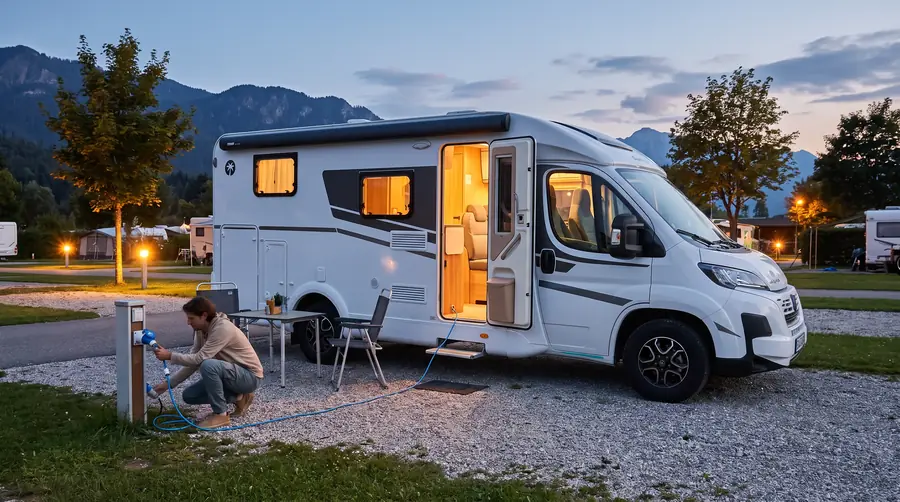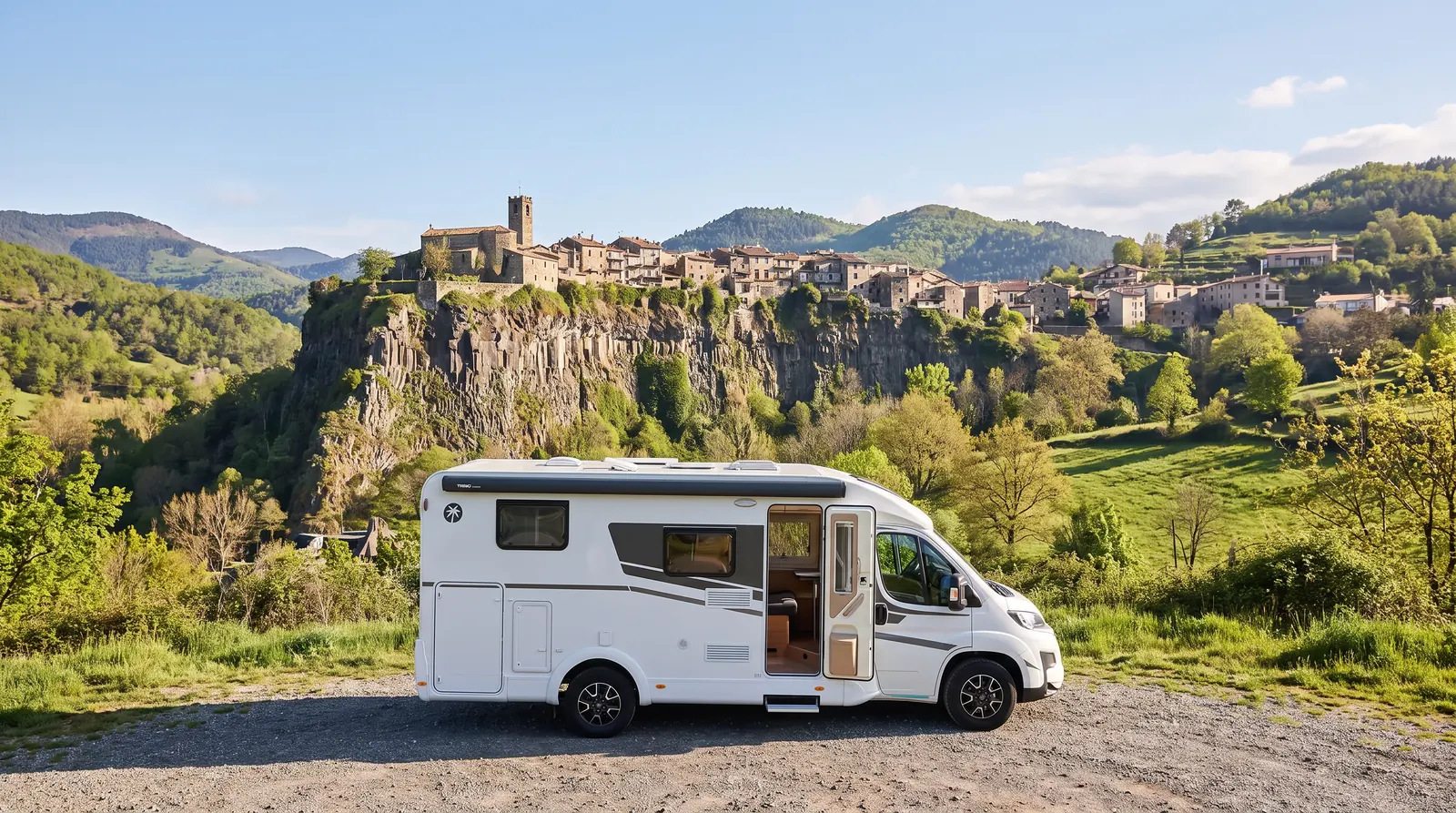
The Garrotxa Volcanic Zone brings together dozens of wooded volcanic cones, lava flows and stone villages. It is a soft, green landscape, quite unlike the Pyrenees or the coast, best explored on foot or by bike along waymarked paths between volcanoes and beech woods.
From our base in Les Franqueses del Vallès, Olot is roughly 1 h 15 away via the C-17 to Vic and the C-37 through the Bracons tunnel. A short rental with Segimon Rental (300 km a day included on 3 to 6 days) gives you plenty of margin: the whole route is around 250 km. Pick-ups are in the afternoon, so on day one you simply drive to Olot.
Route plan
Route map
Tap a day or a stop to see it on the map, or press "Follow the route" to travel it stage by stage.
Approximate line between stops, not a navigation itinerary. Check road conditions and restrictions for large vehicles before you set off.
What you will see
Day-by-day itinerary
Day 1 · Pick-up and drive to Olot
Collect the motorhome in the afternoon, between 16:00 and 19:00, and head off on the C-17 towards Vic. Continue on the C-37: the Bracons tunnel brings you out in the Vall d'en Bas, a few minutes from Olot, roughly 1 h 15 in all. Settle in at a campsite or authorised area around Olot for the first night. If there is still daylight, take a short stroll through the centre; if not, enjoy a quiet dinner and save the walking for tomorrow, the fullest day of the trip.
Day 2 · Fageda d'en Jordà, Santa Margarida, Croscat and Santa Pau
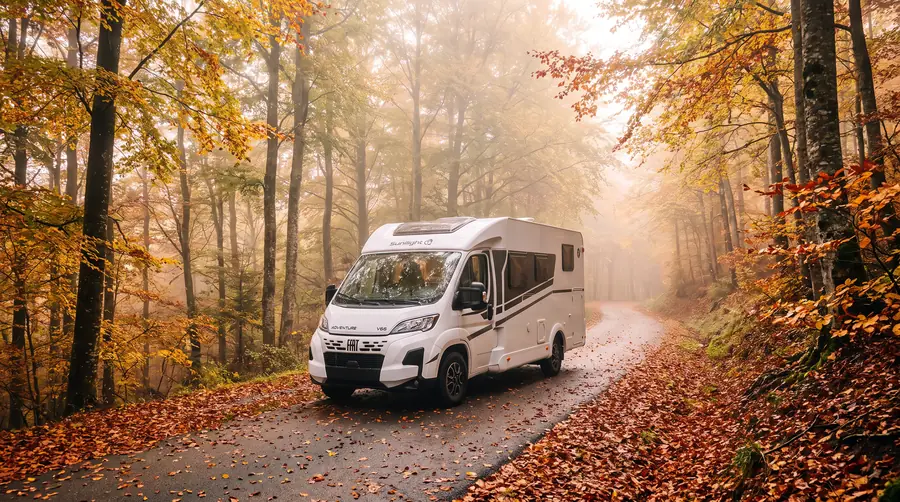
This is the highlight of the trip. The Fageda d'en Jordà is a beech wood growing on a lava flow, especially beautiful in autumn. From the park's signed car parks, footpaths link the wood with the Santa Margarida volcano, which has a Romanesque chapel inside its crater, and with Croscat, where an old quarry exposes the inside of the cone. Allow half a day of walking. Finish in Santa Pau, a medieval village with an arcaded square, known for its beans.
Day 3 · Olot, Montsacopa and the Vall d'en Bas
In the morning, park outside the centre of Olot and walk up Montsacopa, crowned by the Sant Francesc chapel, for views over the whole county. The Volcano Museum in the Parc Nou explains the local geology. In the afternoon, take the bikes off the rack: the Carrilet greenway follows an old railway line between Olot and Girona, with gentle sections. In the Vall d'en Bas you will pass villages such as Sant Privat d'en Bas and Hostalets d'en Bas, with stone houses and wooden balconies. If you would rather walk, Sant Joan les Fonts has a columnar basalt flow beside the river Fluvià.
Day 4 · Castellfollit de la Roca and Besalú
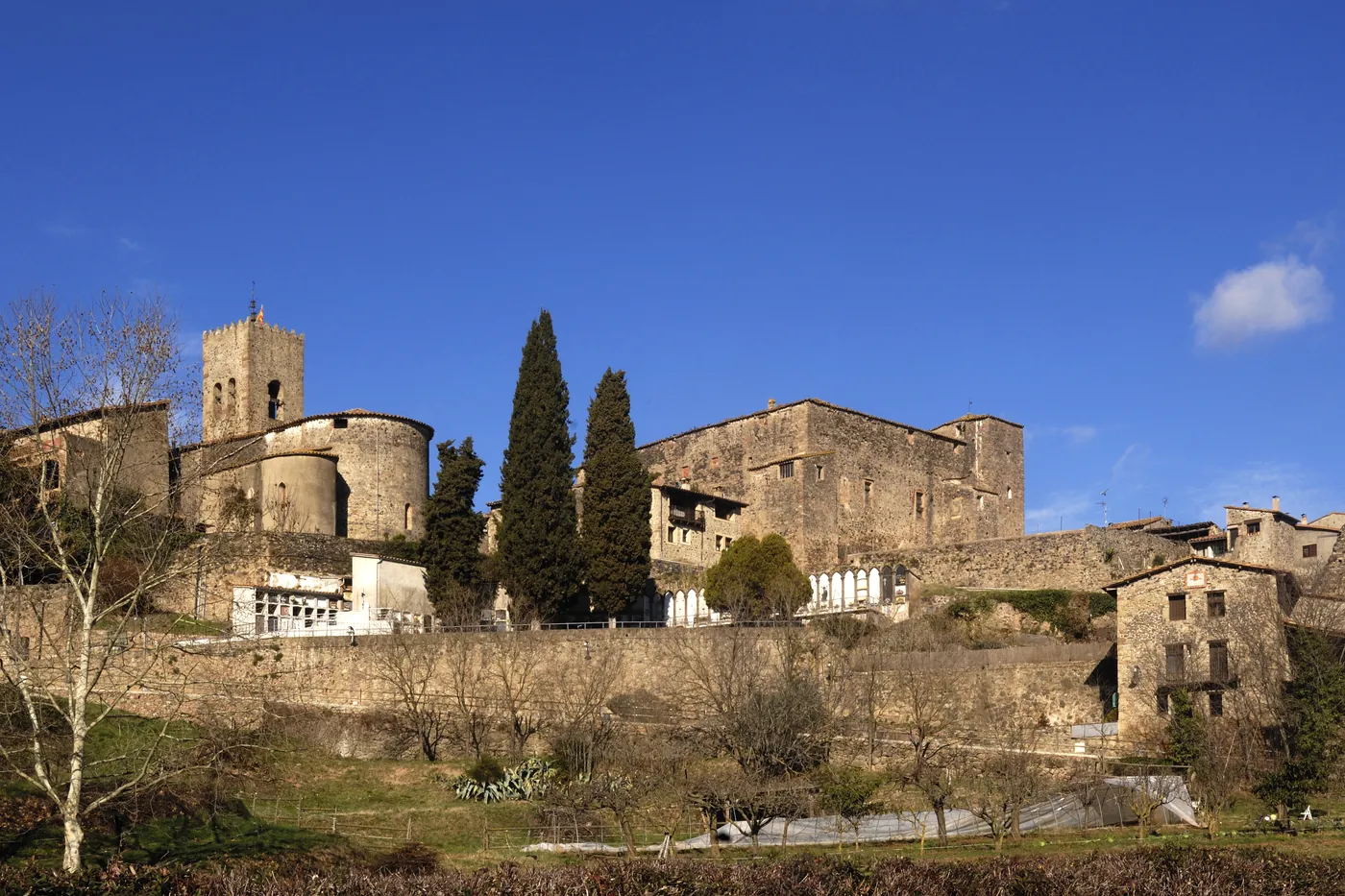
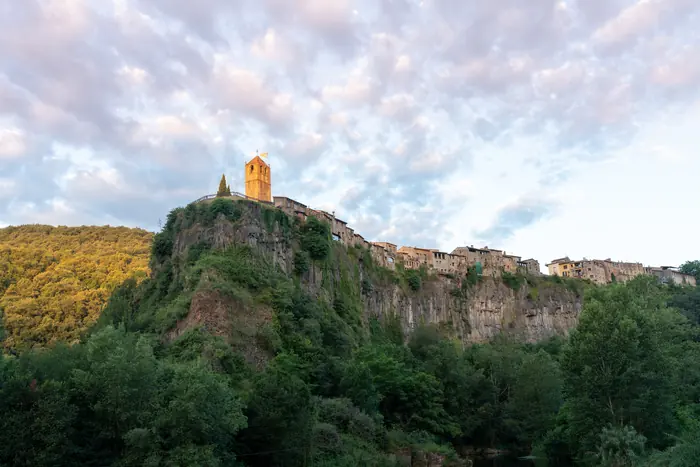
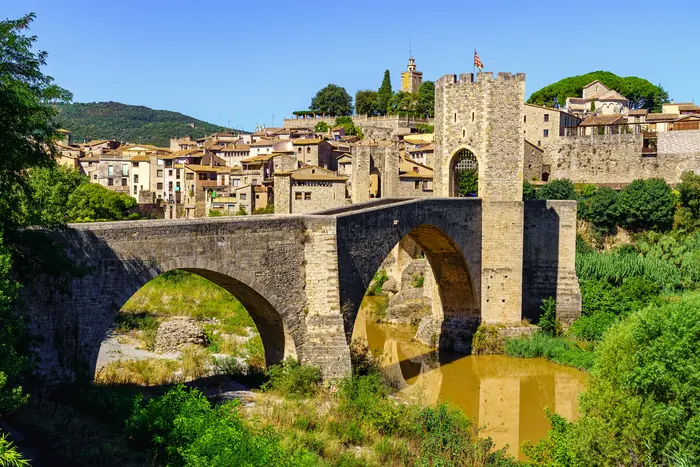
Castellfollit de la Roca sits on a basalt cliff about 50 metres high; the best view is from below, beside the road. The streets are narrow, so park at the entrance. Continue to Besalú, with its fortified Romanesque bridge over the Fluvià, the old Jewish quarter and its mikveh. Spend the last night around Besalú or towards Girona: via the C-66 and the AP-7 the Vallès is roughly 1 h 15 away, and you return the motorhome the next morning, between 9:00 and 12:00. If you have more days, the Costa Brava is close by: see our Costa Brava motorhome route.
Where to sleep
There are several campsites and a few motorhome areas in and around Olot, as well as near Santa Pau and Besalú. Autumn weekends fill up, especially when the beech wood changes colour, so book ahead. Park4Night and Campercontact show facilities and recent reviews.
The Garrotxa Volcanic Zone Natural Park has specific restrictions: camping is only allowed at campsites, and you must use the designated car parks to reach the trails. Parking wherever any vehicle may park is legal in Spain (DGT instruction 08/V-74), but without awning, chairs or levelling ramps, and without emptying any water.
Where to sleep with a motorhome in Catalonia
Practical tips
- The road from Olot to Santa Pau is narrow and winding: drive slowly and give way when needed.
- Do not drive into the old centres of Castellfollit, Besalú or Santa Pau; park at the entrance and walk.
- Bring walking boots and warm clothes even in spring: the climate is damp and it rains often.
- Autumn is the best season for the Fageda but also the busiest: arrive early to find parking.
- Fill up with water and empty grey water at campsites or service areas; inside the natural park there is no other legal option.
Frequently asked questions
How many days do you need for the Garrotxa by motorhome?
The essentials (the Fageda, Santa Pau, Castellfollit and Besalú) take 2 full days, within a minimum rental of 3 days in low season or 4 in mid season. From April to June and in October, the best time to go, the minimum is 4 days (7 in July, August, Christmas and Easter), which is exactly what the full route needs, with the Vall d'en Bas and the greenway by bike.
Where can you stay overnight with a motorhome in the Garrotxa?
At campsites and authorised areas in Olot, Santa Pau or Besalú. Camping outside campsites is not allowed in the natural park.
Can you drive a motorhome to the Fageda d'en Jordà?
Yes, as far as the park's signed car parks, then continue on foot. In high season arrive early, as they fill up.
When is the best time to visit the Garrotxa volcanoes?
Spring, when everything is green, and autumn, when the beech wood turns gold. Winter is cold, but the V66's Truma heating takes care of that; see our winter motorhome guide.