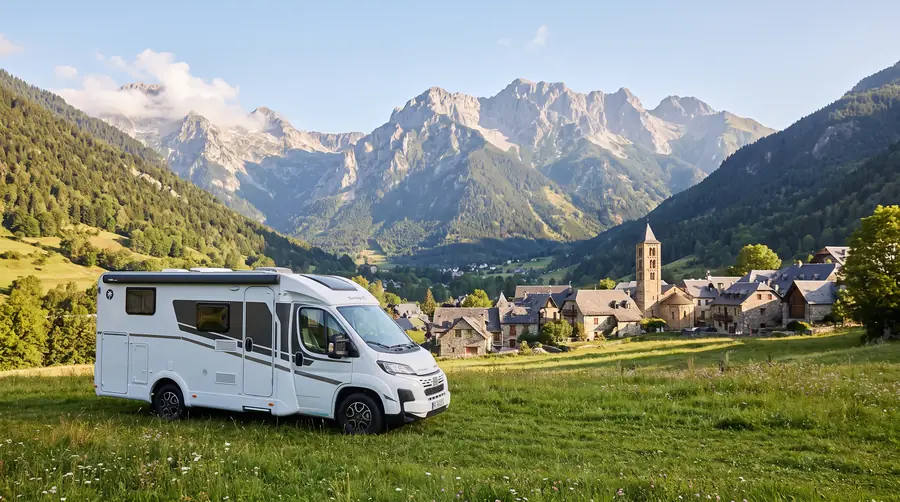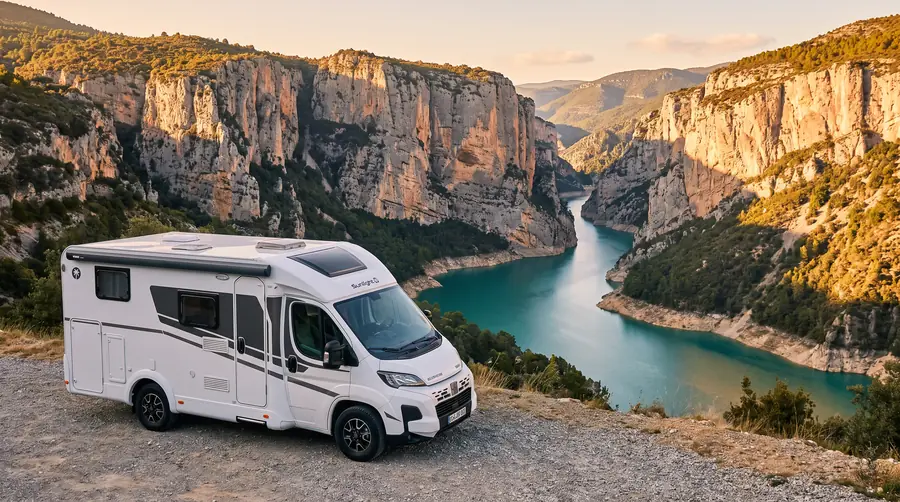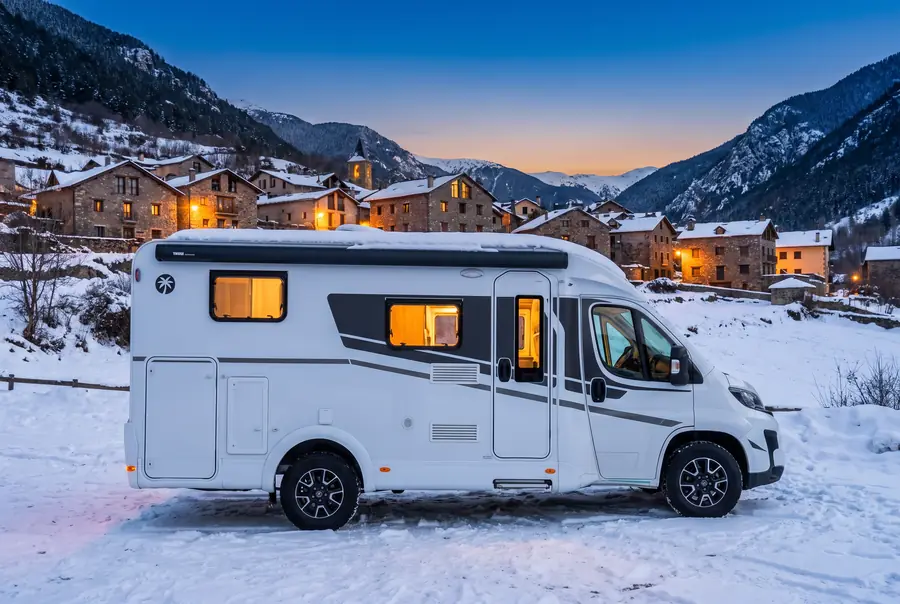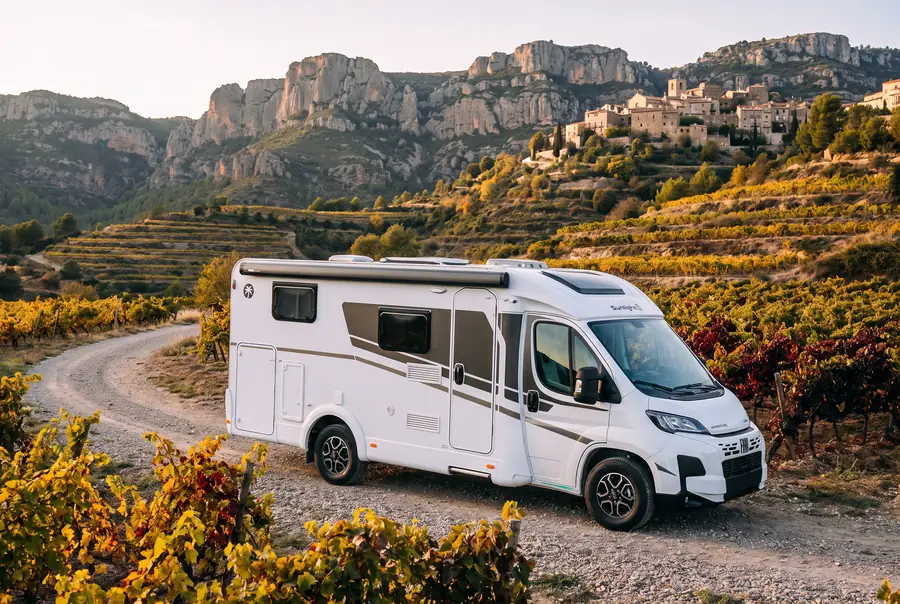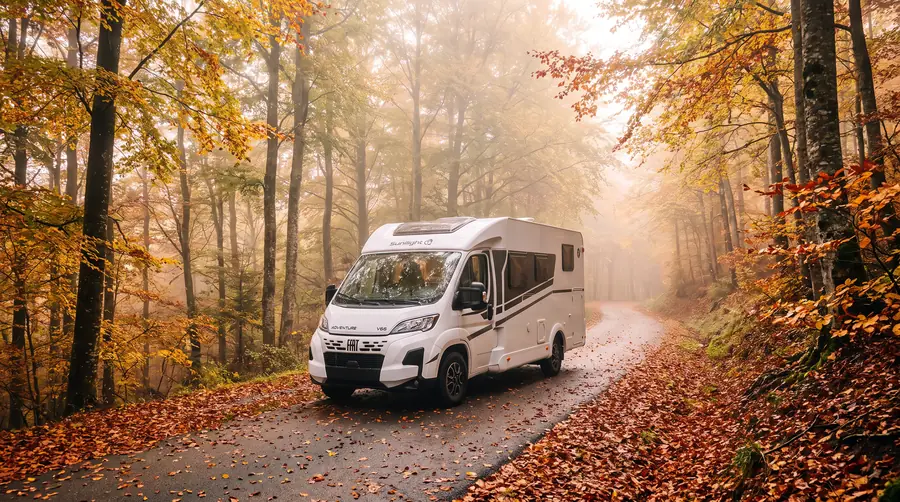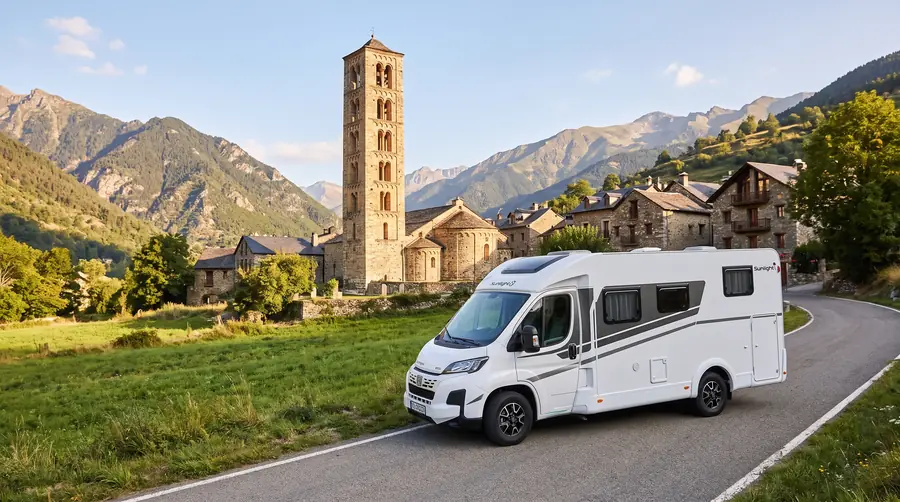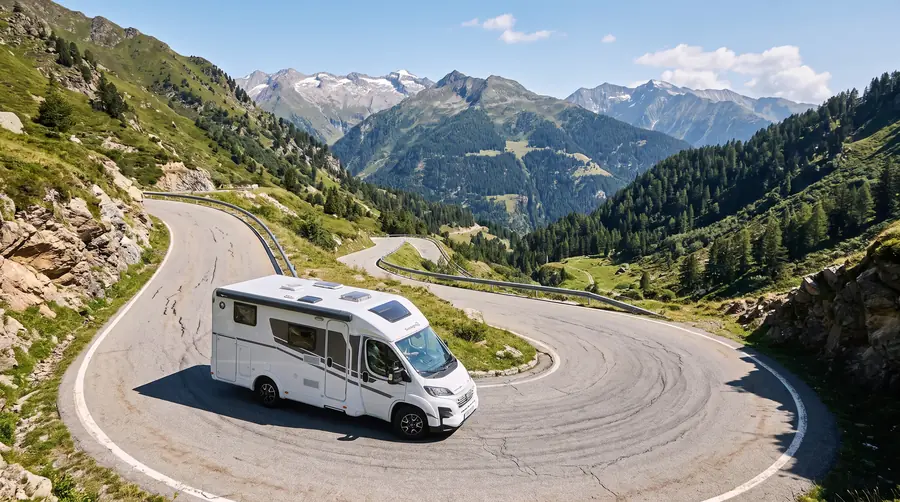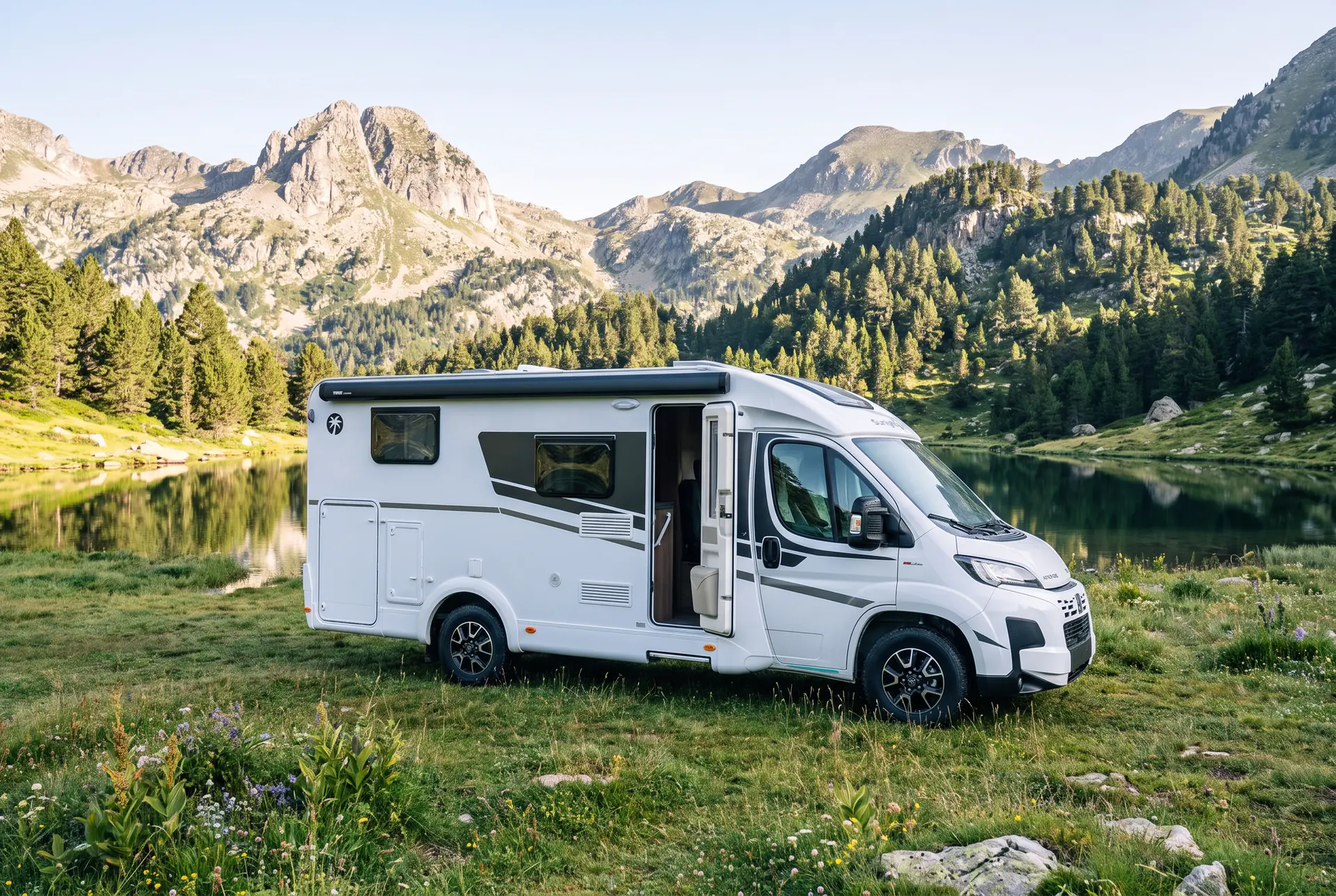
From our base in Les Franqueses del Vallès you take the C-17 towards Vic and Ripoll, and within an hour and a half you are in the Pyrenees without going near Barcelona. This route crosses the Catalan Pyrenees from east to west: the Ripollès, the Cerdanya, the Alt Urgell, the Pallars and the Alta Ribagorça.
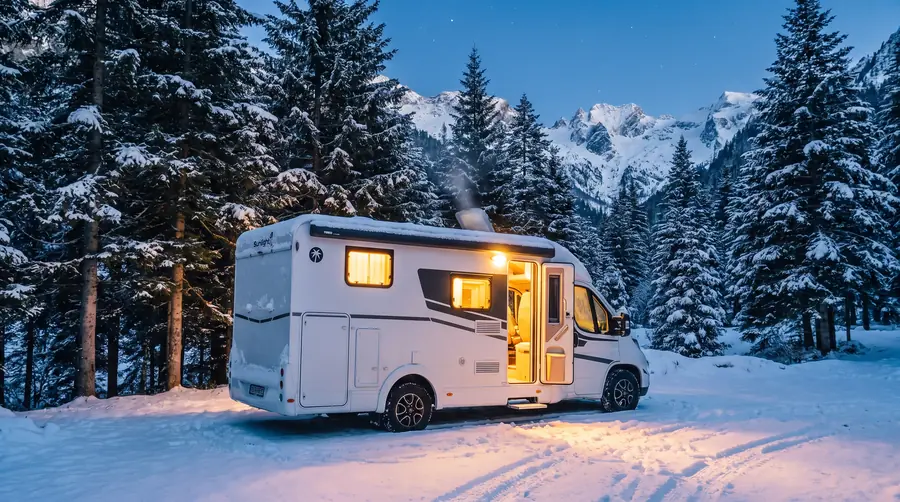
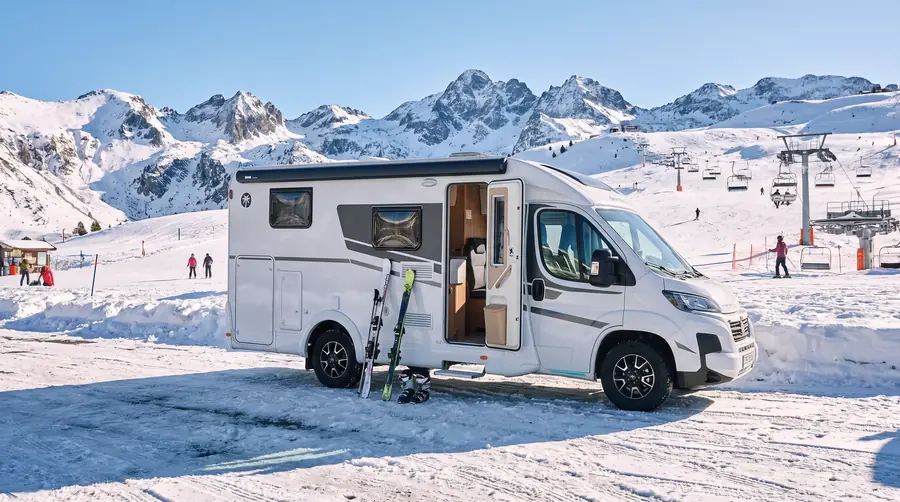
It is a seven-day rental, seven nights: you collect the motorhome on the afternoon of day 1, spend six days with one to two hours of driving per stage on mountain roads with passes and bends, and return it on the morning of day 8. With 7 days, mileage is unlimited. It works all year: in summer for walking among lakes, in winter for snowy valleys with the heating on.
Route plan
Route map
Tap a day or a stop to see it on the map, or press "Follow the route" to travel it stage by stage.
Approximate line between stops, not a navigation itinerary. Check road conditions and restrictions for large vehicles before you set off.
What you will see
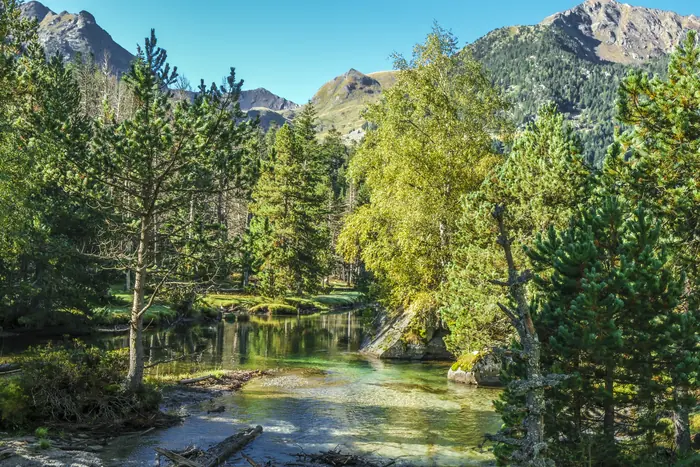
Day-by-day itinerary
Day 1 · Pick-up and the drive to Ripoll
You collect the motorhome in the afternoon, between 16:00 and 19:00, and after the handover you take the C-17 towards Vic and Ripoll. You are there in just over an hour: a short first stage with no mountain passes, ideal for getting used to the V66 without any rush. Spend the night at a campsite or authorised area nearby and save the sightseeing for the next morning.
Day 2 · Ripoll, Sant Joan de les Abadesses and Camprodon
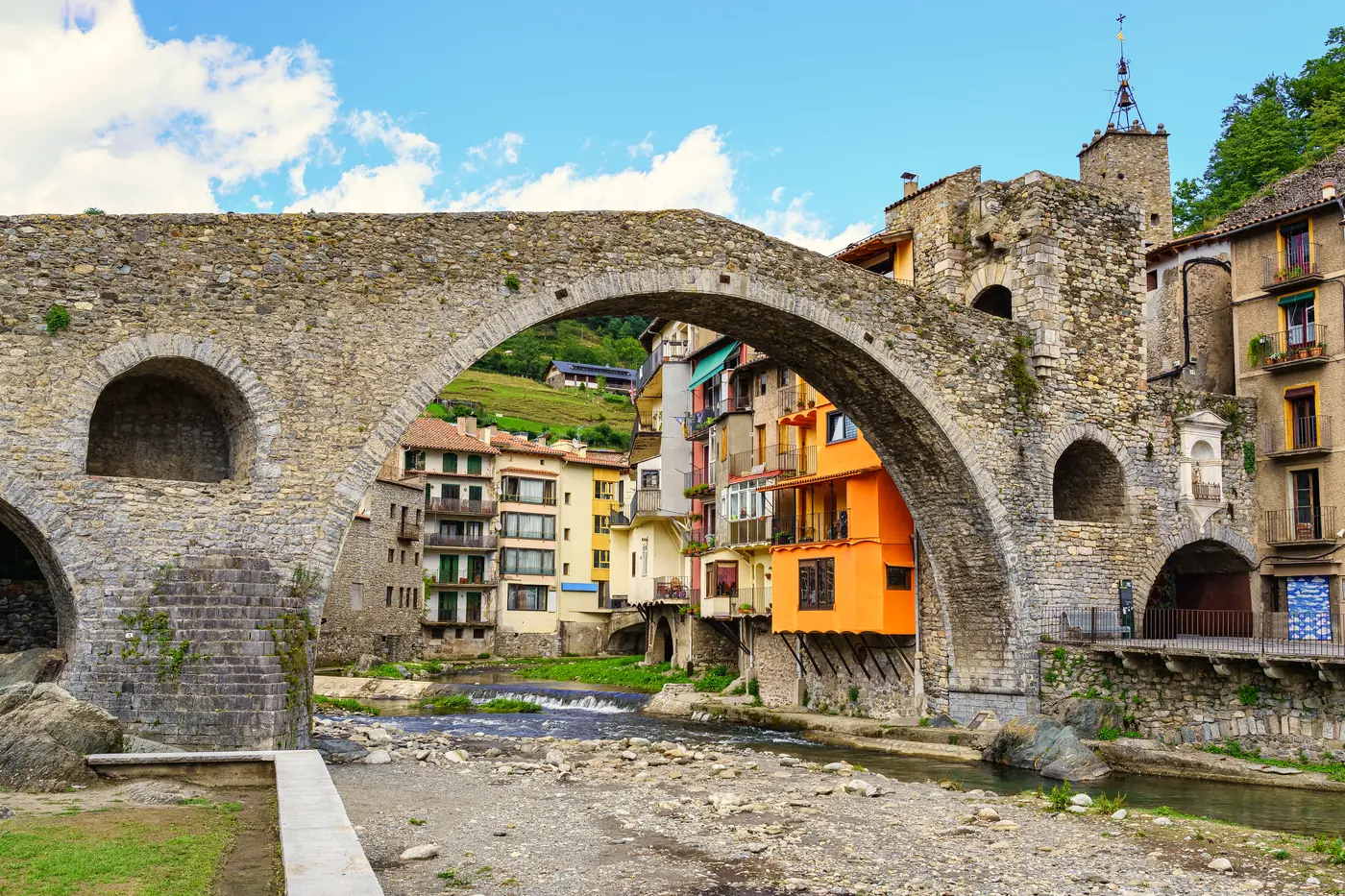
Start with the monastery of Santa Maria de Ripoll, whose portal is one of the most important Romanesque works in Europe. A few kilometres on, Sant Joan de les Abadesses has another monastery and a medieval bridge over the Ter. End the day in Camprodon, with its stone Pont Nou and streets of elegant townhouses. It is an easy stretch before the passes of the following days.
Day 3 · Ribes de Freser and Vall de Núria
Drive back via Sant Joan and Ripoll to Ribes de Freser. There is no road to Núria: you ride the rack railway up from Ribes de Freser or Queralbs. Leave the motorhome below and spend the day in the valley, at around 2,000 m, with its sanctuary, lake and trails for every level. In winter there is a small ski area, ideal for families. Sleep back down in the valley.
Day 4 · Collada de Toses and the Cerdanya
The road over the Collada de Toses climbs to almost 1,800 m: it is the twistiest pass on the route and can see snow in winter, so check conditions and take it slowly. On the way down the Cerdanya opens up, a wide plain with the Serra del Cadí to the south. Stop to stock up, then follow the Segre west. If you would like more time in this valley, our Andorra and Cerdanya route explores it at a gentler pace.
Day 5 · La Seu d'Urgell and Sort
La Seu d'Urgell has a Romanesque cathedral and the Parc del Segre, built for the 1992 Olympic Games. The road then crosses into the Pallars Sobirà. Sort is the rafting capital of the Noguera Pallaresa river, and from spring to summer you will see companies running trips. If the Pallars leaves you wanting more, our Pallars and Montsec route covers it in depth. Spend the night nearby before crossing into the Alta Ribagorça.
Day 6 · Vall de Boí
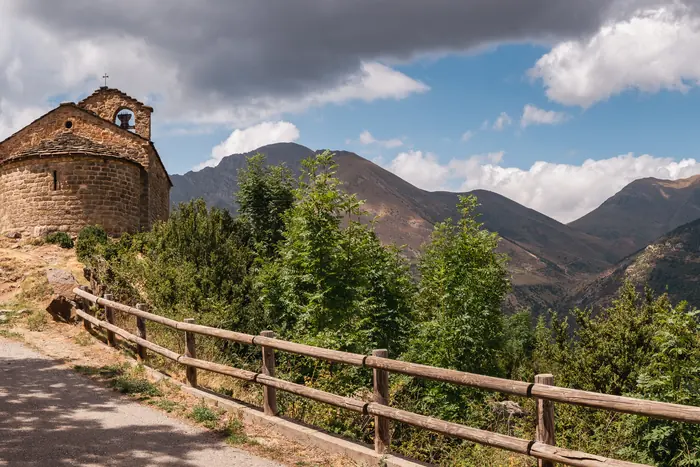
From Sort, the Coll de Perves takes you to El Pont de Suert and on to the Vall de Boí. Its Romanesque churches, including Sant Climent and Santa Maria de Taüll, Sant Joan de Boí and Santa Eulàlia d'Erill la Vall, have been a UNESCO World Heritage Site since 2000. The villages are small and steep: park at the entrance and explore on foot. In winter, the Boí Taüll ski resort is close by.
Day 7 · Aigüestortes and down to Lleida
Aigüestortes i Estany de Sant Maurici is Catalonia's only national park. From Boí, private vehicle access is restricted: visitors go up by 4x4 taxi or set off on foot from the designated car park. After your walk the journey home begins, about 4 hours in all, best split in two: today, just over two hours on the N-230, an ordinary single-carriageway road that follows the Noguera Ribagorçana, and a night in the Lleida area. On the morning of day 8, the motorway brings you back to the Vallès in a little under two hours, in good time for the return, between 9:00 and 12:00.
Where to sleep
The Catalan Pyrenees have plenty of campsites, and several villages have authorised motorhome areas. Some campsites close in the low season, so in winter check what is open before you go. In summer and on ski weekends, book ahead in the Cerdanya and the Vall de Boí. Park4Night or Campercontact help you find areas and check whether they have water services.
You may park wherever any vehicle may, as long as you are not camping: no awning, chairs or levelling ramps, and no emptying of water. Wild camping is not permitted in Catalonia, and protected natural areas such as the surroundings of Aigüestortes have stricter rules. Always follow the signs and each town's local bylaws.
Where to sleep with a motorhome in Catalonia
Practical tips
- In winter, the Segimon Rental V66 is ready for it: Truma Combi 4 heating with EisEx and a heated grey-water tank. Snow chains are an optional extra; ask for them if you travel between November and April. There is more advice in our winter motorhome guide.
- Check road conditions before crossing the Collada de Toses or the Coll de Perves, especially when snow or ice is forecast.
- In very cold weather the heating uses more gas: keep an eye on the bottles and plan where to refill.
- Fill the 116 L water tank before heading up to the highest valleys, and empty grey water only at campsites or serviced areas.
- The old centres of Camprodon, La Seu d'Urgell and Taüll are narrow. At 2.74 m high and 2.14 m wide, it is better to park outside and walk.
Frequently asked questions
How many days do you need for the Catalan Pyrenees by motorhome?
Seven, as in this plan: you pick up on the afternoon of day 1, return on the morning of day 8 and, as it is a 7-day rental, mileage is unlimited. With six, skip the Cerdanya stop. With less time, combine the Ripollès, Núria and the Cerdanya, which are closer to Barcelona; the minimum rental is 3 days in low season, 4 in mid season and 7 in July, August, Christmas and Easter.
Can you tour the Pyrenees in a motorhome in winter?
Yes, with a vehicle built for the cold and some caution on the passes. Check the forecast, carry chains and choose campsites that are open all year.
Where can you sleep in a motorhome in the Catalan Pyrenees?
At campsites and authorised motorhome areas. Parking is allowed wherever it is allowed for any vehicle if you are not camping, but wild camping is not permitted and protected areas have further limits.
Can you drive a motorhome into Aigüestortes?
Not into the park itself: private vehicle access is restricted. The usual approach is to park at the access points and continue on foot or by authorised 4x4 taxi.