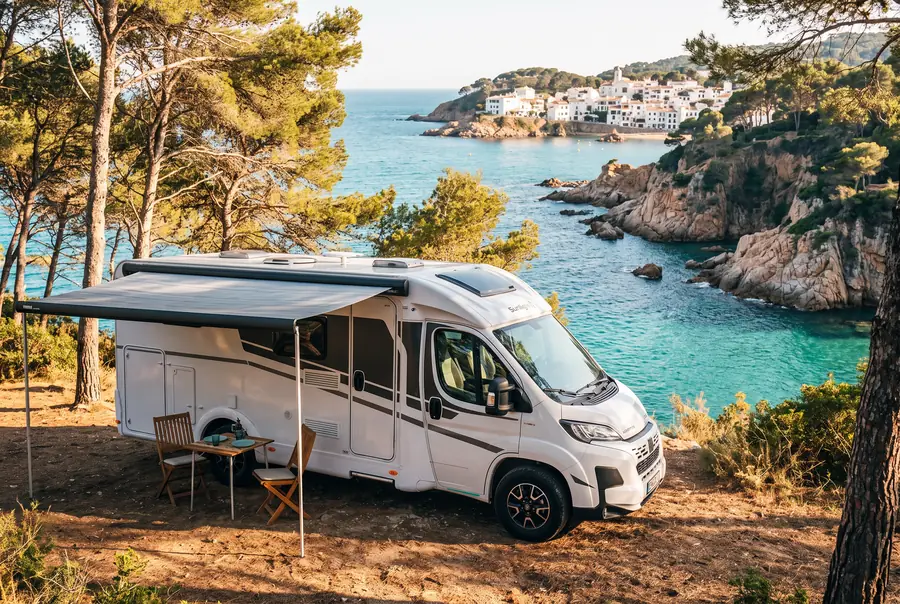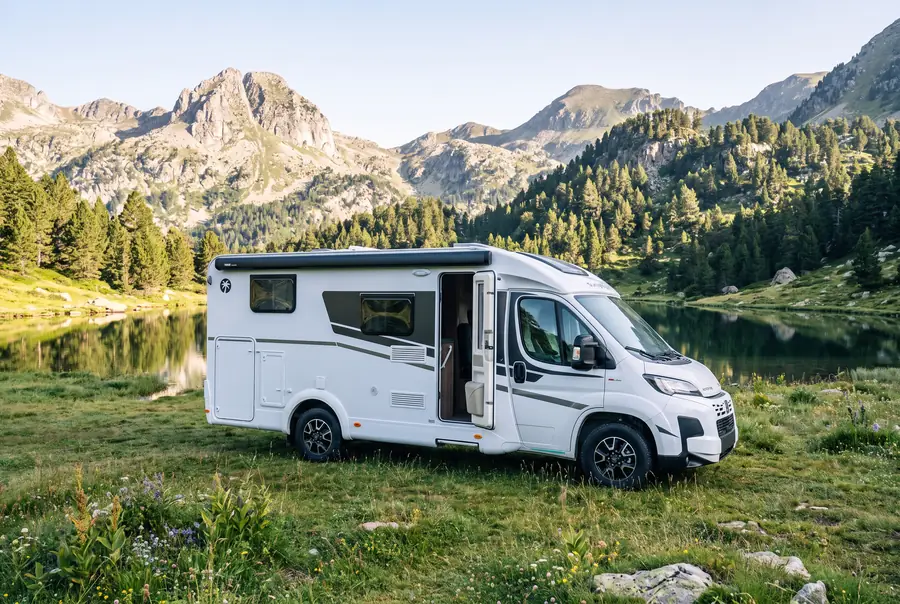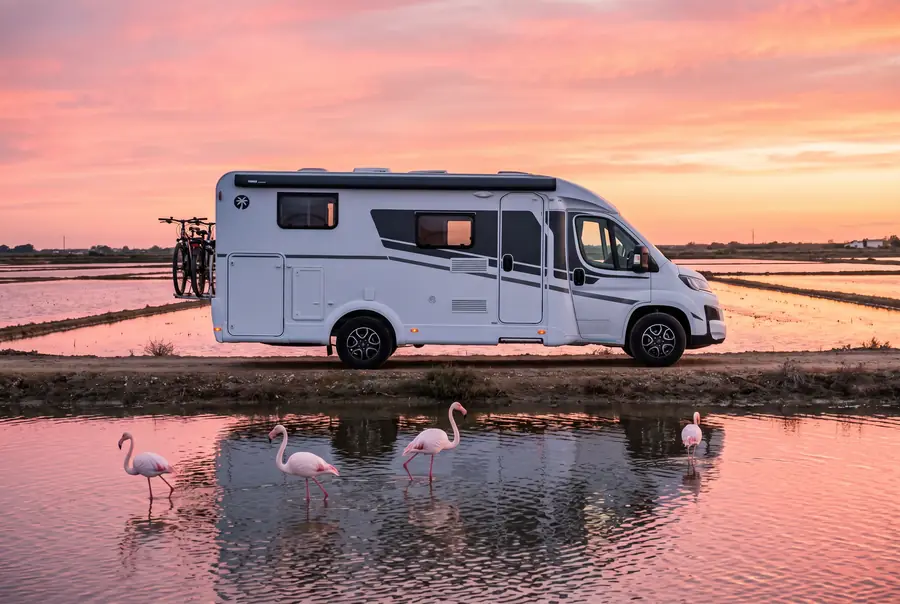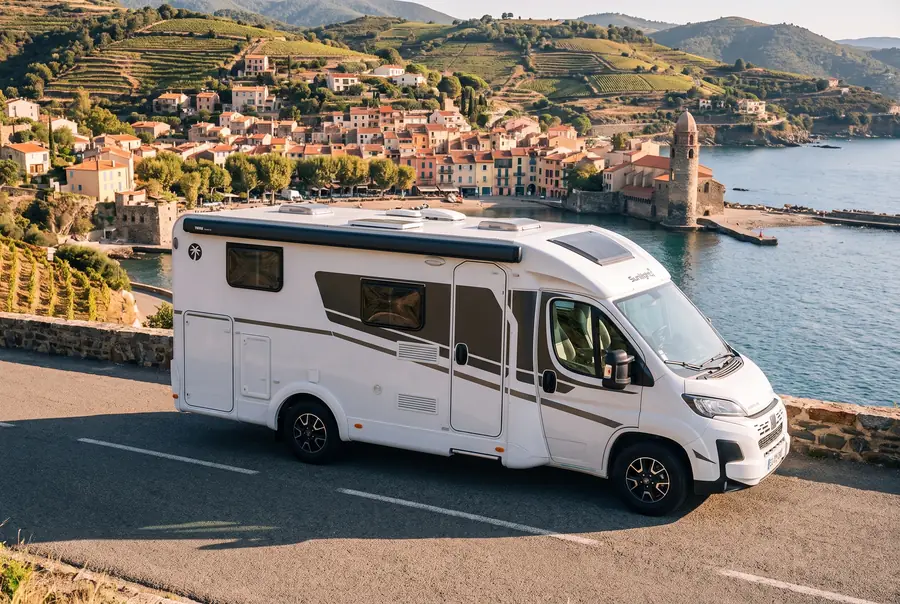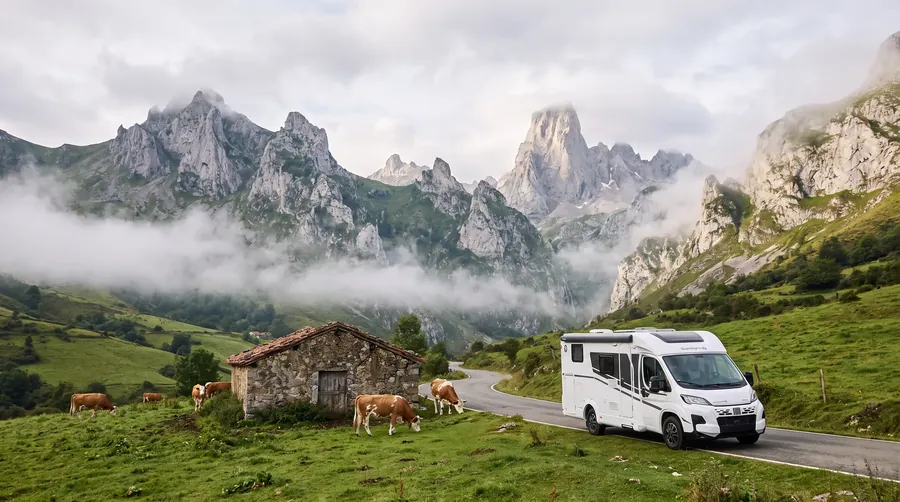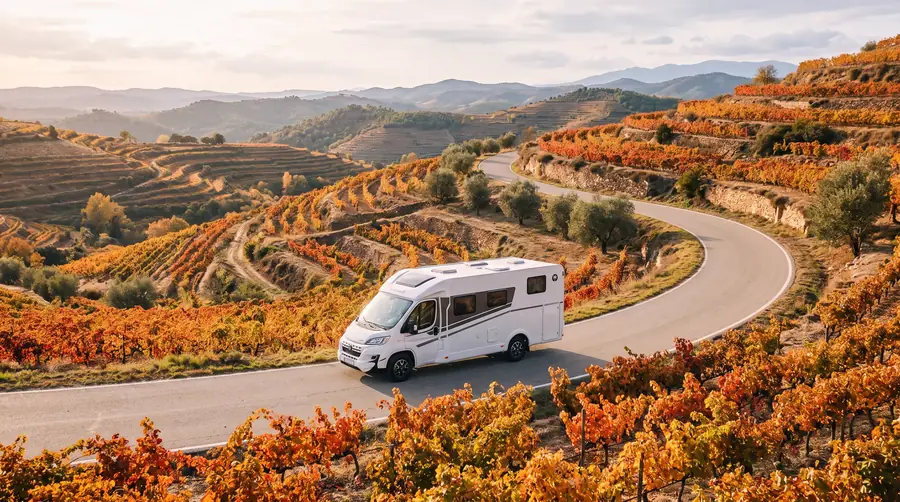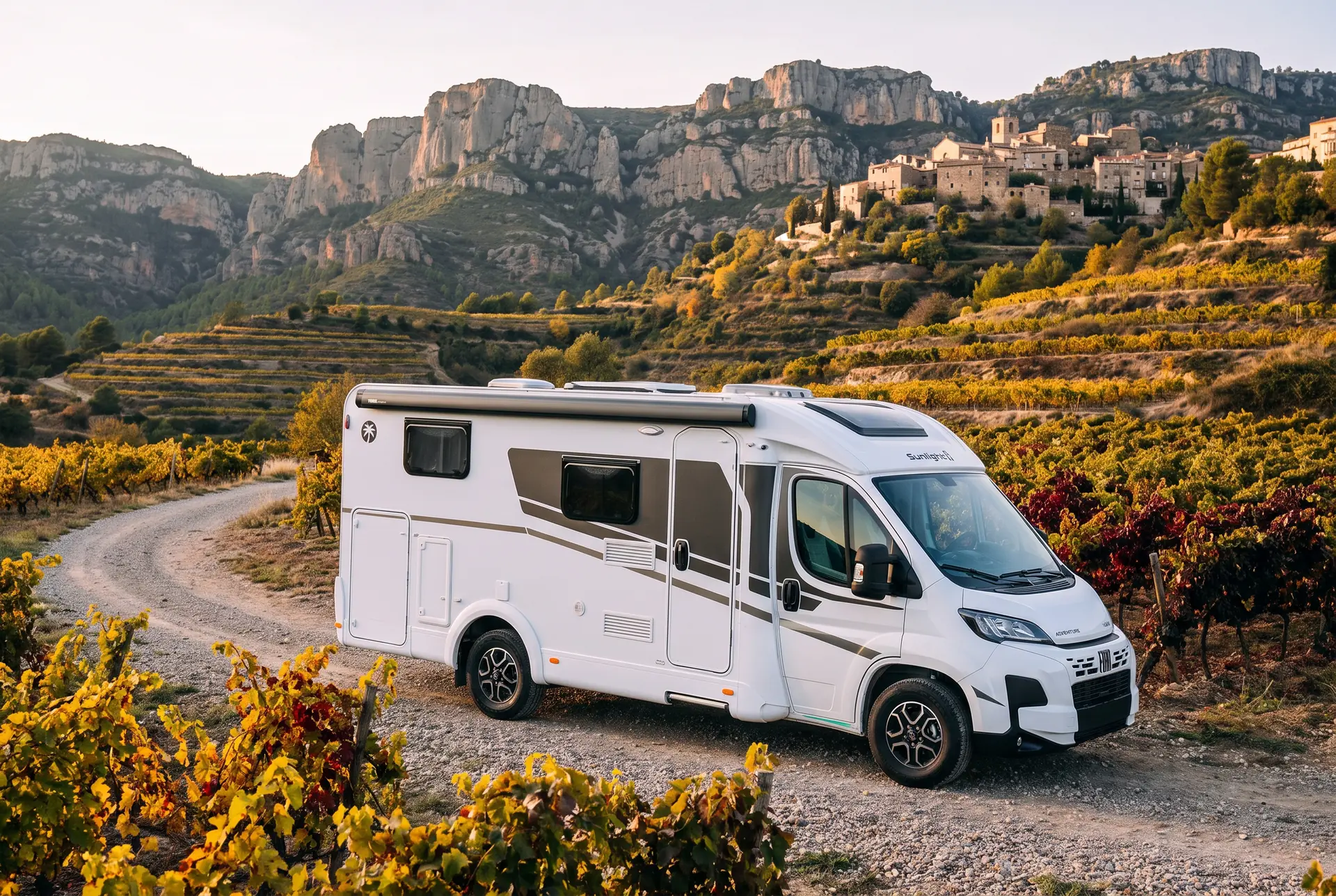
A week is enough for a full loop of Catalonia: Costa Brava coves, Cap de Creus, volcanoes, Pyrenean valleys, the Mont-rebei gorge and the rice fields of the Ebro Delta. The scenery changes every day and you rarely drive more than three hours; the longest stage, to the Vall de Boí, takes about three and a half.
The route starts and ends at our base in Les Franqueses del Vallès, next to Granollers, without crossing Barcelona: you collect the motorhome on the afternoon of day 1 and return it on the morning of day 8, after seven nights. As a 7-day rental with Segimon Rental, mileage is unlimited, so the figure of around 1,100 km is only a guide.
Route plan
Route map
Tap a day or a stop to see it on the map, or press "Follow the route" to travel it stage by stage.
Approximate line between stops, not a navigation itinerary. Check road conditions and restrictions for large vehicles before you set off.
What you will see
Day-by-day itinerary
Day 1 · Pick-up and a first evening in the Baix Empordà
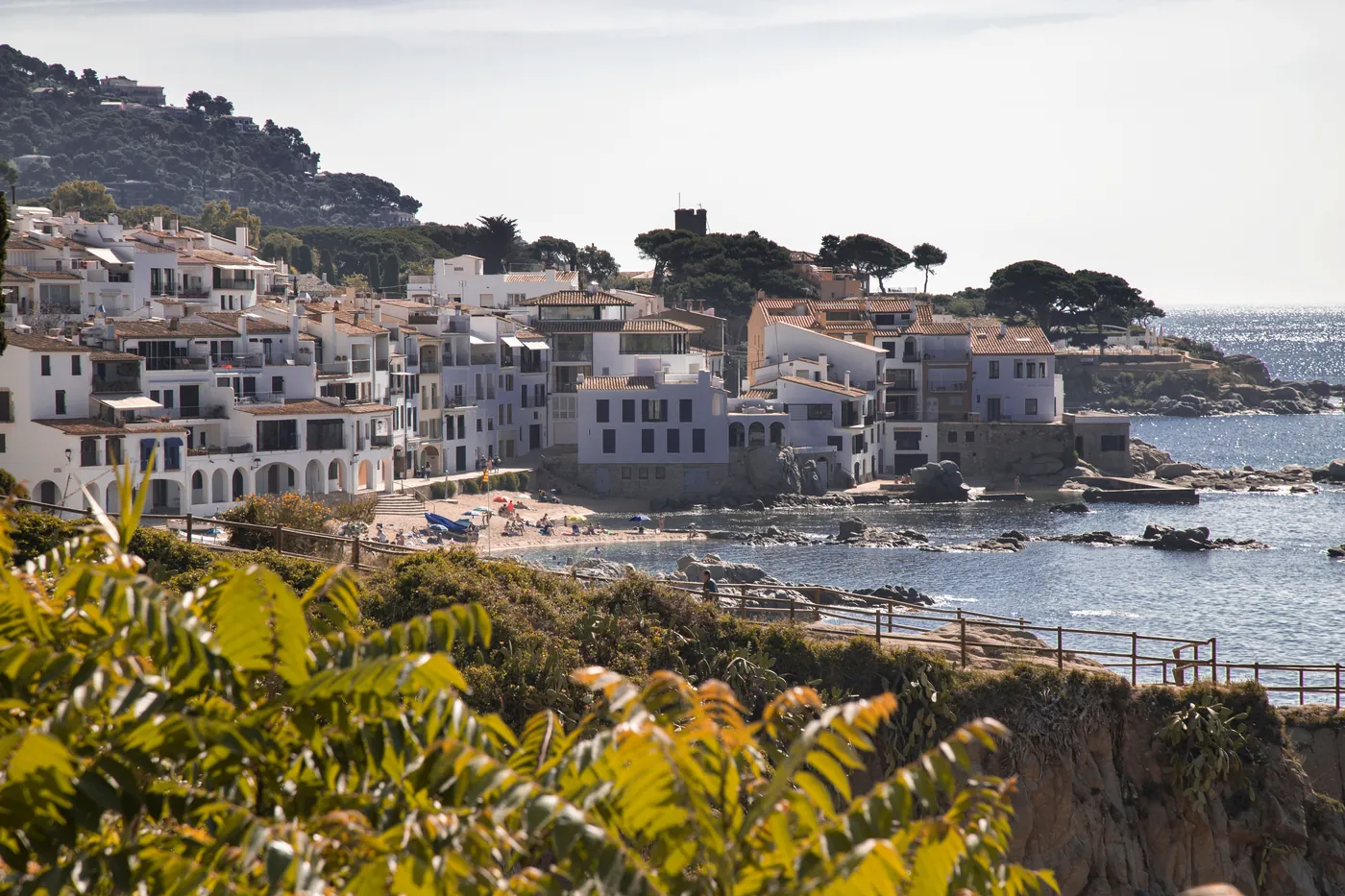
You collect the motorhome in the afternoon, between 16:00 and 19:00. An hour on the AP-7 and C-31 takes you to the Baix Empordà: a short first stage to get used to the vehicle. If you arrive in daylight, stroll around Calella de Palafrugell, with its fishermen's houses and boats drawn up on the sand. Spend the night at a campsite or authorised area nearby; in summer, book ahead.
Day 2 · Begur, Cadaqués and Cap de Creus
In the morning, head up to Begur: its old town of narrow streets is topped by the castle, so park at the edge of the village and walk up. Its coves, such as Sa Tuna and Aiguablava, have narrow access roads and small car parks. Then, via the Alt Empordà and Roses, a winding mountain road leads to Cadaqués; leave the motorhome in the car parks at the entrance. In high season, vehicle access to the Cap de Creus lighthouse may be regulated. For more time on the coast, see our Costa Brava route.
Day 3 · Besalú and the Garrotxa volcanoes
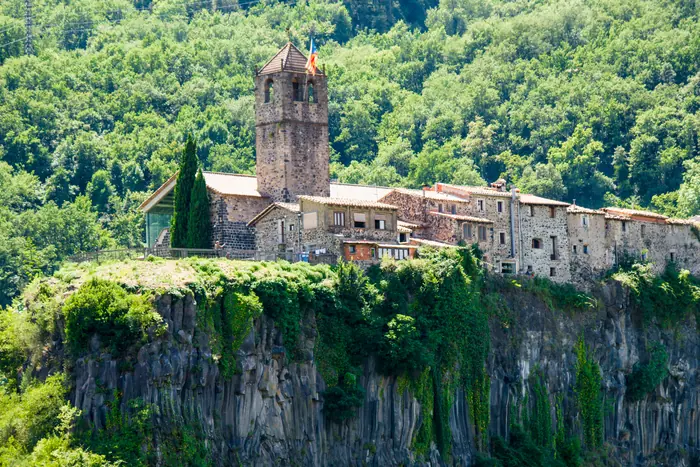
Inland, Besalú greets you with its fortified Romanesque bridge and old Jewish quarter. Continue to Castellfollit de la Roca, a village perched on a basalt cliff, and on to Olot. In the afternoon, walk the Fageda d'en Jordà beech wood and the Santa Margarida volcano from the natural park's signed car parks. This is a protected area: sleep at campsites or authorised areas in and around Olot. Our Garrotxa route expands on this stage.
Day 4 · Ripollès, Collada de Toses and the Cerdanya
From Olot, Ripoll is about an hour away; the portal of its monastery of Santa Maria is one of the most important Romanesque works in Europe. The road then climbs to the Collada de Toses, at almost 1,800 m: a twisty pass that can see snow in winter, so check conditions and take it slowly. On the way down the Cerdanya opens up, a wide plain with the Serra del Cadí to the south. Spend the night at a campsite or authorised area in the valley, for example near Puigcerdà or Bellver de Cerdanya.
Day 5 · Vall de Boí
This is the longest stage, about three and a half hours on mountain roads: follow the Segre to La Seu d'Urgell, cross into the Pallars via Sort and carry on to El Pont de Suert. Leave early, take breaks and do not rush. The Vall de Boí is home to UNESCO World Heritage Romanesque churches such as Sant Climent and Santa Maria de Taüll. If you have time, access to Aigüestortes National Park is by authorised 4x4 taxis from Boí.
Day 6 · Mont-rebei and Montsec
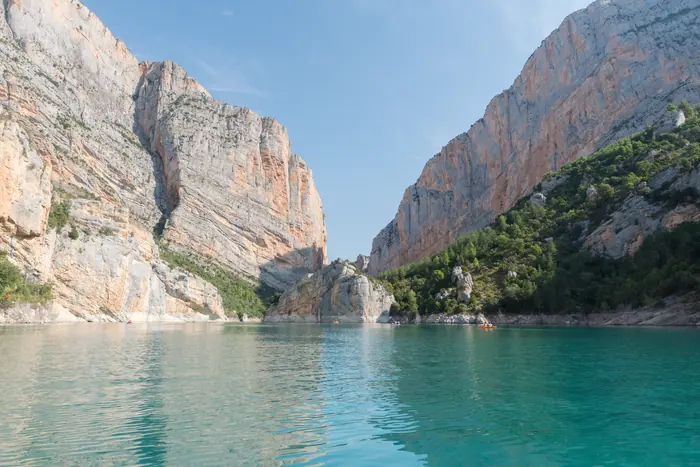
Head south on the N-230 to the Montsec area. The Mont-rebei gorge, with its path cut into the rock above the Noguera Ribagorçana river, is one of the most spectacular walks in Catalonia. Access roads are narrow and parking is regulated in high season, so check before you go. Montsec is a Starlight Reserve, which makes a night near Àger perfect for stargazing.
Day 7 · Ebro Delta
From Àger, head south via Lleida: in about three hours you reach the Ebro Delta. Priorat and Siurana lie close to this drive, but they deserve a day of their own. In the Delta, focus on the northern half, with Deltebre, Riumar and flat tracks between the rice fields, ideal for bikes. Spend the night around L'Ampolla and empty the grey water and toilet cassette at a campsite or service area. On the morning of day 8, the AP-7 takes you back to the Vallès in about two hours, skirting Barcelona, for the return between 9:00 and 12:00. More ideas in our Ebro Delta route.
Where to sleep
There are campsites and motorhome areas at every stage: Costa Brava, Olot, the Pyrenees, Montsec and the Delta. Book ahead for July, August and bank holidays, especially on the coast. Park4Night and Campercontact help you find areas with fresh water and waste disposal.
Wild camping is generally not allowed in Catalonia, and natural parks such as Cap de Creus, Garrotxa, Aigüestortes and the Delta have stricter rules. Parking wherever any vehicle may park is legal in Spain (DGT instruction 08/V-74), as long as you do not put out the awning, chairs or levelling ramps, or empty any water.
Where to sleep with a motorhome in Catalonia
Practical tips
- Fill up with water and empty grey water every two or three days at campsites or service areas; the 116 L fresh tank lasts several days with moderate use.
- In villages such as Begur, Cadaqués, Besalú and Castellfollit, park at the entrance: the V66 is 2.14 m wide and old towns are not built for motorhomes.
- Avoid the Costa Brava in August if you can; May, June and September offer more space and pleasant temperatures.
- The Pyrenees stages (the Collada de Toses and the drive to the Vall de Boí) are the most demanding: leave early and, in winter, check the passes before setting off.
- Bring the bikes: the Delta and the Garrotxa greenways are best enjoyed without an engine.
Frequently asked questions
Can you see Catalonia in 7 days by motorhome?
Yes. In seven nights, picking up on the afternoon of day 1 and returning on the morning of day 8, a loop like this covers the coast, the Pyrenees, the interior and the Delta. Some stages are long; for a slower pace, drop one stop and spend two nights at another.
How many kilometres is the 7-day Catalonia route?
Around 1,100 km. On a 7-day rental mileage is unlimited, so detours cost nothing extra.
Where can you stay overnight with a motorhome in Catalonia?
At campsites and authorised motorhome areas. Wild camping is generally not allowed, and natural parks have stricter rules.
When is the best time to tour Catalonia by motorhome?
April to June and September to October: good weather, fewer crowds on the coast and mountain roads open.