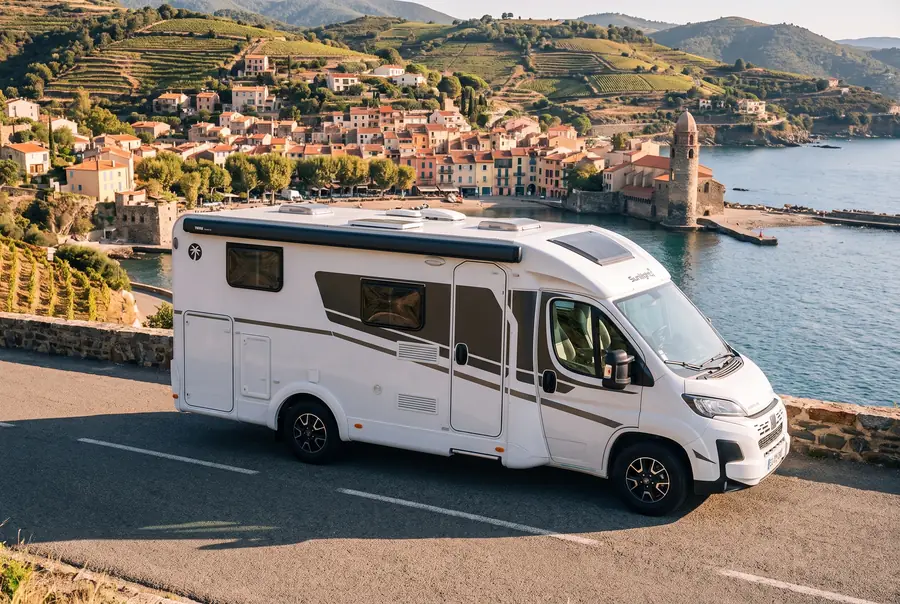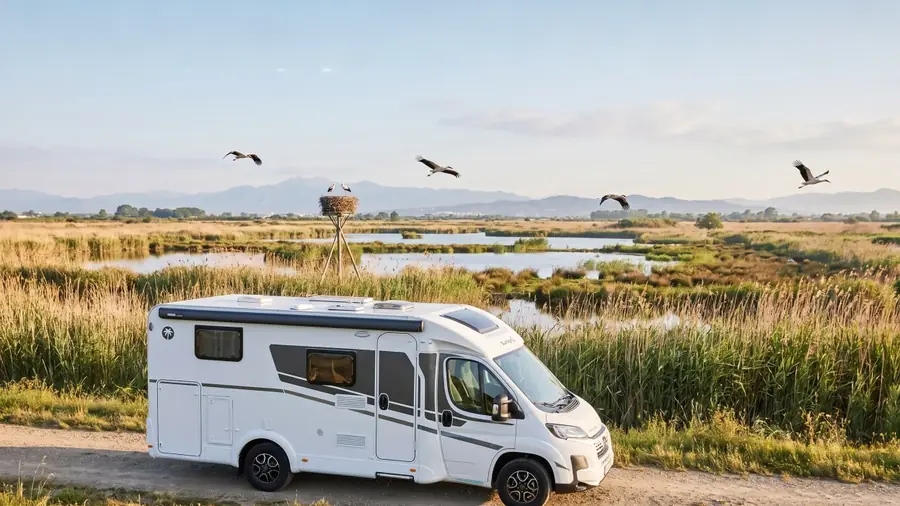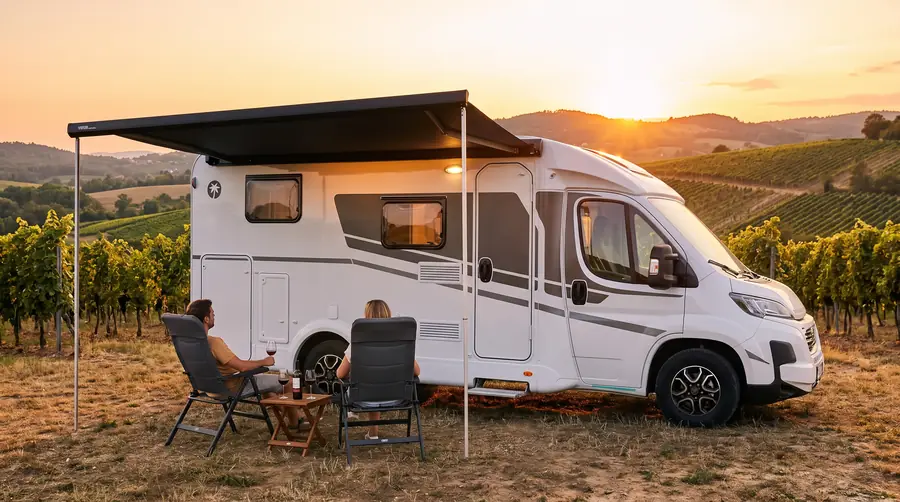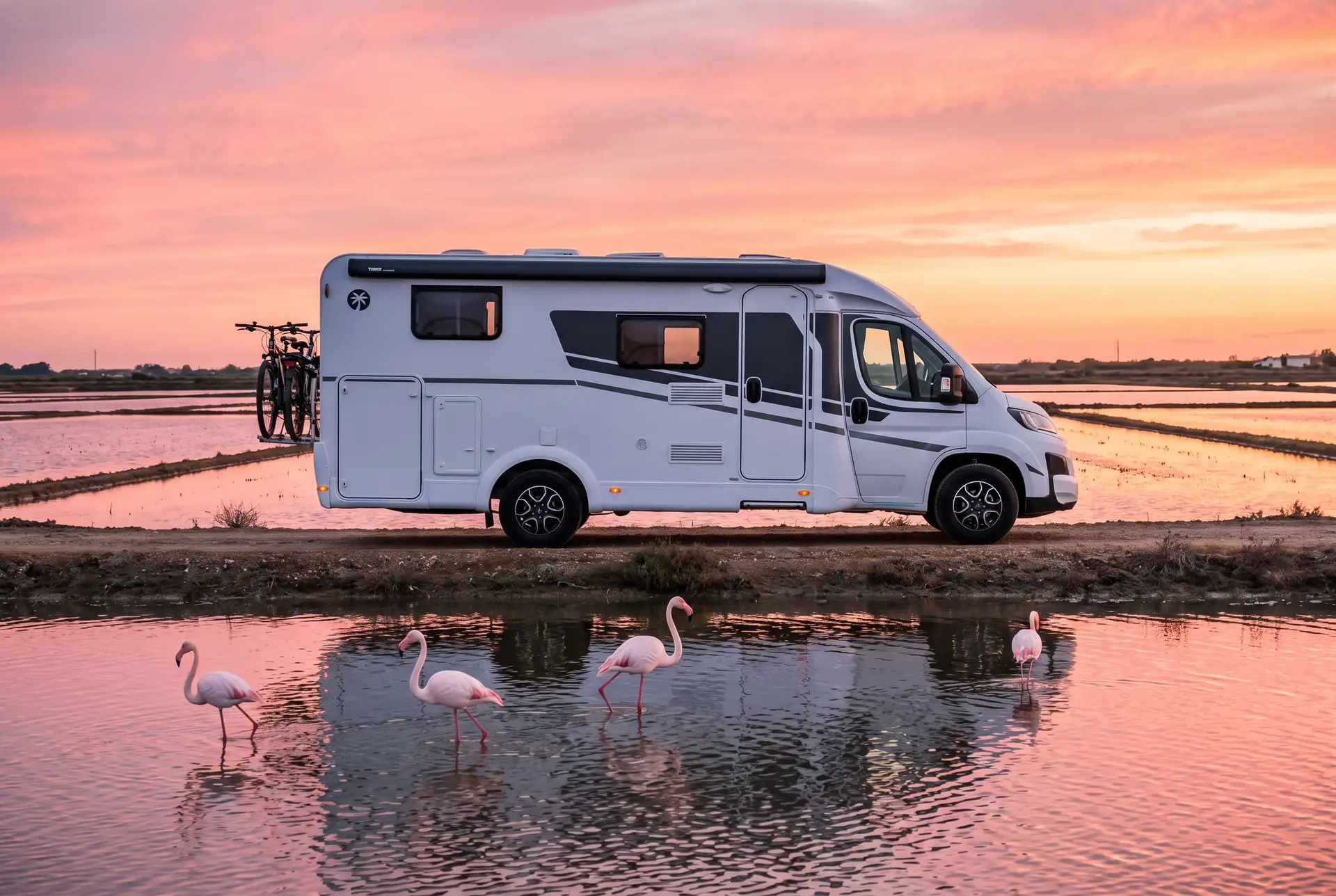
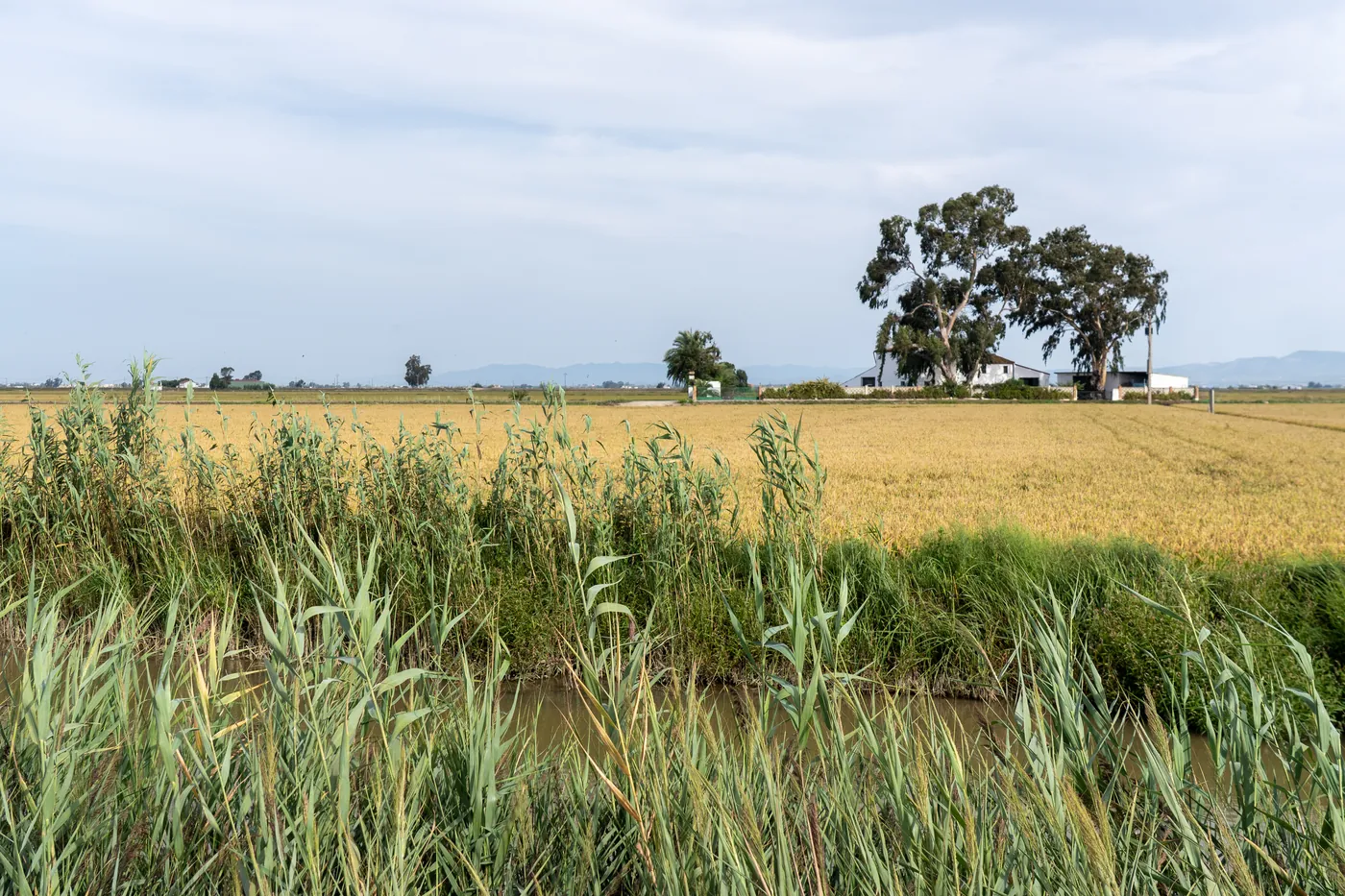
The Ebro Delta is a horizontal landscape of rice paddies, lagoons, long beaches and shallow bays where mussels and oysters are farmed. It is completely flat, so you take it slowly, with the motorhome as base camp and a bike for getting between viewpoints and farm tracks.
From our base in Les Franqueses del Vallès it is about 2 h 15 on the AP-7, skirting Barcelona without going into the city. A rental of 3 days in low season or 4 in mid season with Segimon Rental includes 300 km a day, which is plenty for the drive down, the drive back and exploring both halves of the delta. Pick-ups are in the afternoon, so day one is a transfer.
Route plan
Route map
Tap a day or a stop to see it on the map, or press "Follow the route" to travel it stage by stage.
Approximate line between stops, not a navigation itinerary. Check road conditions and restrictions for large vehicles before you set off.
What you will see
Day-by-day itinerary
Day 1 · Pick-up and drive to the delta
Collect the motorhome in the afternoon, between 16:00 and 19:00, and head south on the AP-7, skirting Barcelona without going into the city. It is about 2 h 15 of motorway to the L'Ampolla exit, the northern gateway to the delta. Spend the night at a campsite or authorised area there. If you pick up late or would rather not drive after dark, split the journey and stop halfway on the Costa Daurada; the next morning you reach the delta in under an hour.
Day 2 · Deltebre, Riumar and Punta del Fangar
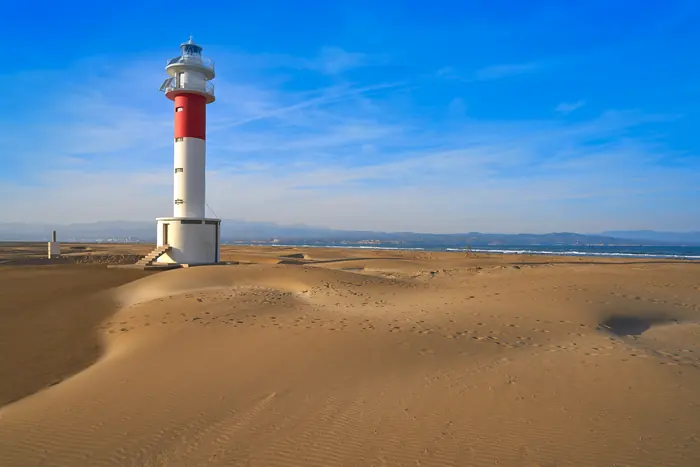
From L'Ampolla, Deltebre is a short drive away. There, the natural park information centre and Ecomuseu give you a good first overview. Carry on to Riumar, where the Ebro meets the sea: the river mouth and beach are a fine place to stretch your legs. In the afternoon, go to the Fangar area in the northern half of the delta, with its lighthouse and dunes. Leave the van in the signed car parks and continue on foot or by bike; sunsets here are among the best of the trip.
Day 3 · L'Encanyissada, the Trabucador and Punta de la Banya
Cross to the southern half by the bridge between Deltebre and Sant Jaume d'Enveja. The L'Encanyissada and La Tancada lagoons are the best spots for flamingos, herons and other birds, with hides and flat paths that suit the bikes on the rack. Then head for the Trabucador, the narrow sand bar linking the delta to Punta de la Banya and the salt pans. Vehicle access is regulated and can change with the season, so check before you go and cycle in if you can. Punta de la Banya is a nature reserve: do not go beyond the signed areas.
Day 4 · La Ràpita, Amposta and Tortosa
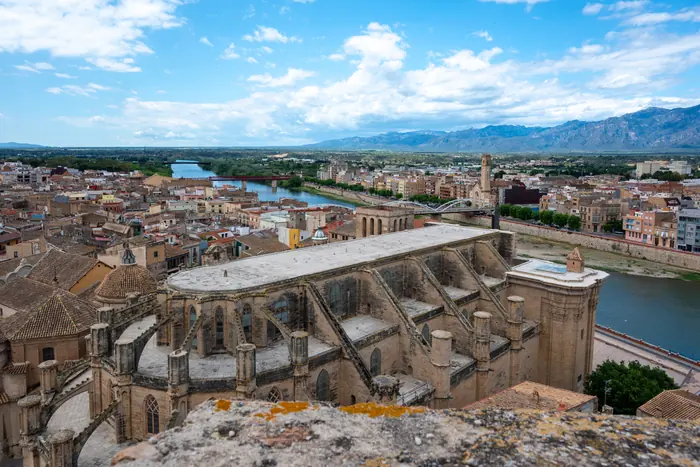
Spend the day in La Ràpita, on the Alfacs bay. Walk along the harbour and seafront and try local shellfish or a delta rice dish. If you have time, Amposta and its suspension bridge over the Ebro are close by, as is Tortosa with its cathedral and La Suda castle. For the last night, do not stay at the southern end of the delta: sleep around L'Ampolla, next to the AP-7, or better still halfway, on the Costa Daurada. The next morning the motorway takes you back to the Vallès without passing through central Barcelona, and you return the motorhome between 9:00 and 12:00 without rushing.
Where to sleep
There are campsites and a few motorhome service areas in and around the delta, mostly near Deltebre, Riumar, L'Ampolla and La Ràpita. In spring and September you will usually find space, but book ahead for July, August and bank holidays. Apps such as Park4Night or Campercontact show facilities and recent reviews.
Remember this is a natural park: wild camping is not allowed, and you cannot stay overnight on beaches, sand bars or park tracks. Parking wherever any vehicle may park is legal in Spain (DGT instruction 08/V-74), as long as you are not camping: no awning, chairs or levelling ramps, and no emptying water outside authorised points.
Where to sleep with a motorhome in Catalonia
Practical tips
- Bring mosquito repellent from May to September, especially at dusk near paddies and lagoons.
- The lanes between rice fields are narrow and often have no verge: drive slowly and only park in designated areas, never at the edge of irrigation channels.
- From April to June the fields are flooded and mirror the sky; in September the rice turns golden. In winter the fields are dry, but birdlife is abundant.
- Wind can be strong on the sand bars: keep the awning closed in gusts and choose sheltered parking.
- Empty grey water and the toilet cassette at campsites or service areas; there is no legal alternative out in the park.
- Cycling is the best way around: the terrain is completely flat and many parts of the park are easier to reach by bike.
Frequently asked questions
How many days do you need for the Ebro Delta by motorhome?
The essentials of both halves of the delta take 2 full days, within a minimum rental of 3 days in low season. From April to June and in September, the best time to go, the minimum is 4 days (7 in July, August, Christmas and Easter), enough for the full route with La Ràpita, Amposta and Tortosa.
Where can you stay overnight with a motorhome in the Ebro Delta?
At campsites and authorised areas in Deltebre, Riumar, L'Ampolla or La Ràpita. Wild camping is not allowed in the natural park, and overnight stays on beaches and sand bars are forbidden.
Can you drive a motorhome to the Trabucador?
Vehicle access is regulated and may vary through the year. Check the natural park's information before going; often the easiest option is to leave the van and cycle in.
When is the best time to visit the Ebro Delta?
April to June, when the paddies are flooded, and September, when the rice is ripe and it is less hot. Summer is hot and brings more mosquitoes. To compare seasons, see our guide to when to travel by motorhome.