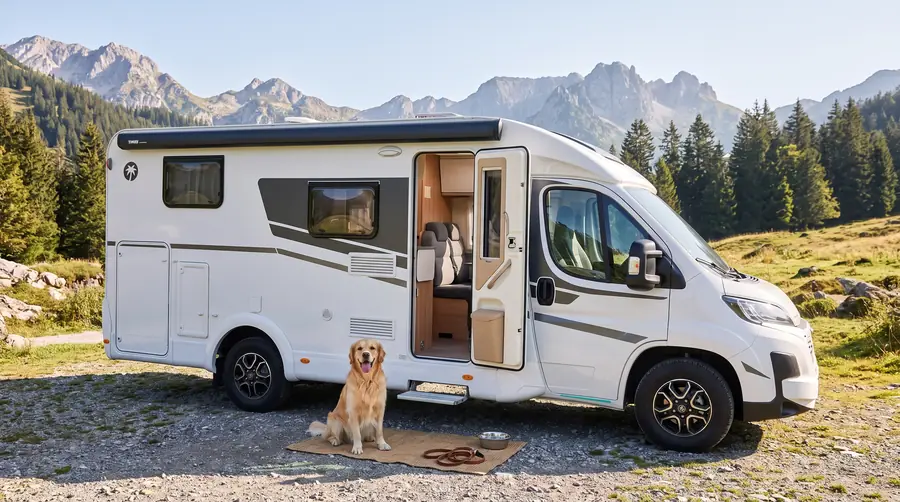
From our base near Granollers you take the AP-7 and reach the border at La Jonquera in an hour and a quarter. On the other side begins a route of fishing villages, medieval cities, canals and wetlands that suits a motorhome perfectly: France has a very large network of municipal motorhome areas, many with water and waste services.
The plan runs from the Côte Vermeille to the Camargue over seven days, seven nights: you collect the motorhome on the afternoon of day 1 and return it on the morning of day 8. A seven-day rental comes with unlimited mileage, and with a few extra days you can carry on into Provence. Before pick-up, let us know you are travelling to France so we can confirm the insurance.
Route plan
Route map
Tap a day or a stop to see it on the map, or press "Follow the route" to travel it stage by stage.
Approximate line between stops, not a navigation itinerary. Check road conditions and restrictions for large vehicles before you set off.
What you will see
Day-by-day itinerary
Day 1 · Pick-up, Collioure and Port-Vendres
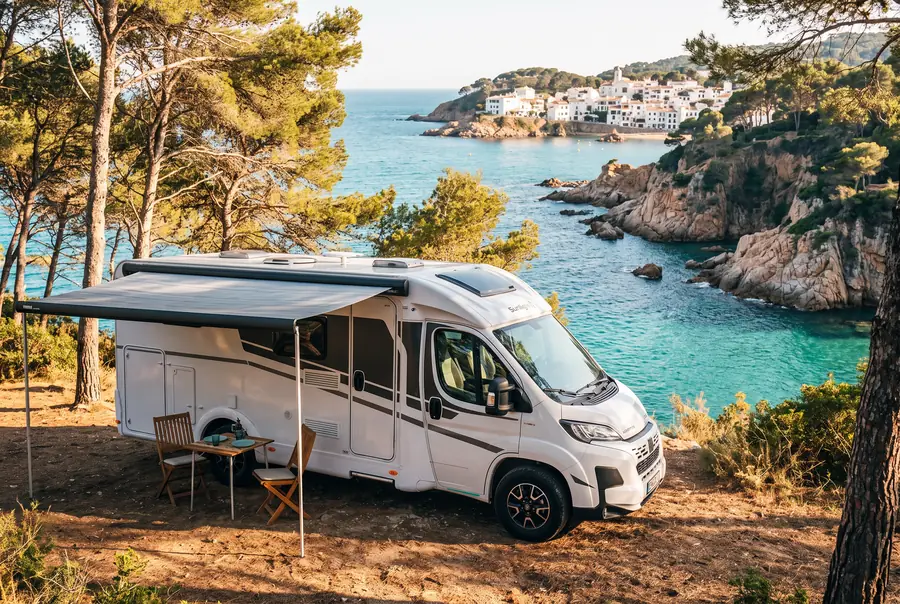
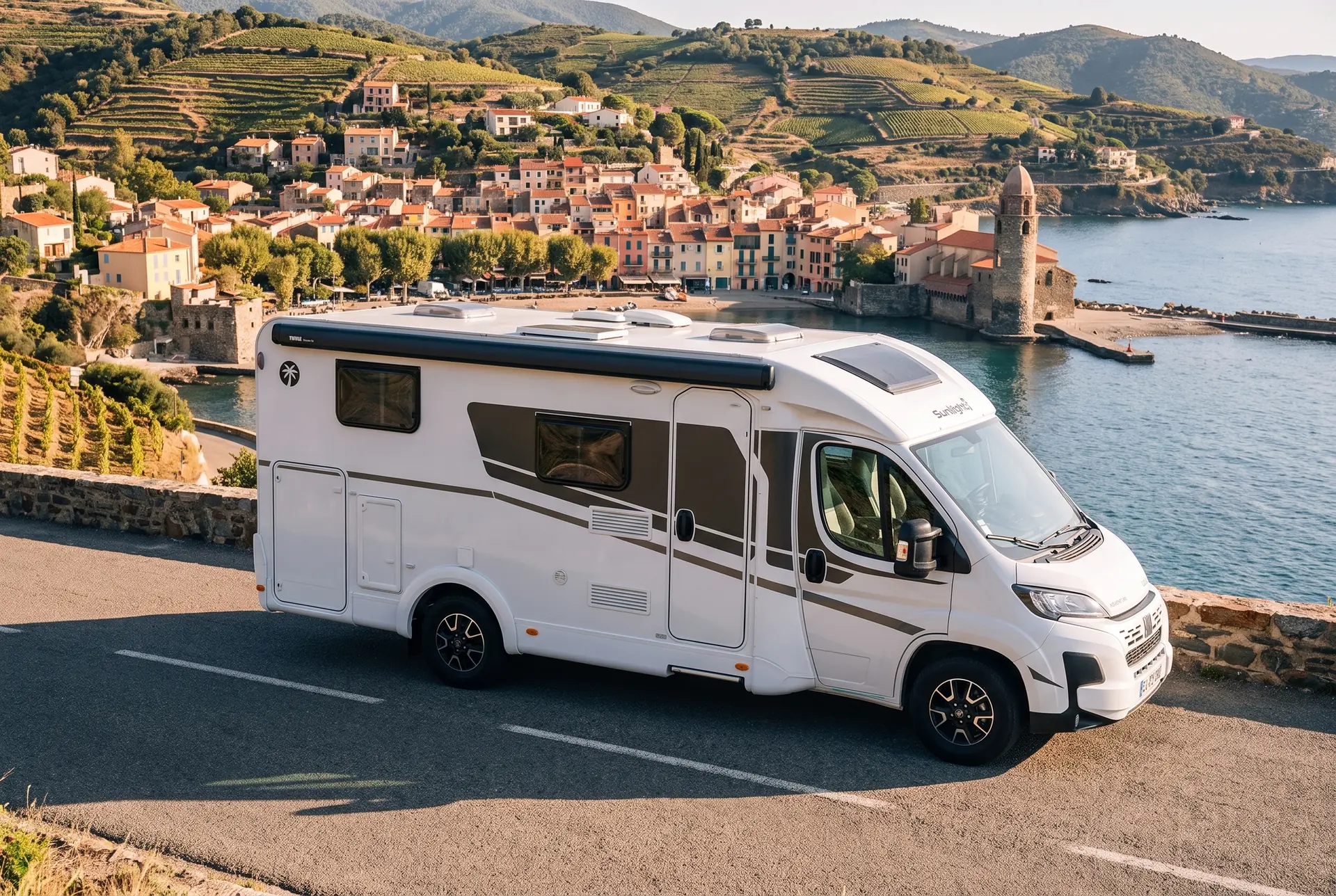
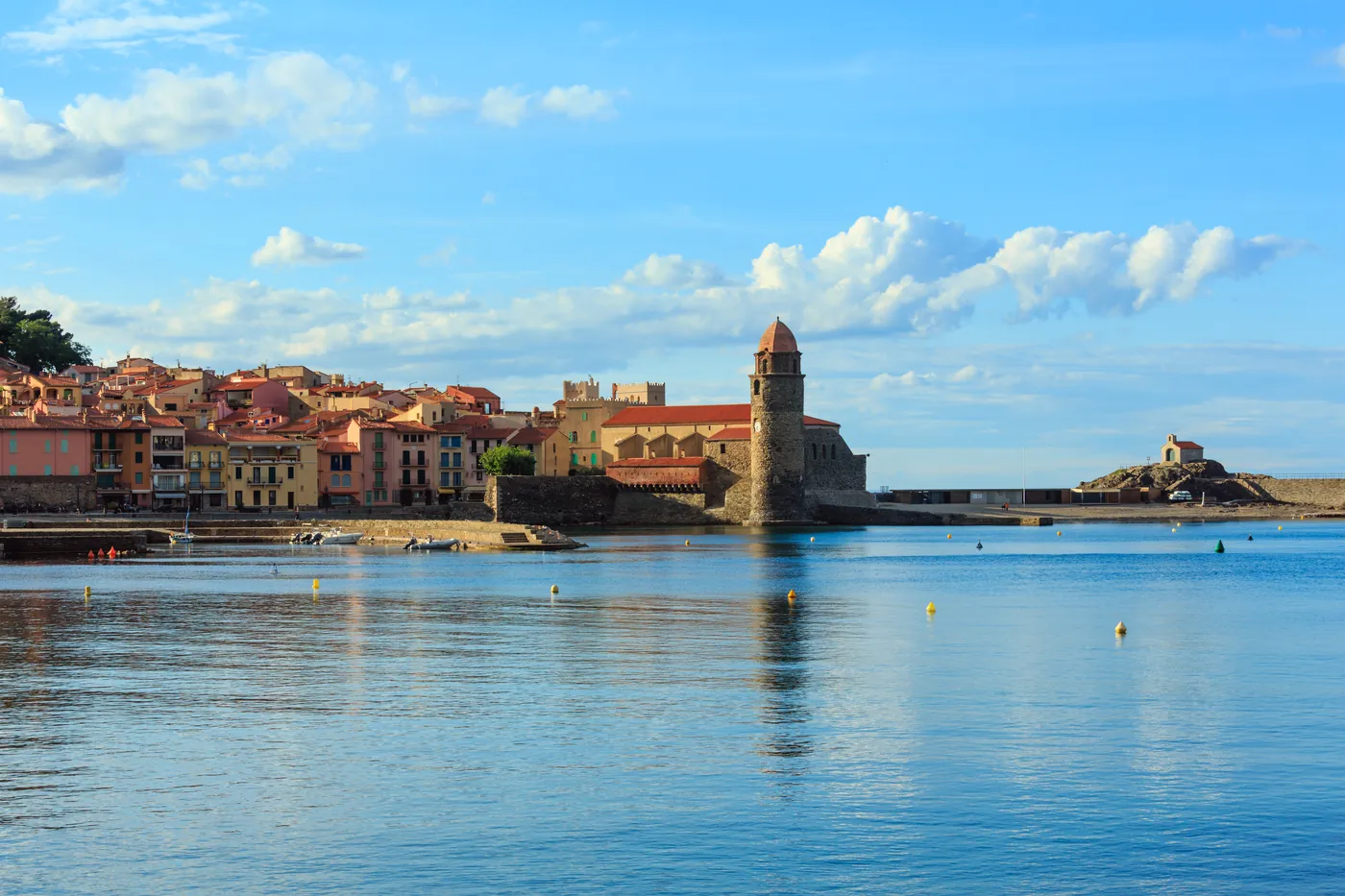
You collect the motorhome in the afternoon, between 16:00 and 19:00. Via the AP-7 and the coast at Argelès-sur-Mer, Collioure is a little under two hours away; if you pick up late, sleep before the border in the Alt Empordà and visit in the morning. Collioure, with its royal castle and seafront church tower, captivated Matisse and Derain, who painted here in 1905. The centre is small and busy: park on the outskirts and walk in. Next door, Port-Vendres is a working fishing port and a good place for a seafood dinner.
Day 2 · Perpignan and Carcassonne
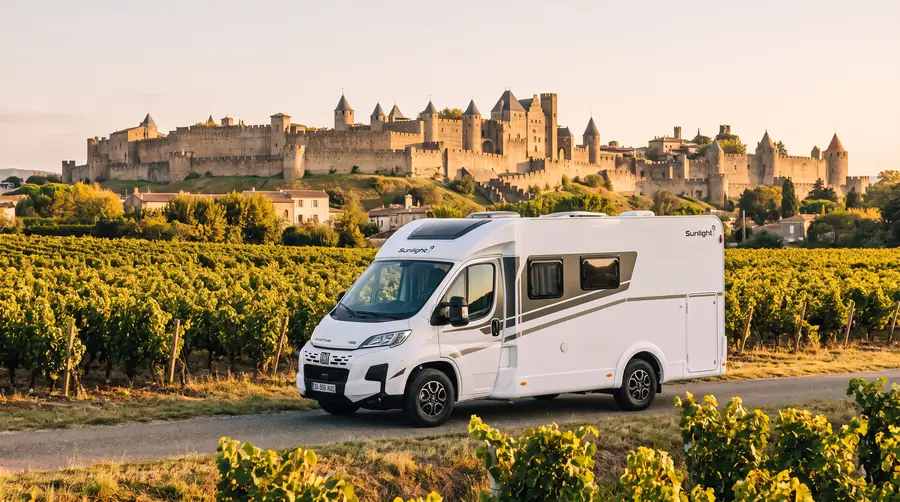
In the morning, visit Perpignan: the Castillet, the old city gate, and the Palace of the Kings of Majorca. Then an hour and a half on the motorway brings you to Carcassonne. Its walled medieval city, La Cité, is a UNESCO World Heritage Site. Vehicles cannot enter: leave the motorhome in one of the outer car parks and explore at dusk, once the tour groups have gone. For the Cathar castles nearby, see our Cathar Country route.
Day 3 · Canal du Midi and Narbonne
The Canal du Midi, also a World Heritage Site, links Toulouse with the Mediterranean and runs through Carcassonne. Cycle a stretch of the towpath in the shade of the plane trees; the V66's bike rack makes it easy. In the afternoon, continue to Narbonne, with its Gothic cathedral and a section of the Roman Via Domitia on view in the main square.
Day 4 · Béziers and Sète
In Béziers, the nine Fonseranes locks lift boats up a steep stretch of the Canal du Midi and are quite a sight when boats pass through. The cathedral looks down over the city. In the afternoon, carry on to Sète, a town of canals between the sea and the Étang de Thau, famous for its oysters. Climb Mont Saint-Clair for a view along the whole coast.
Day 5 · Aigues-Mortes and the Camargue
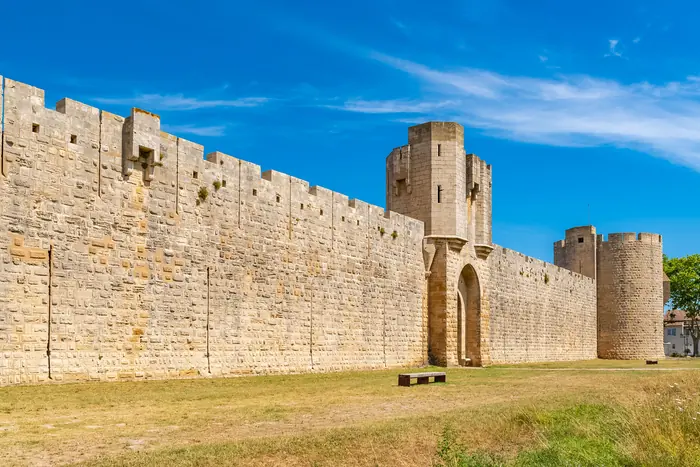
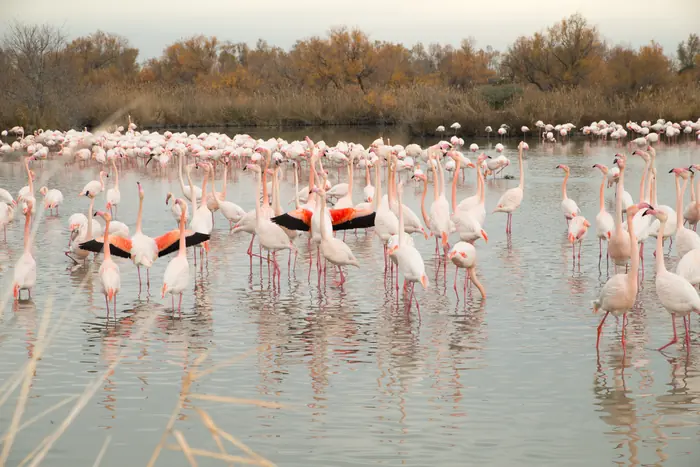
Aigues-Mortes is a 13th-century walled town you can circle along the top of its ramparts, surrounded by pink-tinged salt pans. From there you enter the Camargue, the great Rhône delta: rice fields, white horses, black bulls and flocks of flamingos. The roads are flat and quiet, ideal for an unhurried drive, and the Pont de Gau bird park is a good stop for seeing birds up close.
Day 6 · Saintes-Maries-de-la-Mer and the Digue à la Mer
Spend the day in Saintes-Maries-de-la-Mer, with its fortified church and wide-open beaches. In the afternoon, take the bikes along a stretch of the Digue à la Mer, a sea wall closed to cars that separates the sea from the lagoons and is one of the best places to see flamingos and other birds. It is a good moment to pick up some Camargue fleur de sel or local rice. Spend the night at a campsite or authorised area: signs banning overnight stays elsewhere are common on the Camargue coast.
Day 7 · Salses fortress and back towards Roussillon
The journey home begins: it is about 4 h 30 from the Camargue to the Vallès via the A9 and AP-7, so cover most of it today without rushing. Right by the motorway, just before Perpignan, the late 15th-century Salses fortress is a good place to stretch your legs. Spend the night in Roussillon or the Alt Empordà and empty the grey water and toilet cassette at a campsite or service area. On the morning of day 8 only the last stretch on the AP-7 remains to the return, between 9:00 and 12:00; remember that gas bottles go back full or the gas used is charged.
Where to sleep
The south of France has a great many municipal motorhome areas, as well as campsites of every kind. Areas usually offer water and waste services, though conditions vary widely between towns. In July and August the coast fills up: book a campsite or arrive early at the areas. Park4Night or Campercontact are very useful for up-to-date options.
In France, many parking rules are set by each town. Respect signs banning motorhomes or overnight stays, especially on the coast and in the Camargue, and keep the awning and chairs packed away outside campsites and authorised areas.
Where to sleep with a motorhome in Catalonia
Practical tips
- At French motorway tolls, the V66's height (2.74 m) and weight (3,500 kg) usually put it in class 2.
- Some French cities, such as Montpellier, have low-emission zones (ZFE) that require a Crit'Air sticker. This route avoids them, but check if you change your plans.
- Spanish gas bottles usually cannot be exchanged in France. We hand them over full: keep an eye on consumption and, for longer trips, ask us before you leave.
- The tramontane wind blows hard in Roussillon: never leave the awning out unattended.
- In the Camargue in summer, pack mosquito repellent and close the fly screens at dusk.
- Rent for seven days or more from Segimon Rental and mileage is unlimited, ideal if you want to add Provence or Montpellier.
Frequently asked questions
How many days do you need for the south of France by motorhome?
Seven days, as in this plan (seven nights, returning on the morning of day 8), cover the Roussillon coast, Carcassonne and the Camargue with unlimited mileage. With fewer, cut back on Sète or the Camargue; in mid season the minimum rental is 4 days, and in July and August it is 7.
Where can you sleep in a motorhome in the south of France?
At the many municipal motorhome areas and at campsites. Always follow local signs, as each town can set its own restrictions.
Can I take the rental motorhome to France?
Usually yes; let us know before pick-up so we can confirm it with the insurer.
Can you drive a motorhome into Carcassonne?
Vehicles are not allowed in the medieval city. There are car parks outside the walls, a few minutes' walk away.