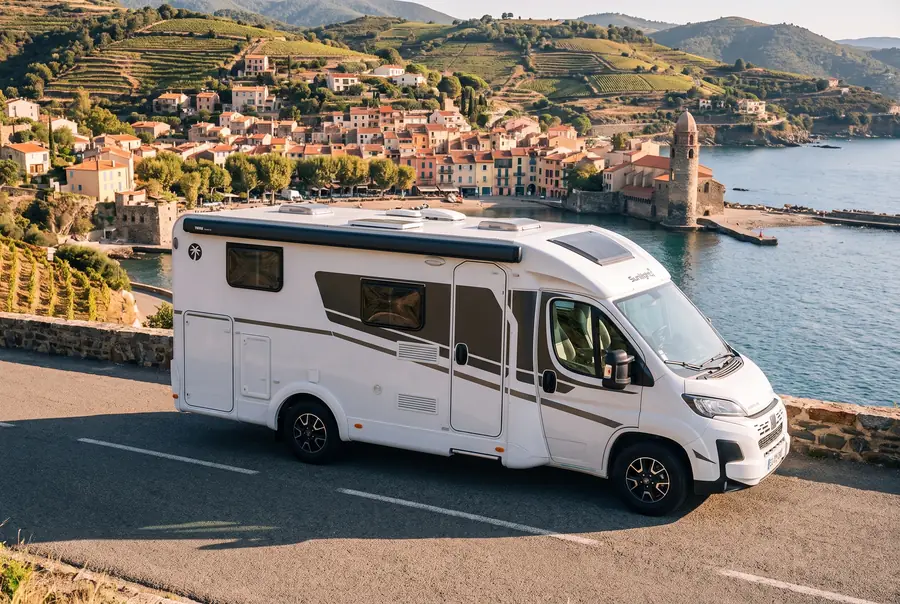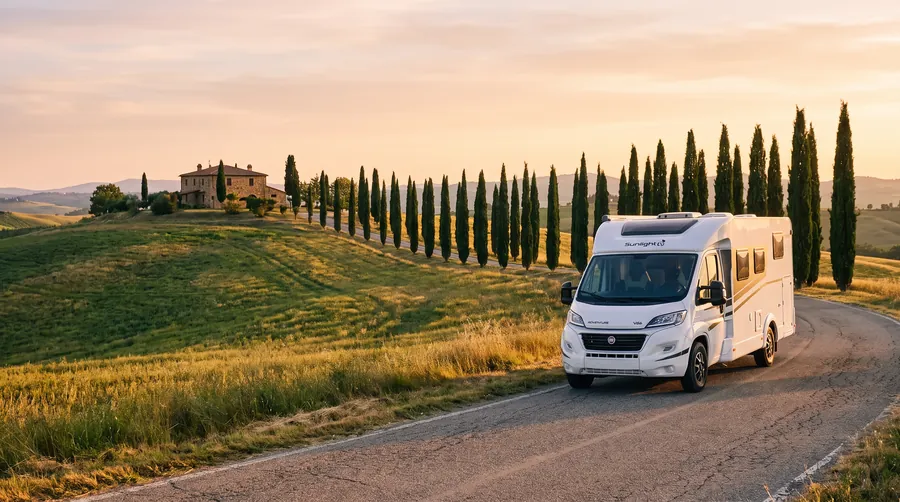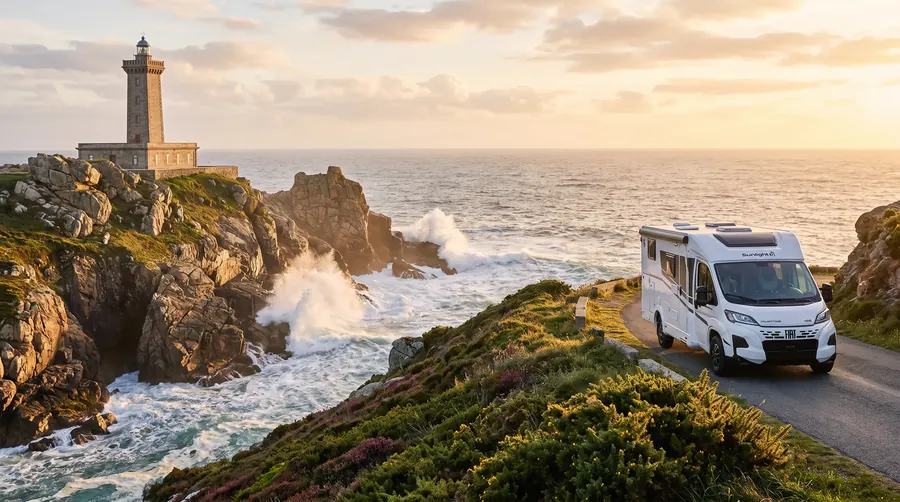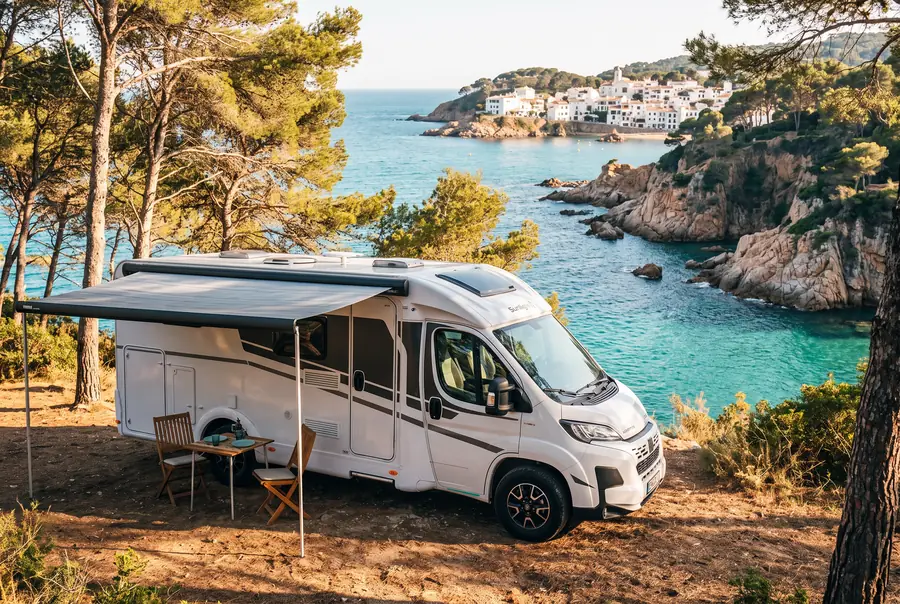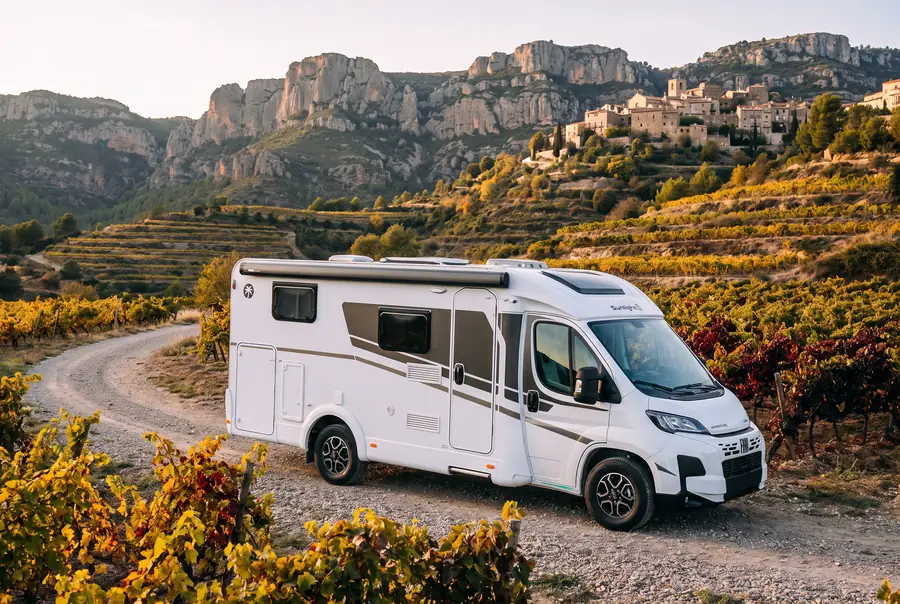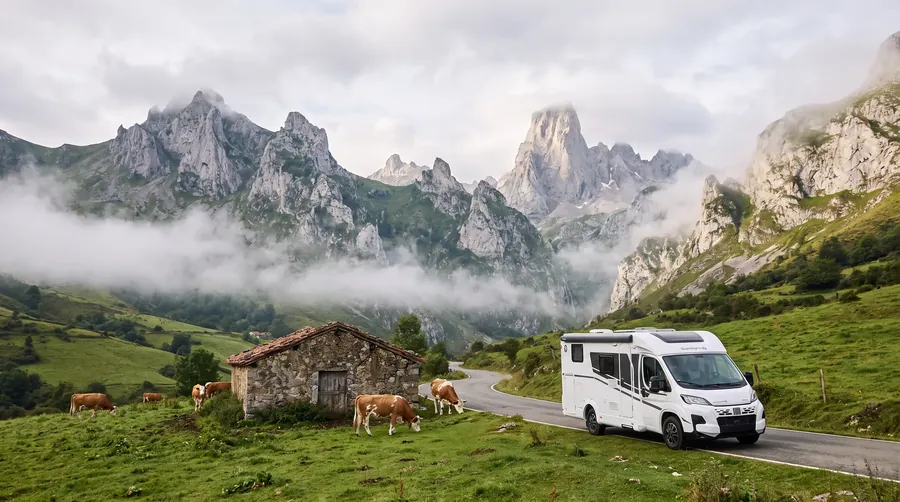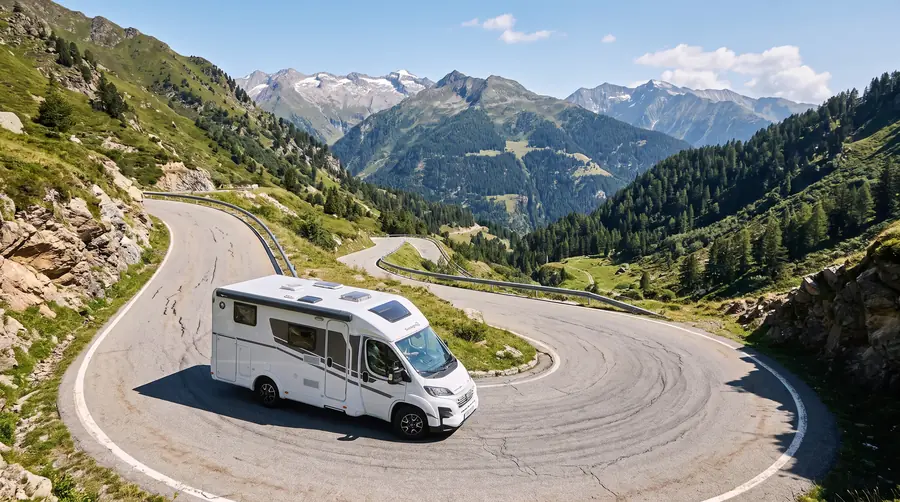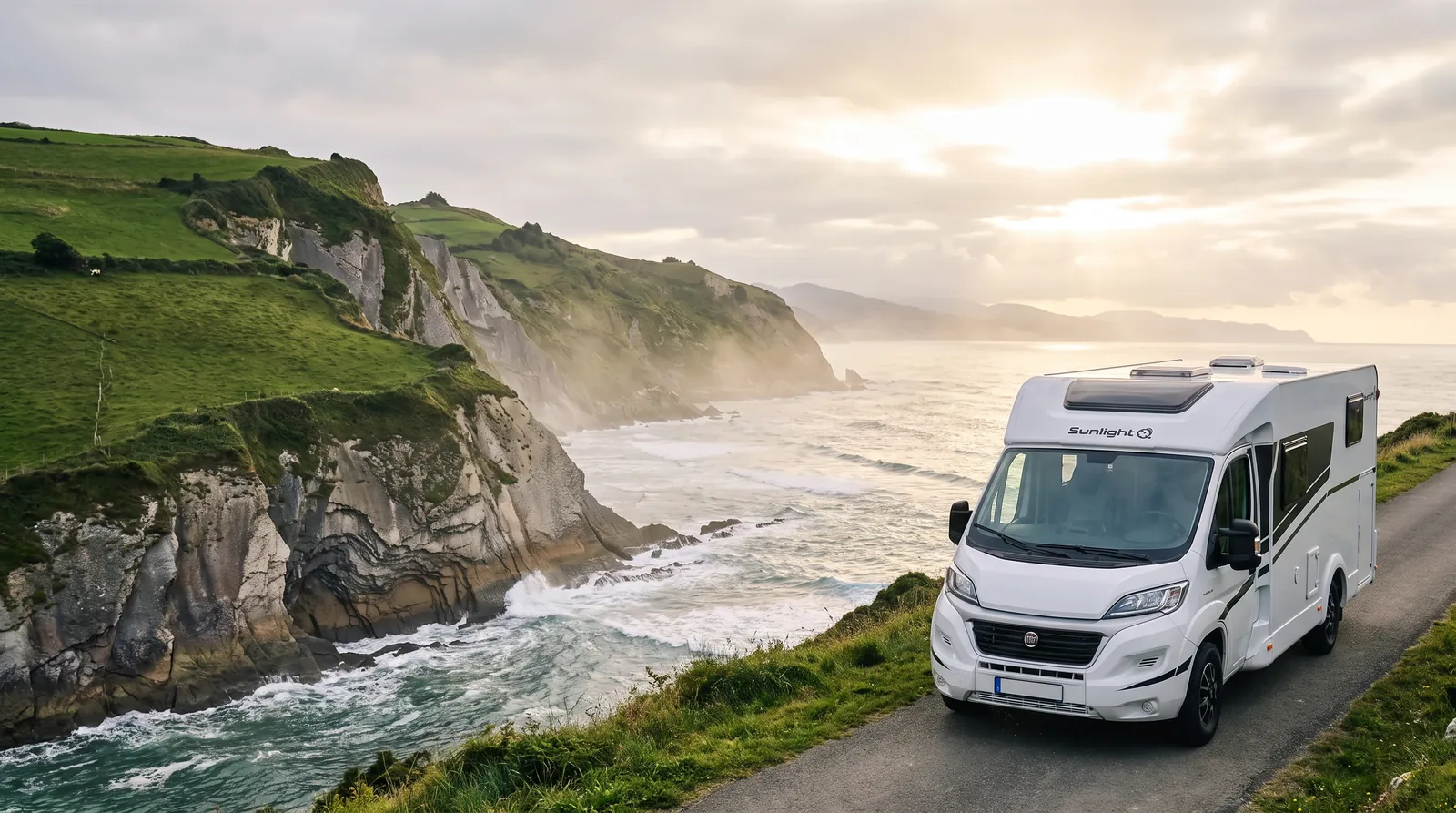
This route links two landscapes that could belong to different countries: the Bardenas Reales desert in southern Navarre and the damp green of the Basque coast. In between come the Royal Palace of Olite, the old town of Pamplona/Iruña, pintxos in Donostia-San Sebastián, the Zumaia flysch, Bilbao's Guggenheim and the Urdaibai Biosphere Reserve, with San Juan de Gaztelugatxe perched above the sea.
It belongs to our Adventure category: a nine-day rental, nine nights, collecting on the afternoon of day 1 and returning on the morning of day 10. It covers about 1,500 km and there is no need to count: with Segimon Rental, rentals of 7 days or more come with unlimited mileage. The best season is May to October; in July and August (high and peak season) the minimum is 7 days, and in May, June, September and October it is 4.
Route plan
Route map
Tap a day or a stop to see it on the map, or press "Follow the route" to travel it stage by stage.
Approximate line between stops, not a navigation itinerary. Check road conditions and restrictions for large vehicles before you set off.
Day-by-day itinerary
Day 1 · Pick-up and a short leg to Lleida
You collect the motorhome between 16:00 and 19:00 in Les Franqueses del Vallès and, after the handover, head west on the AP-7 and AP-2, or via the Eix Transversal and the A-2. In about two hours you reach the Lleida area, with the Seu Vella cathedral above the city. This stage is designed to let you get used to the V66 without rushing and start tomorrow closer to Navarre. Spend the night at a campsite or authorised area.
Day 2 · Tudela and the Bardenas Reales
Via Zaragoza and the AP-68 you reach Tudela in around two and a half hours: stroll the old town and try the vegetables of the Ribera. From Arguedas you enter the Bardenas Reales Natural Park, a Biosphere Reserve. Call at the information centre first and drive only on the tracks authorised for visitors, slowly and in daylight: never off-road. Castildetierra, the clay chimney that symbolises the park, stands beside the access track. Sleep near Arguedas or Tudela.
Day 3 · Olite/Erriberri and Pamplona/Iruña
Head north to Olite/Erriberri, where the Royal Palace of the kings of Navarre, with its towers and battlements, is one of the most striking castle-palaces in Spain. There are wineries to visit nearby. In the afternoon, it is around 45 minutes to Pamplona/Iruña. Leave the motorhome outside the old town, with its narrow streets and restricted access, and walk or take the bus in. If you want more of Navarre, our Ordesa and Irati route climbs into the Navarrese Pyrenees.
Day 4 · Pamplona/Iruña and Donostia-San Sebastián
Spend the morning in the old town: Plaza del Castillo, Calle Estafeta, where the San Fermín bull runs pass, the walls and the Citadel. After lunch, the A-15 crosses green hills to Donostia-San Sebastián in just over an hour. You will notice the change in climate: the Atlantic brings rain and mild temperatures. Settle in at a campsite or authorised area in or near the city and take the bus into the centre.
Day 5 · Donostia: La Concha, Monte Igueldo and pintxos
Walk the bay of La Concha from end to end and ride the century-old funicular up Monte Igueldo: from the top you see the whole bay and Santa Clara island. In the afternoon, visit Chillida's Comb of the Wind at the end of Ondarreta beach, then the Parte Vieja for a pintxo crawl. Fancy surfing? Zurriola beach has a lively scene and surf schools. The motorhome stays put today.
Day 6 · Getaria, the Zumaia flysch and Bilbao
Follow the coast west. Getaria, the fishing town where Juan Sebastián Elcano was born, smells of grills and txakoli, the local white wine. Ten minutes away, Zumaia reveals the flysch: tilted layers of rock holding millions of years of geological history, within the Basque Coast Geopark. See it from Itzurun beach and the San Telmo hermitage, ideally at low tide. In the afternoon, just over an hour to Bilbao.
Day 7 · Bilbao and the Guggenheim
Do not take the motorhome into the centre: sleep at a campsite or authorised area on the outskirts and get around by metro, tram or bus. Frank Gehry's Guggenheim Museum, with Jeff Koons's Puppy at the entrance, deserves the morning; in high season buy tickets in advance. Afterwards, walk along the river, explore the Casco Viejo and its Seven Streets and have pintxos in Plaza Nueva.
Day 8 · Urdaibai, Gaztelugatxe and Vitoria-Gasteiz
Set off early for the Urdaibai Biosphere Reserve: Gernika-Lumo, with its Assembly House and oak tree; Mundaka, at the mouth of the estuary and famous for its wave; and Bermeo. San Juan de Gaztelugatxe, the hermitage on an islet joined to land by a stone stairway, calls for good footwear and a couple of hours. In high season and on some weekends access requires advance booking: check first. The car park is small, so arrive early. In the afternoon, nearly an hour and a half to Vitoria-Gasteiz.
Day 9 · Vitoria-Gasteiz, Laguardia and back to Lleida
Vitoria-Gasteiz, European Green Capital in 2012, has an almond-shaped medieval centre and a green ring of parks. Take an early stroll, then drop down to Rioja Alavesa: Laguardia is a walled village among vineyards, with wine cellars beneath its streets. Then, via Logroño and Zaragoza, almost four hours to the Lleida area. It is the longest stage, about 390 km in all: set off early and skip Laguardia if you prefer. Tomorrow, about two hours to Granollers for the return between 9:00 and 12:00.
Where to sleep
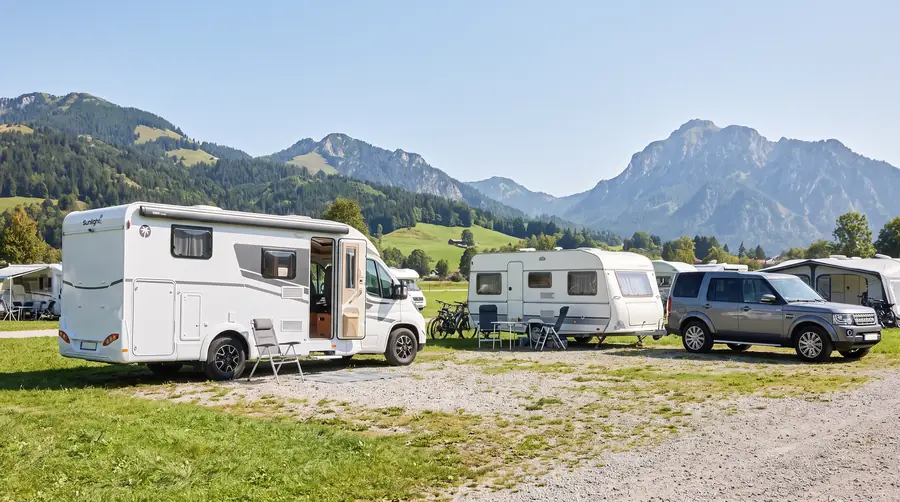
Southern Navarre, Pamplona/Iruña, Donostia-San Sebastián, Bilbao and Vitoria-Gasteiz all have campsites and authorised motorhome areas, several with public transport into the centre. In July and August the coast fills up: book ahead in Donostia and Bilbao. Park4Night or Campercontact help you find areas and services; for a refresher on the rules, see our guide to where to sleep in a motorhome.
You may park wherever any vehicle may park, as long as you are not camping: no awning, chairs or levelling chocks, and no emptying of waste water. There is no overnighting inside the Bardenas Reales: visits are in daylight and within the hours set by the park. Many Basque coastal towns regulate motorhome parking; follow the signs.
Where to sleep with a motorhome in Catalonia
Practical tips
- Bardenas Reales: drive only on authorised tracks, at a moderate speed and without leaving them; a motorhome is not an off-roader. Part of the park is a military firing range and access is closed on exercise days, on top of closures for nesting birds. Check opening hours and official notices before you go and avoid the tracks after heavy rain.
- Low-emission zones: Bilbao, Donostia-San Sebastián, Vitoria-Gasteiz and Pamplona/Iruña have or are introducing LEZs. Check each city's rules for motorhomes and the Spanish DGT environmental label; the easiest option is to leave the vehicle outside and use public transport.
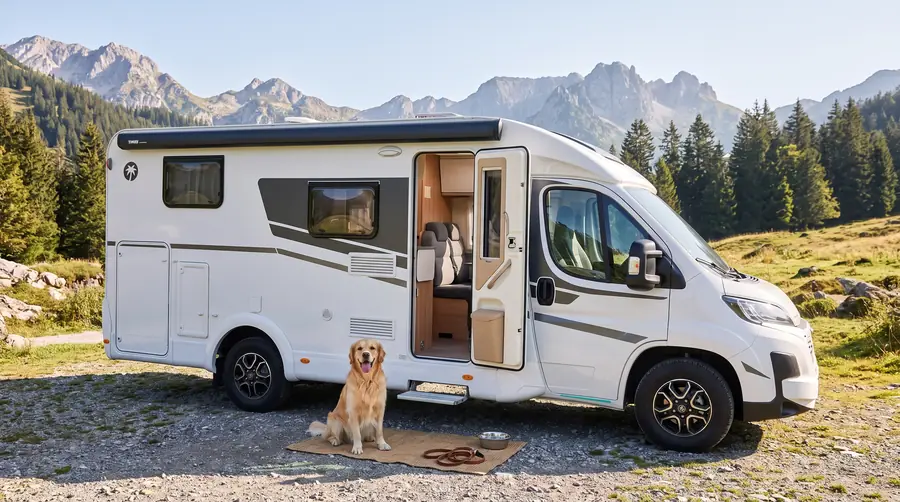
- Height and gradients: at 2.74 m, the V66 will not fit most underground car parks, and old towns and coastal villages have narrow, steep streets. Park at the edge and continue on foot; more tips in our guide to driving a motorhome.
- Atlantic weather: even in summer it can rain for several days running. Pack a waterproof and shoes that grip on wet rock, especially for Gaztelugatxe and the flysch, and check the tide tables.
- Tolls and mileage: some motorway sections on this route, especially in the Basque Country, are tolled, with dual carriageway or main-road alternatives; check when you plan. Mileage, on the other hand, does not count: from 7 rental days it is unlimited.
- Surfing: Zarautz and Zurriola are good beaches for beginners with a school; the Mundaka wave is for experts. For something calmer, you can add a paddle board to your booking.
Frequently asked questions
How many days do you need for the Basque Country and Navarre by motorhome?
Nine nights, as here, let you combine the Bardenas, Pamplona and the coast without rushing, and from 7 days mileage is unlimited. With 4 to 6 days (4 is the mid-season minimum), focus on Donostia, the coast and Bilbao; those rentals include 300 km a day. In July and August the minimum is 7 days.
Can you drive a motorhome into the Bardenas Reales?
Yes, on the tracks authorised for visitors, in daylight and within park hours, never leaving them. Some access routes close on firing-range exercise days and during the nesting season, and you cannot spend the night inside the park. Check the official information before you go.
Do you need to book to visit San Juan de Gaztelugatxe?
In high season and on some weekends and bank holidays, access usually requires advance booking on the official Bizkaia Provincial Council website; outside those dates it is usually free to enter. Dates change, so check before you go.
Where can you park a motorhome in Bilbao and San Sebastián?
The practical option is to sleep at a campsite or authorised area on the outskirts and go in by metro or bus. The centres have low-emission zones, narrow streets and underground car parks with height limits too low for a motorhome.