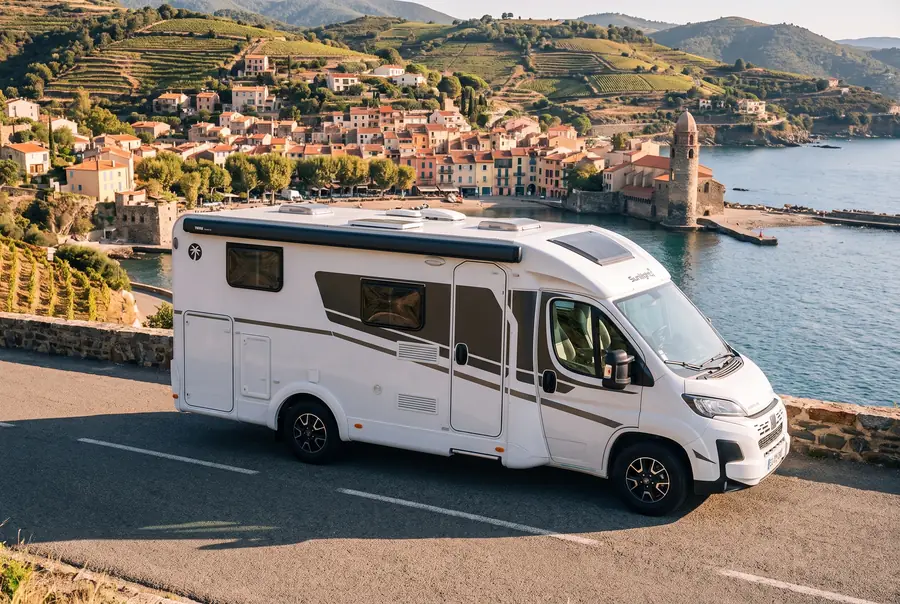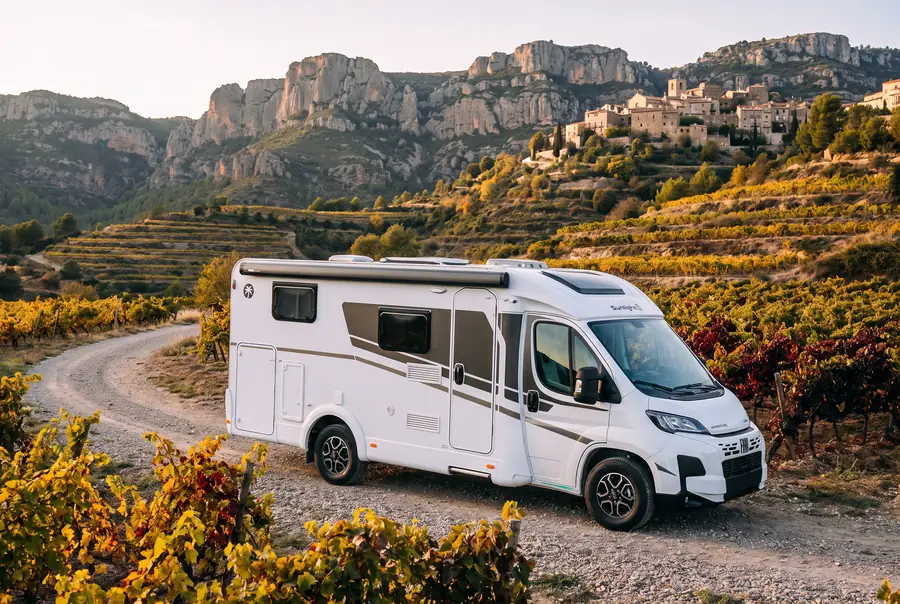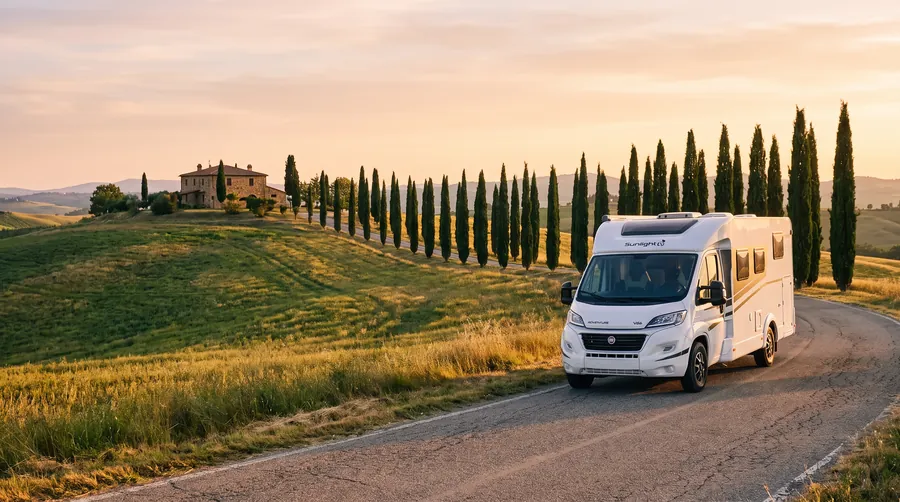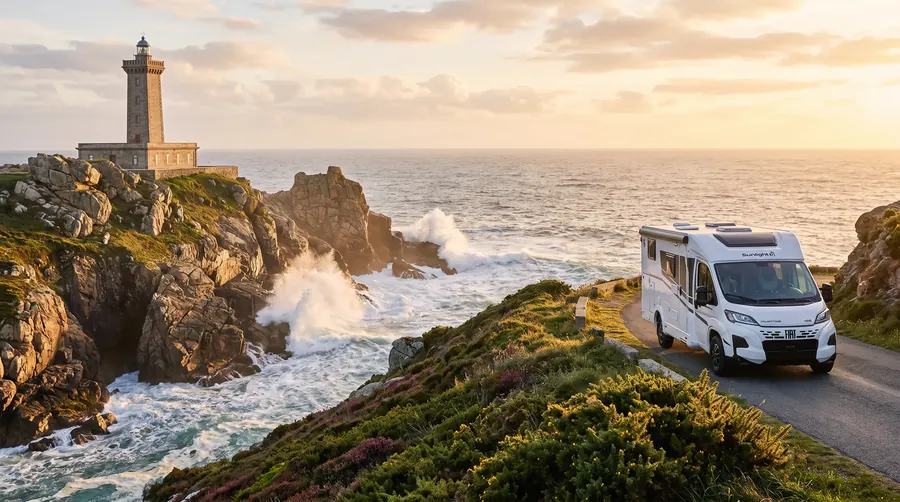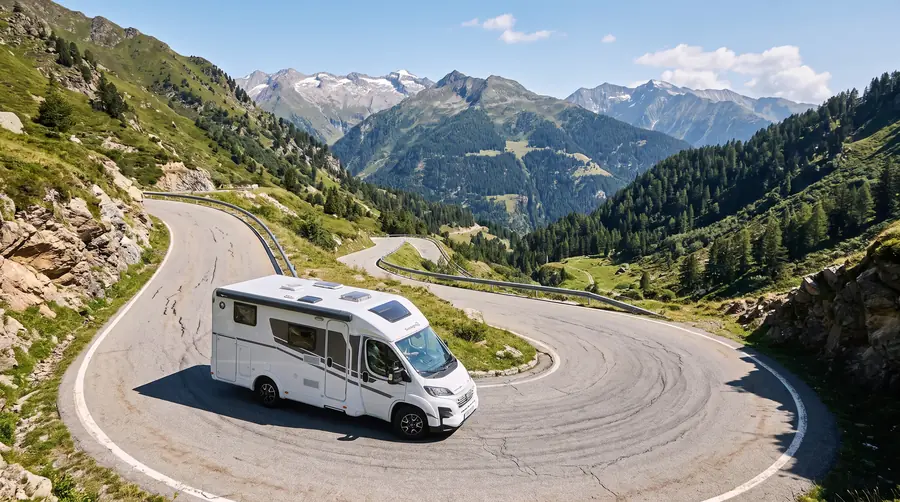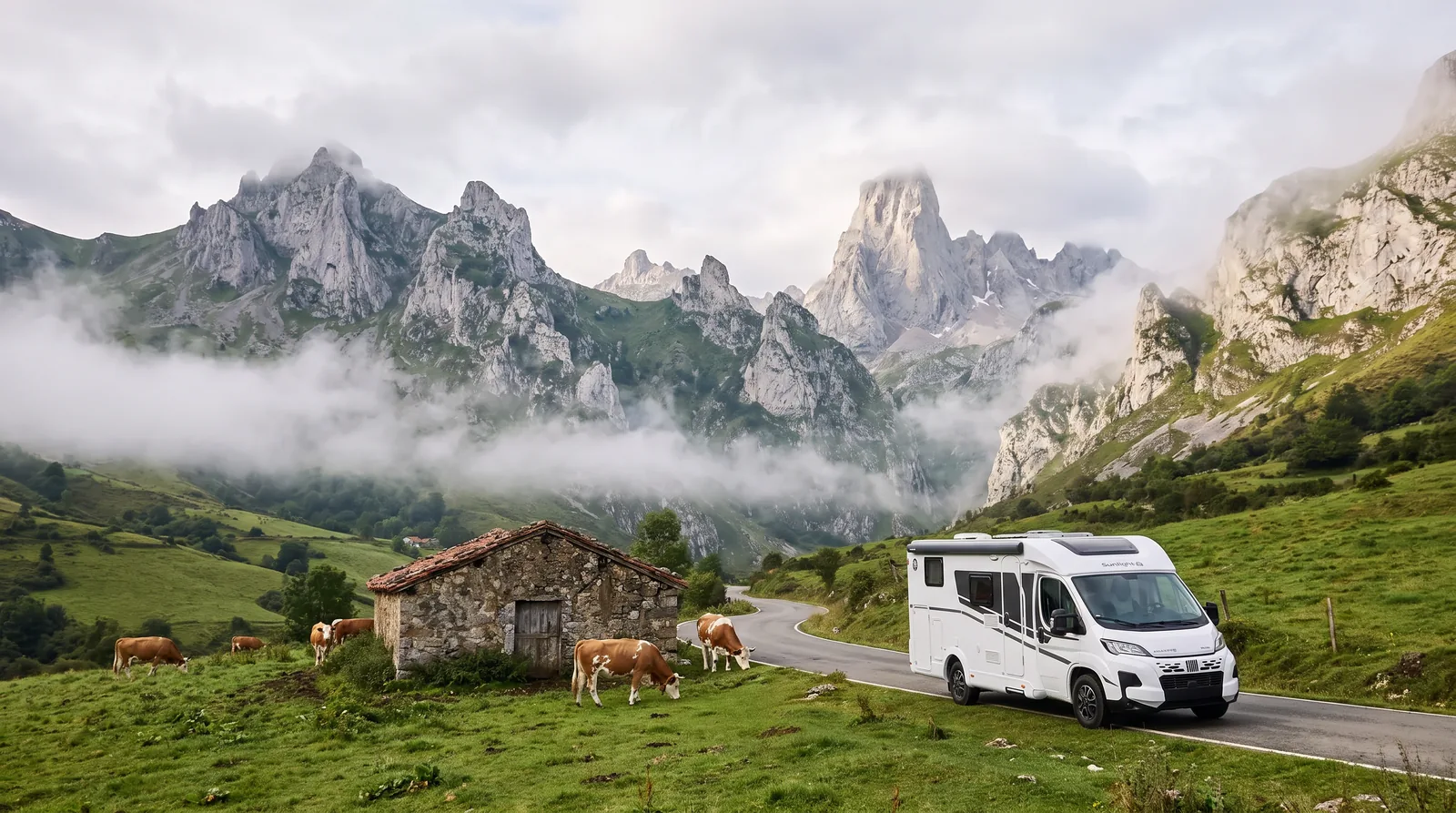
This route takes the motorhome to Spain's green north. First the Cantabrian coast: Santillana del Mar, Gaudí's Capricho in Comillas and San Vicente de la Barquera. Then eastern Asturias, with Llanes, the inland beach of Gulpiyuri and Ribadesella, and finally the heart of the Picos de Europa: Covadonga and its lakes, the Cares gorge walk, the La Hermida gorge, Potes and the Fuente Dé cable car. Along the way, cider poured from on high and Cabrales blue cheese.
It belongs to our Adventure category: a ten-day rental, ten nights, collecting on the afternoon of day 1 and returning on the morning of day 11. It covers about 2,000 km and there is no need to count them: with Segimon Rental, rentals of 7 days or more come with unlimited mileage. To be clear, getting there and back takes three days of driving, and day 10 is a long one. The best season is May to October; ten days meets the minimum in any season, including July and August (7 days).
Route plan
Route map
Tap a day or a stop to see it on the map, or press "Follow the route" to travel it stage by stage.
Approximate line between stops, not a navigation itinerary. Check road conditions and restrictions for large vehicles before you set off.
Day-by-day itinerary
Day 1 · Pick-up and a short leg to Lleida
You collect the motorhome between 16:00 and 19:00 in Les Franqueses del Vallès and, after the handover, head west on the Eix Transversal and the A-2, or the AP-7 and AP-2. In about two hours (170 km) you reach the Lleida area. This stage lets you get used to the V66 without rushing and makes tomorrow shorter. Spend the night at a campsite or authorised area.
Day 2 · Zaragoza and Logroño
About 320 km and just over three hours on the A-2 and AP-68. Stretch your legs in Zaragoza: park outside the centre and walk to the Basilica del Pilar and the Puente de Piedra. In the afternoon you reach Logroño. Leave the motorhome at a campsite or authorised area and walk into Calle Laurel and Calle San Juan, where every bar has its own pincho and the wine is Rioja.
Day 3 · From La Rioja to Santillana del Mar
The AP-68 (toll) climbs towards Bilbao, which you skirt on the A-8 into Cantabria; to see the city properly, our Basque Country and Navarre route gives it a full day. It is about 270 km, around three hours. Santillana del Mar is a medieval village of stone and coats of arms, with the Romanesque collegiate church of Santa Juliana. Park at the entrance, as the centre is cobbled and pedestrian. It looks its best at dusk, once the coach groups leave.
Day 4 · Altamira, Comillas and San Vicente de la Barquera
Two kilometres away, the Altamira Museum recreates the cave and its bison paintings in the Neocave. Then Comillas: El Capricho, one of Gaudí's few works outside Catalonia, its tower clad in sunflower tiles, next to Sobrellano Palace. In the afternoon, San Vicente de la Barquera, with the Maza bridge over the estuary and, on a clear day, the Picos de Europa behind. Try sorropotún, a fishermen's tuna stew. Only about 35 km today.
Day 5 · Llanes, Gulpiyuri and Ribadesella
You enter Asturias. Llanes combines a medieval centre, a harbour and Agustín Ibarrola's painted Cubes of Memory on the breakwater; the clifftop Paseo de San Pedro has the best views. Near Naves, Gulpiyuri is an inland beach: the sea flows in through a cave to form a tiny cove among meadows. Park where allowed and walk; at low tide there is little water. Sleep in Ribadesella and try a sidrería: cider is poured from high above and drunk in short gulps.
Day 6 · Cangas de Onís, Covadonga and the Lakes
Half an hour brings you to Cangas de Onís, with its medieval bridge and the Victory Cross hanging from the arch. Go up to Covadonga, its Holy Cave and basilica. Do not drive the motorhome up to the Lakes of Covadonga, Enol and Ercina: the road is narrow and steep, and at busy times private vehicles are restricted and a shuttle bus runs from Cangas. Check dates and conditions on the National Park website. At the top, short trails among cows and pasture.
Day 7 · The Cares gorge walk
Leave early for Arenas de Cabrales (about 30 km). The car park at Poncebos is small and fills early: if it is full, leave the motorhome in Arenas and take a taxi. The Ruta del Cares follows the gorge for about 12 km to Caín, the path cut into the rock beside a water channel. There and back takes six to seven hours; if that is too much, walk as far as you like and turn round. Hiking boots, water and a head for heights. Sleep in Arenas de Cabrales.
Day 8 · Cabrales, La Hermida and Potes
In Arenas, the Cabrales cheese cave exhibition explains how this blue cheese ripens in mountain caves. Via Panes you enter Cantabria and the La Hermida gorge, about 20 km on the N-621: narrow, winding and walled with rock, but fine if you take it slowly. You reach Potes, capital of Liébana, with the Infantado tower and stone houses above the river Deva. In the afternoon, the monastery of Santo Toribio de Liébana, a few minutes away, then cocido lebaniego, a hearty chickpea stew, for dinner.
Day 9 · Fuente Dé and on to Burgos
Make an early start: Fuente Dé is about 23 km from Potes and its cable car climbs some 750 m in a few minutes to the El Cable viewpoint, over 1,800 m up. Summer brings queues, so go first thing. At midday, back through La Hermida to the A-8 and A-67 towards Burgos: about 270 km and just over three hours, some 320 km for the day. You arrive in time for an evening stroll by the cathedral, a World Heritage Site.
Day 10 · Burgos, Zaragoza and back to Lleida
This is the longest stage of the trip: about 450 km and four and a half to five hours at the wheel, via Logroño and Zaragoza. If you want to go inside Burgos cathedral, do it first thing and leave afterwards; otherwise, set off early and have lunch in Zaragoza. Stop every two hours. You sleep near Lleida and tomorrow it is about two hours to Granollers to return the motorhome between 9:00 and 12:00.
Where to sleep
The Cantabrian coast, Llanes, Ribadesella, Cangas de Onís, Arenas de Cabrales and Potes all have campsites and authorised motorhome areas. In July and August they fill up, especially on the coast and in Cangas: book ahead. Park4Night or Campercontact help you find areas and services; for a refresher on the rules, see our guide to where to sleep in a motorhome.
Camping is not allowed inside the Picos de Europa National Park: sleep at campsites or authorised areas in the surrounding villages. Outside the park you may park wherever any vehicle may park, as long as you are not camping: no awning, chairs or levelling chocks, and no emptying of waste water. Many coastal towns regulate motorhome parking; follow the signs.
Where to sleep with a motorhome in Catalonia
Practical tips
- Mountain roads: the La Hermida gorge, the climb from Cangas to Covadonga, Arenas–Poncebos and Potes–Fuente Dé are narrow and winding, with cyclists and coaches. At 6.66 m long and 2.14 m wide the V66 copes well if you drive slowly and use the passing places; more tips in our guide to driving a motorhome.
- Lakes of Covadonga: do not drive up in the motorhome. At busy times (usually Easter, much of the summer and some autumn weekends and bank holidays) private vehicles are restricted, motorhomes cannot go up and a shuttle bus runs from Cangas de Onís; the dates change every year, so check the National Park website.
- Rain and fog: the climate is Atlantic and it can rain for days, even in summer. Pack a waterproof and shoes with grip. If the morning is overcast, swap the order and save Fuente Dé and the Lakes for the clearest day.
- Parking on slopes: many villages have steep, narrow streets, and at 2.74 m the V66 will not fit underground car parks. Park at the edge of town in gear with the handbrake on, and walk in.
- Cider and cheese: in a sidrería the waiter pours a couple of fingers at a time, to be drunk straight away. Cabrales has protected designation of origin and you can buy it vacuum-packed for the trip; fabada bean stew and cachopo do the rest.
- Mileage and tolls: the AP-68 is tolled, while the A-8 and A-67 are free dual carriageways. Mileage does not count: from 7 rental days it is unlimited. With two extra days, carry on west to Gijón and Cudillero.
Frequently asked questions
How many days do you need for Asturias and the Picos de Europa by motorhome?
Ten nights, as here, is sensible from Barcelona, because getting there and back takes three days. Rentals under 7 days include 300 km a day and the journey alone is around 1,500 km, so it does not pay off. From 7 days mileage is unlimited.
Can you drive a motorhome up to the Lakes of Covadonga?
It is not advisable: the road is narrow and steep, and at busy times private vehicles are restricted and visitors go up by shuttle bus from Cangas de Onís. Check the dates on the National Park website.
Where can you sleep in a motorhome in the Picos de Europa?
At campsites and authorised areas in Cangas de Onís, Arenas de Cabrales, Potes and other nearby villages. Camping is not allowed inside the National Park. In summer, book ahead.
When is the best time for this route?
May to October. July and August are the busiest months and the minimum rental is 7 days; June, September and early October are usually quieter. In winter the passes can get snow and the Fuente Dé cable car may close for wind or maintenance.