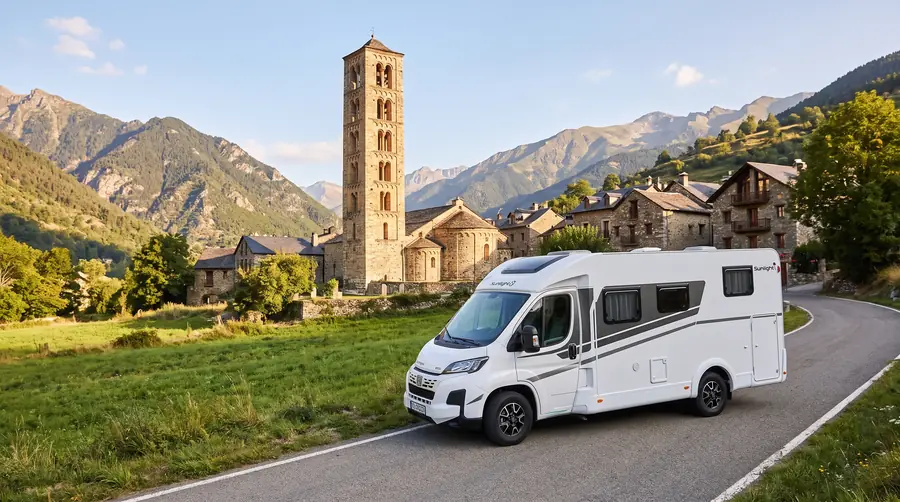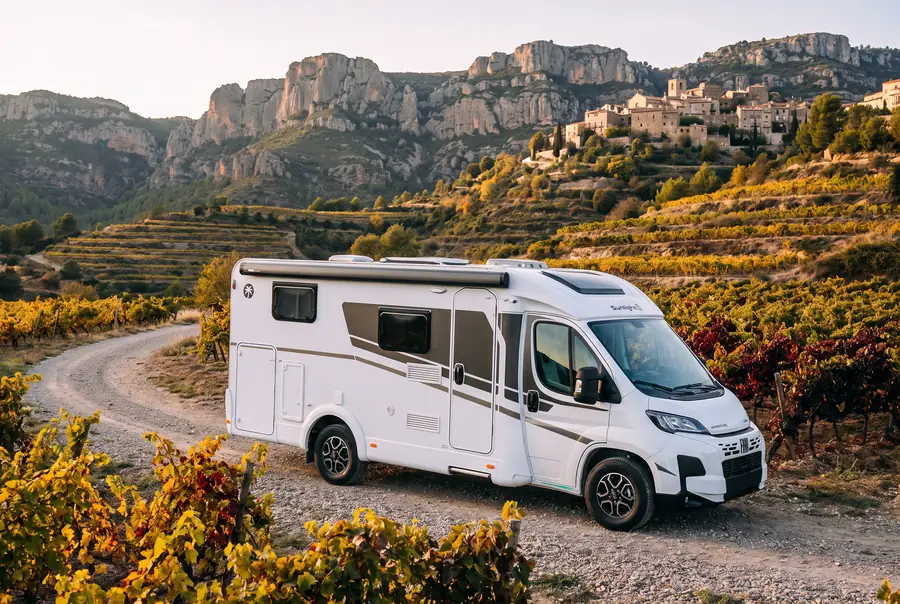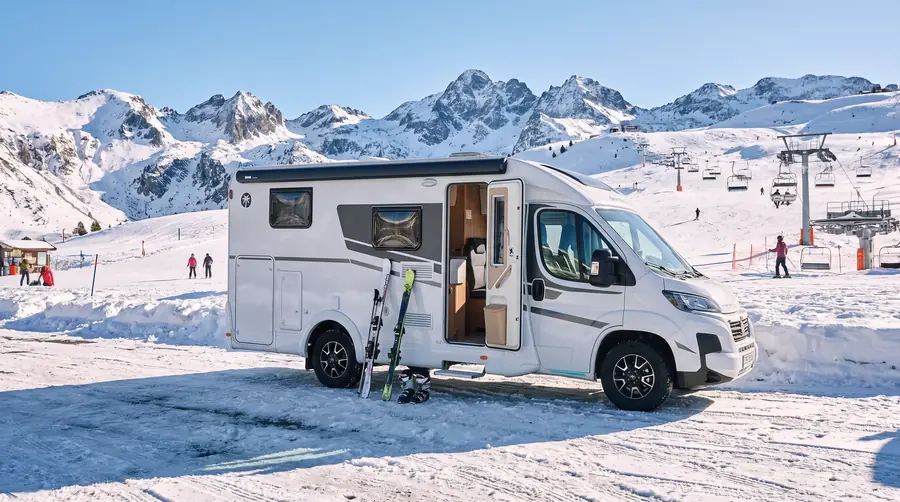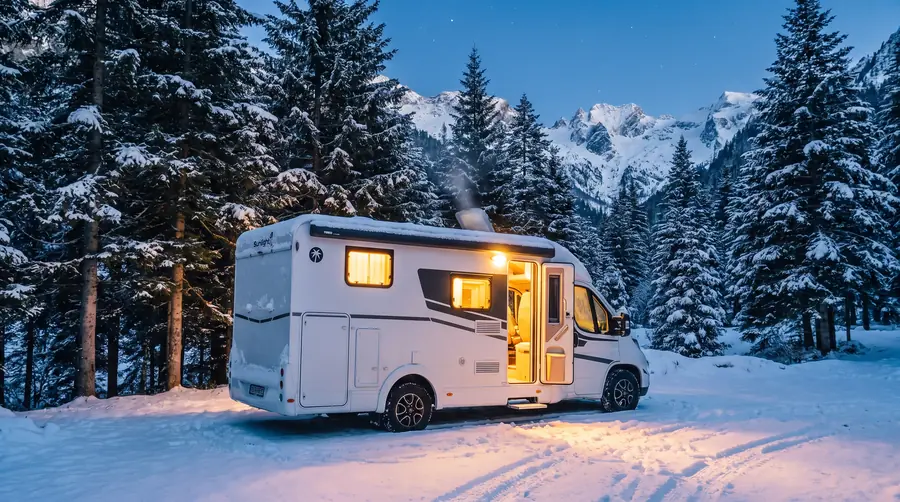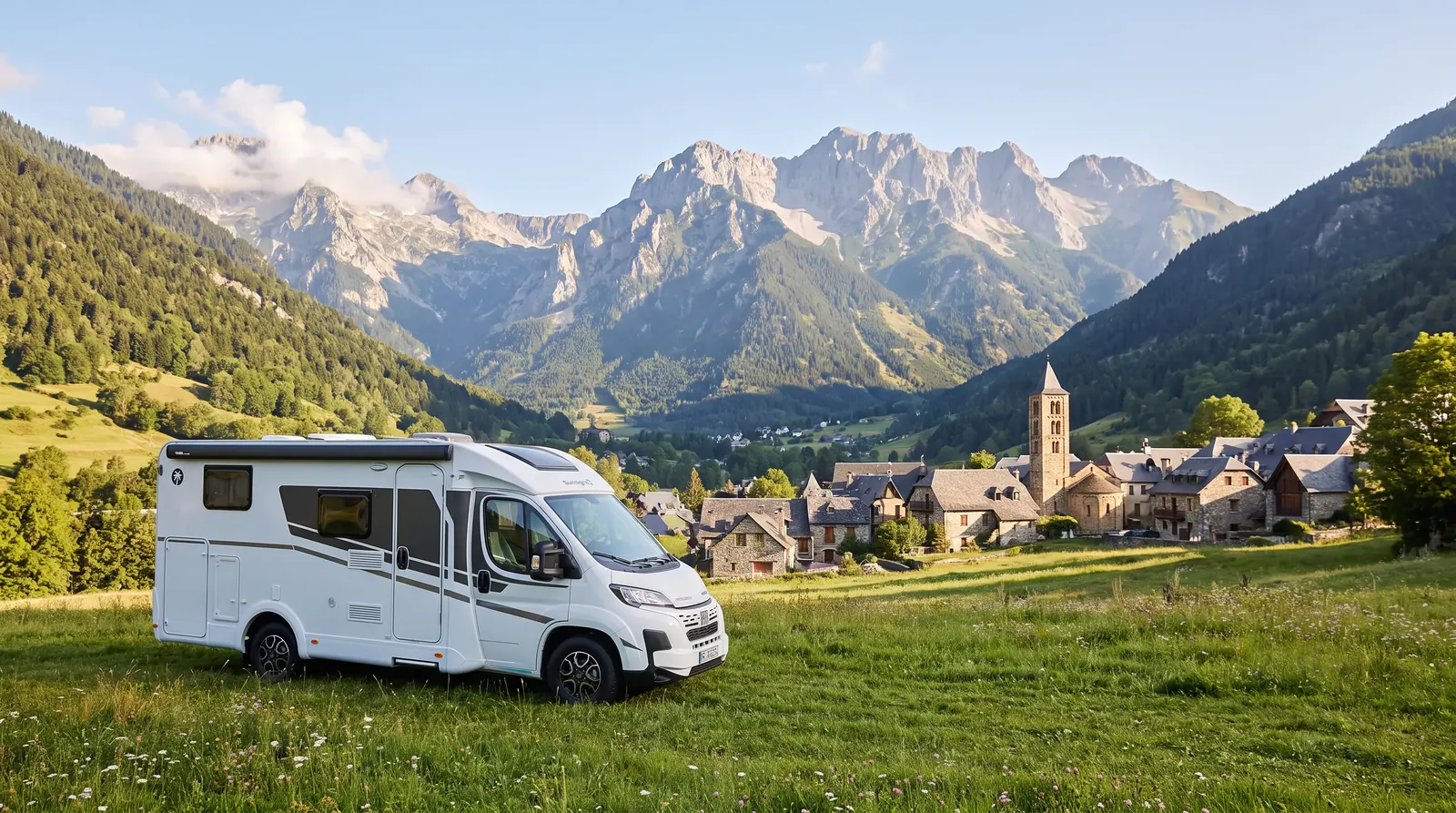
The Val d'Aran is the only part of Catalonia on the Atlantic side of the Pyrenees. Its rivers flow north, the climate is wetter and the fir forests and meadows feel closer to France than to the rest of Catalonia. The local language is Aranese, a variety of Occitan with official status.
This is not a day trip: from our base it is about 330 km and roughly 4 hours via Lleida, El Pont de Suert and the Vielha tunnel. As pick-ups are in the afternoon, we suggest 5 days, five nights: a first night halfway, four days in the valley and the Pallars with the way back over the Bonaigua pass, and the return on the morning of day 6.
Route plan
Route map
Tap a day or a stop to see it on the map, or press "Follow the route" to travel it stage by stage.
Approximate line between stops, not a navigation itinerary. Check road conditions and restrictions for large vehicles before you set off.
What you will see
Day-by-day itinerary
Day 1 · Pick-up and a first night near Lleida
You collect the motorhome in the afternoon, between 16:00 and 19:00. Vielha is about 4 hours away, so do not try to get there today: take the motorway towards Lleida, a little under two hours, and spend the night at a campsite or authorised area nearby. In summer, with long evenings and an early pick-up, you can carry on along the N-230 towards El Pont de Suert to shorten tomorrow's drive.
Day 2 · Up the N-230 to Vielha and Arties
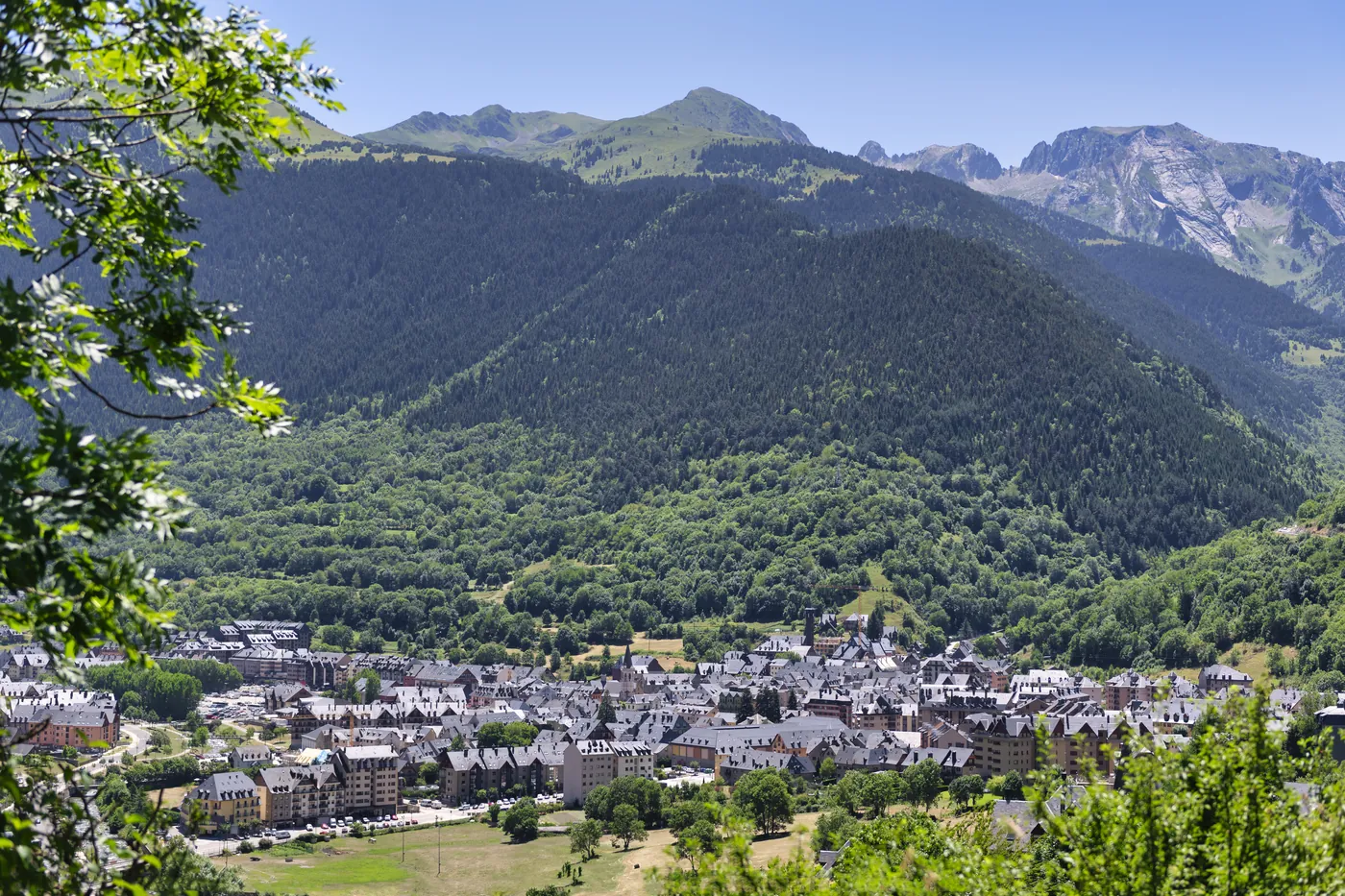
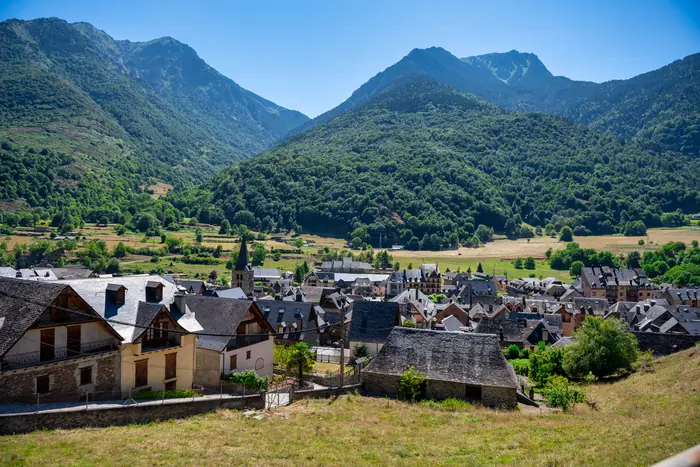
The N-230, an ordinary single-carriageway road, climbs the Ribagorça via El Pont de Suert to the Vielha tunnel, just over 5 km long, which brings you straight into the valley: a little over two hours from Lleida. Vielha is the capital and has every service you need to stock up; the church of Sant Miquèu holds the Christ of Mijaran, a Romanesque carving that is a symbol of Aran. In the afternoon, drive up to Arties, with stone houses, slate roofs and a Romanesque church. It is a good place to try olla aranesa.
Day 3 · Artiga de Lin and Bossòst
Head down the valley to Es Bòrdes and turn off for the Artiga de Lin, an enclosed valley of meadows and forest beneath the Maladeta massif. The final stretch is narrow: drive with great care and check at the tourist office whether access is restricted in high season. A short walk leads to the Uelhs deth Joèu, where meltwater from the Aneto resurfaces after kilometres underground. In the afternoon, visit Bossòst, close to the French border, with one of the valley's finest Romanesque churches.
Day 4 · Salardú, Bagergue and Pla de Beret
Today is for the Naut Aran, the upper valley. Salardú keeps the church of Sant Andrèu, with murals inside and mountain views outside. Then climb to Bagergue, one of the highest villages in the valley, on a narrow road best taken slowly. In winter, Baqueira-Beret is the leading ski resort in the Catalan Pyrenees; in summer, the Pla de Beret is a broad meadow where both the Garonne and the Noguera Pallaresa rise, perfect for easy, level walks.
Day 5 · Bonaigua pass and down through the Pallars
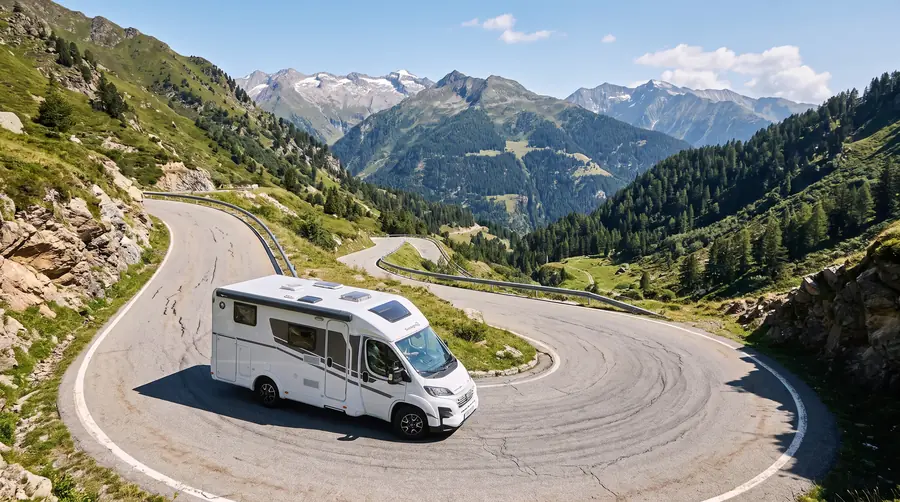
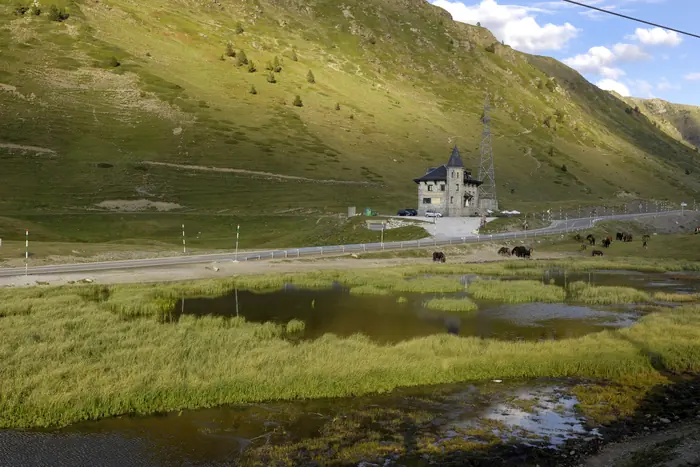
Cross the Port de la Bonaigua at over 2,000 metres and descend through the Pallars Sobirà to Esterri d'Àneu and Sort, following the Noguera Pallaresa. It is a mountain pass road with many bends and big views. In winter it may close for snow or require chains: if it is closed, return via the Vielha tunnel. Spend the night south of Sort, towards the Conca de Tremp. On the morning of day 6 you have about 3 hours to the return, between 9:00 and 12:00: ordinary roads to Balaguer and Lleida, then motorway to the Vallès, so set off early. Our Pallars and Montsec route has ideas for this area.
Where to sleep
The Val d'Aran has several campsites, mostly between Vielha and the Naut Aran, plus a few motorhome areas. They fill up in July, August, Easter and the ski season, so book ahead. Apps such as Park4Night or Campercontact help you compare options and read recent reviews, including for the outward and return nights near Lleida and in the Pallars.
Wild camping is generally not permitted in Catalonia. You may park overnight wherever any vehicle may park, as long as you are not camping: no awning, chairs or levelling ramps, and no emptying of waste water (Spanish DGT instruction 08/V-74). Local by-laws vary, so follow the signs, especially around the ski resorts.
Where to sleep with a motorhome in Catalonia
Practical tips
- Mileage: the full route is about 750 km. A 5-day rental with Segimon Rental includes 1,500 km (300 km per day), so you have plenty of margin. If you go over the included mileage, each extra kilometre costs €0.40. On rentals of 7 days or more, mileage is unlimited.
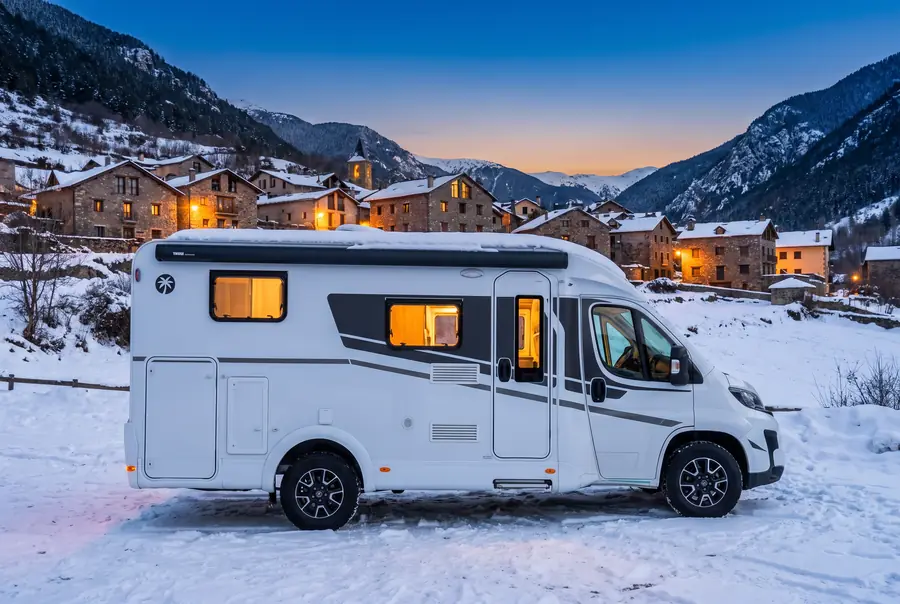
- Winter: the V66 has Truma Combi 4 heating with EisEx and a heated grey-water tank, ready for nights in the snow. Snow chains are an optional extra: ask for them when booking if you travel in snow season.
- Passes and tunnel: the Vielha tunnel gives access to the valley all year, while the Bonaigua pass can close for snow. Check road conditions with the Servei Català de Trànsit before you leave.
- Water: use campsites to refill the 116 L tank and empty grey water. Never discharge into rivers or roadside ditches.
Frequently asked questions
How many days do I need for the Val d'Aran by motorhome?
Five, as in this plan, returning on the morning of day 6; fewer is not worth it, as the pick-up afternoon and the return morning are mostly driving. With 6 or 7 you can add the Colomèrs cirque or a hop into France (let us know before pick-up), and with 7 mileage is unlimited. In July, August, Christmas and Easter the minimum rental is 7 days.
Can I visit the Val d'Aran by motorhome in winter?
Yes, with care. The V66 has Truma heating and frost protection; take snow chains (optional extra) and always check the forecast and road conditions. If you are heading to Baqueira, see our guide to skiing by motorhome.
Where can I sleep with a motorhome in the Val d'Aran?
At campsites and authorised areas, booking early in high season. Wild camping is generally not permitted.