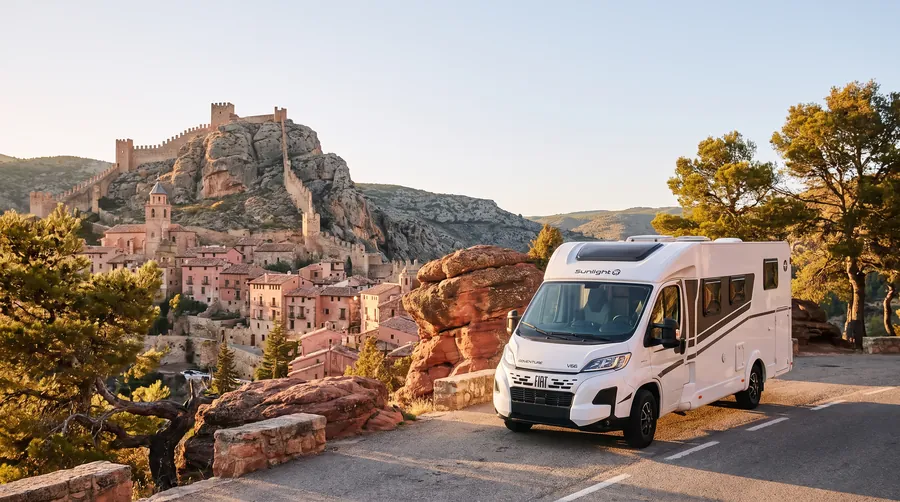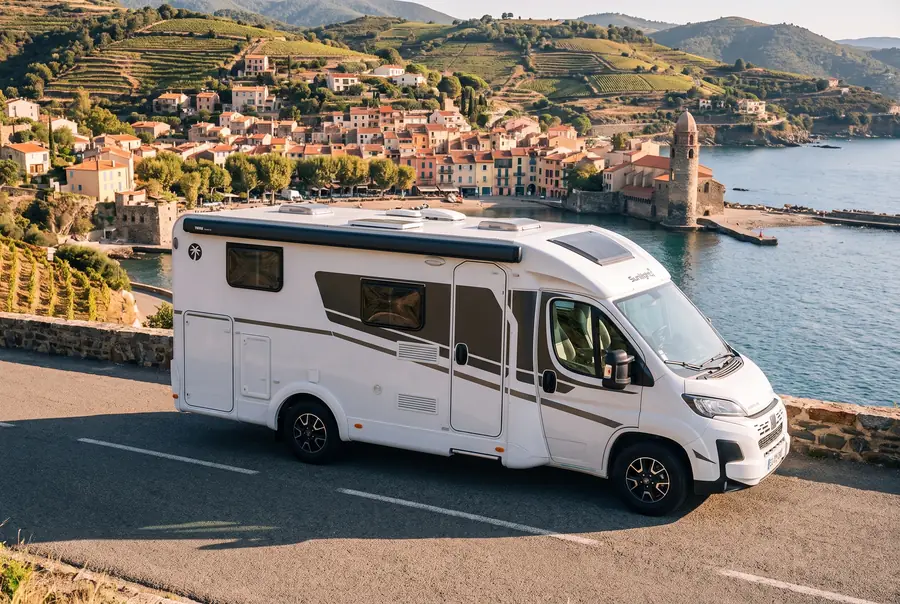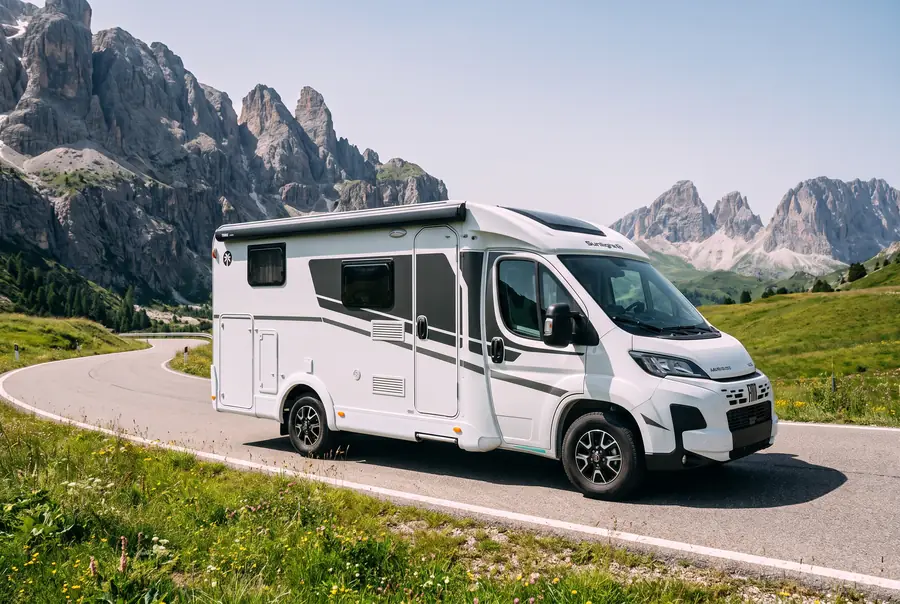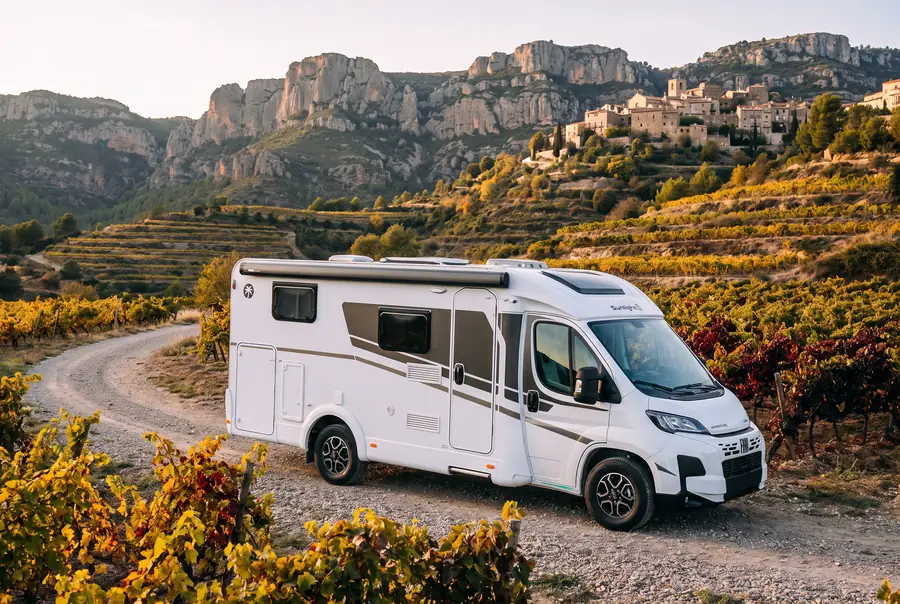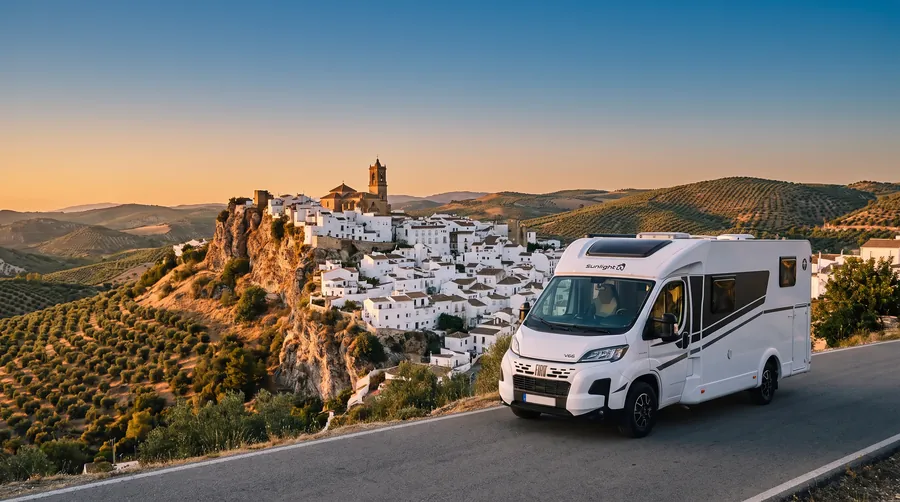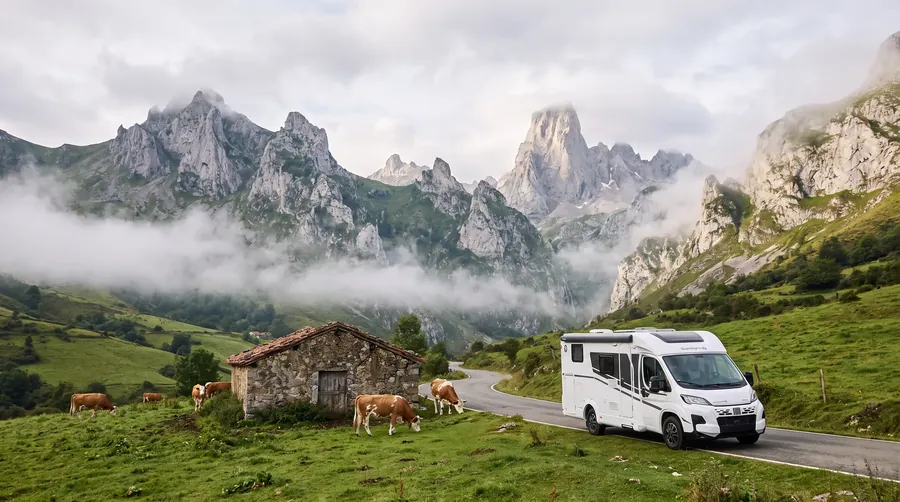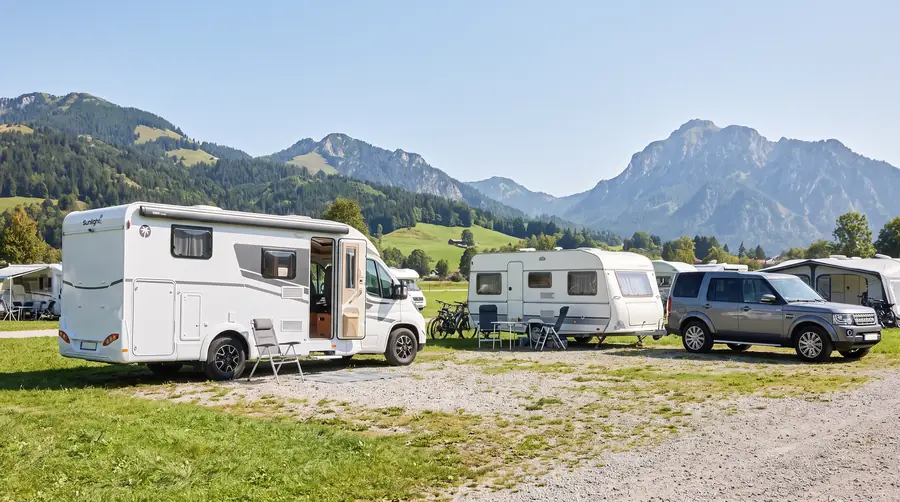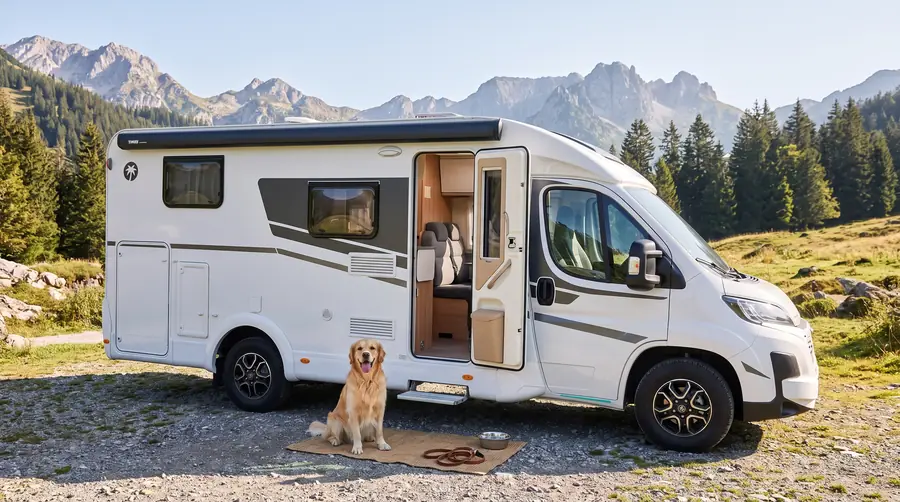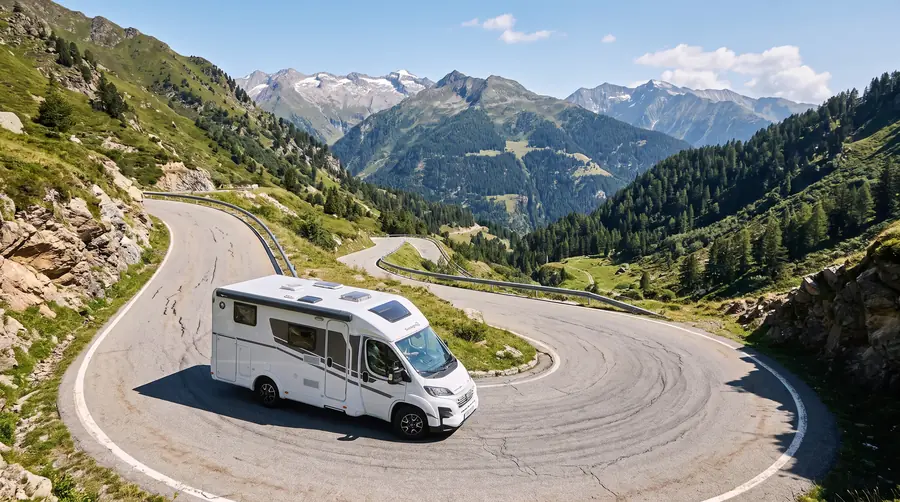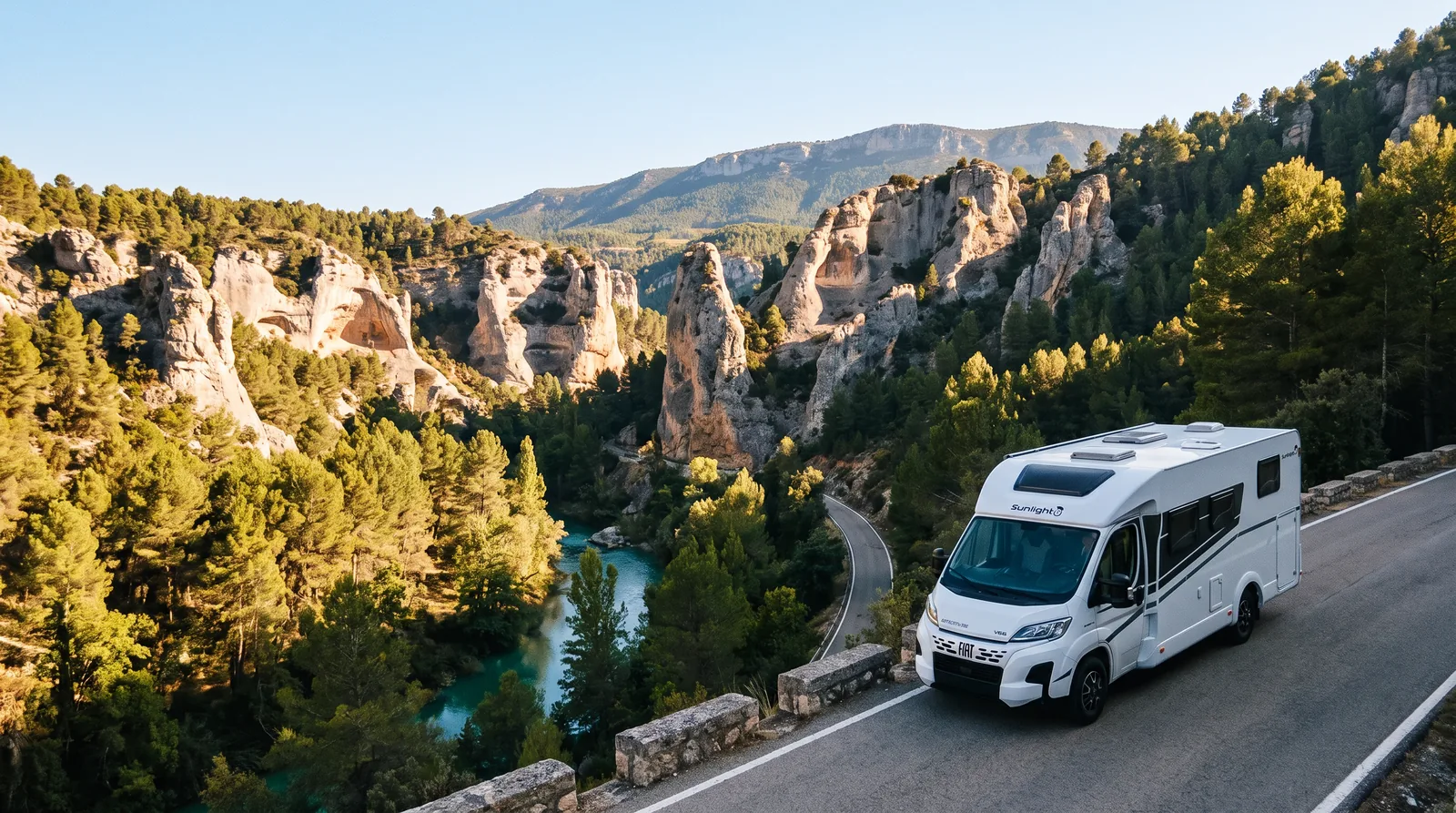
This is one of our Adventure routes: a long trip that needs time and open road, from our base near Granollers to Cuenca, the Serranía de Cuenca and the Alto Tajo Natural Park, returning via Molina de Aragón, Sigüenza and Aragon. It runs to eight days and eight nights: you collect the motorhome on the afternoon of day 1 and bring it back on the morning of day 9.
From 7 rental days, Segimon Rental includes unlimited mileage, so the roughly 1,500 km of this loop add nothing to the bill. The best seasons are spring, when the waterfalls are full, and autumn, when the gorges turn ochre. At 8 days it also meets the minimum rental of every season, including July, August, Christmas and Easter (7 days).
Route plan
Route map
Tap a day or a stop to see it on the map, or press "Follow the route" to travel it stage by stage.
Approximate line between stops, not a navigation itinerary. Check road conditions and restrictions for large vehicles before you set off.
Day-by-day itinerary
Day 1 · Pick-up and a short drive to Tortosa
Collect the motorhome between 16:00 and 19:00 and, after the handover, head south on the AP-7. In just over two hours you reach Tortosa, on the banks of the Ebro. It is an easy first leg to get used to the V66, leaving tomorrow's long transfer for a fresh start. Have a relaxed dinner and spend the night at a campsite or authorised motorhome area nearby.
Day 2 · The long transfer to Cuenca
Today is the long one: around 390 km and about four and a half hours of driving. Follow the AP-7 to Valencia, take the A-3 towards Madrid as far as Motilla del Palancar, then the N-320 to Cuenca. Stop every two hours and refuel on the motorway, as filling stations are scarce in the Serranía. You will arrive in time for a first stroll in the lower town and a view of the old town lit up.
Day 3 · Cuenca, the hanging houses and the Huécar gorge
Leave the motorhome in the lower town: the old town has steep, narrow streets. Walk up to the cathedral and the Plaza Mayor, cross the San Pablo bridge over the Huécar and look straight at the hanging houses, home to the Museum of Spanish Abstract Art. In the afternoon, walk along the Huécar or Júcar gorges that wrap around this UNESCO World Heritage old town.
Day 4 · Ventano del Diablo, Ciudad Encantada and Tragacete
Take the CM-2105 towards Villalba de la Sierra. The Ventano del Diablo is a natural window in the rock above the Júcar gorge. Carry on to the Ciudad Encantada, a maze of karst rocks shaped by water and wind; there is an entry fee and the waymarked trail takes a little over an hour. Continue via Uña to Tragacete, deep in the Serranía.
Day 5 · Source of the Cuervo, Beteta and Peralejos
Start early at the Nacimiento del río Cuervo, where a short path leads to waterfalls tumbling over moss and tufa. In spring, with snowmelt, the flow is impressive; by late summer it can drop a lot. Arrive early, as the car parks fill up at busy times. Then follow mountain roads to Beteta and its gorge, and into the Alto Tajo as far as Peralejos de las Truchas.
Day 6 · Alto Tajo, Puente de San Pedro and Molina de Aragón
Today belongs to the river. Pass through Poveda de la Sierra and find the Puente de San Pedro, where the Gallo meets the Tajo between limestone walls and pine forest. Roads in the park are narrow and twisting; at 6.66 m the V66 copes well if you take it slowly and give way on tight sections. In the afternoon, visit Molina de Aragón and its huge castle, with the Torre de Aragón watching over the valley.
Day 7 · Sigüenza
A short drive brings you to Sigüenza, one of the best-preserved medieval towns in inland Spain. Visit the cathedral, home to the tomb of the Doncel, climb Calle Mayor past stone mansions and reach the castle, now a Parador. It is a good day to slow down before heading home: stroll along the Alameda at dusk and sleep nearby.
Day 8 · Monasterio de Piedra and Lleida
Via Medinaceli and the A-2 you reach the Monasterio de Piedra at Nuévalos: waterfalls, caves and trails in a park with paid entry that needs about three hours. For a shorter stop, try Calatayud instead. Then follow the A-2 past Zaragoza to the Lleida area, about 260 km more: in all, close to 370 km and some five hours at the wheel, the trip's other long day, so leave Sigüenza early. Sleeping in Lleida leaves about two hours for the morning of day 9, with time to spare for the 9:00–12:00 return.
Where to sleep
Cuenca, Sigüenza, Molina de Aragón and the Serranía have campsites, and several towns have authorised motorhome areas. In the Alto Tajo the choice is smaller and some campsites only open from spring to autumn: check dates before you go and do not leave the night to chance. Park4Night or Campercontact will help you find areas and water points; there are more ideas in our guide to where to sleep in a motorhome.
You may park wherever any vehicle may park, provided you do not camp: no awning, chairs or levelling chocks, and no emptying of waste water. Inside the Serranía de Cuenca and Alto Tajo natural parks restrictions are tighter, so stay at campsites or authorised areas.
Where to sleep with a motorhome in Catalonia
Practical tips
- Mileage: 3–6 day rentals include 300 km a day; from 7 days mileage is unlimited, which is what makes this route possible without watching the odometer.
- Fuel: fill up in Cuenca or Molina before heading into the Serranía and the Alto Tajo, where filling stations are few and bends are many.
- Signal: in the Alto Tajo gorges and parts of the Serranía mobile coverage disappears. Download offline maps and tell someone your plan for the day.
- Narrow roads: drive slowly, use passing places and keep off forest tracks. No stage of this route requires leaving the tarmac.
- Winter: the Serranía de Cuenca is one of the coldest areas in Spain and snow is possible. The V66 has Truma heating with frost protection, but check DGT road reports and carry chains (an optional €20 extra). More in our winter motorhome guide.
- If you have time for another inland trip, our route through Teruel, Albarracín and the Matarraña pairs well with this one.
Frequently asked questions
How many days do I need for Cuenca and the Alto Tajo by motorhome?
Eight days, as here, let you see Cuenca, the Serranía and the Alto Tajo without rushing. With 7 days you can drop Sigüenza and still keep unlimited mileage, which starts at exactly 7 rental days.
Is it hard to drive a motorhome in the Alto Tajo?
Not if you take your time. The roads are narrow and winding but surfaced. At 6.66 m long and 2.14 m wide, the V66 gets through without trouble; slow down on blind bends and avoid forest tracks.
Where can I park a motorhome in Cuenca?
In the lower town, in car parks that allow vehicles of its size, then walk or take the city bus up to the old town. The historic centre has very narrow, steep streets.
When is the best time to visit the source of the Cuervo?
Spring, when snowmelt and rain fill the waterfalls. Autumn is lovely too for the forest colours. In winter there may be ice and snow in the Serranía.