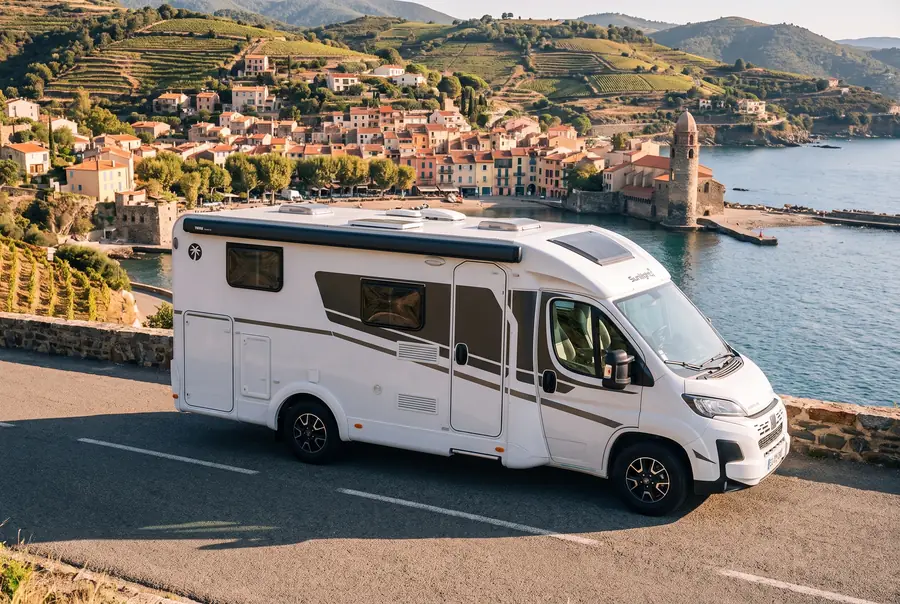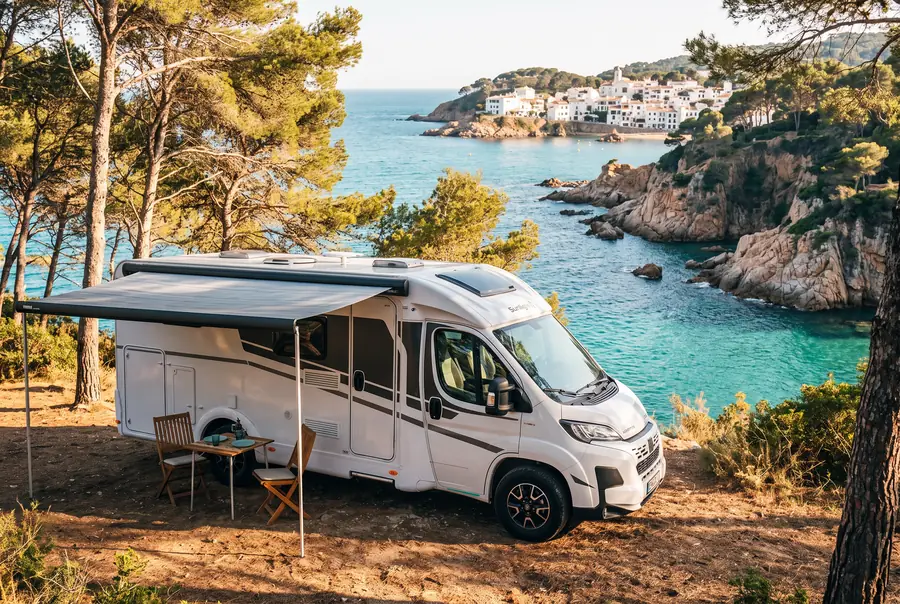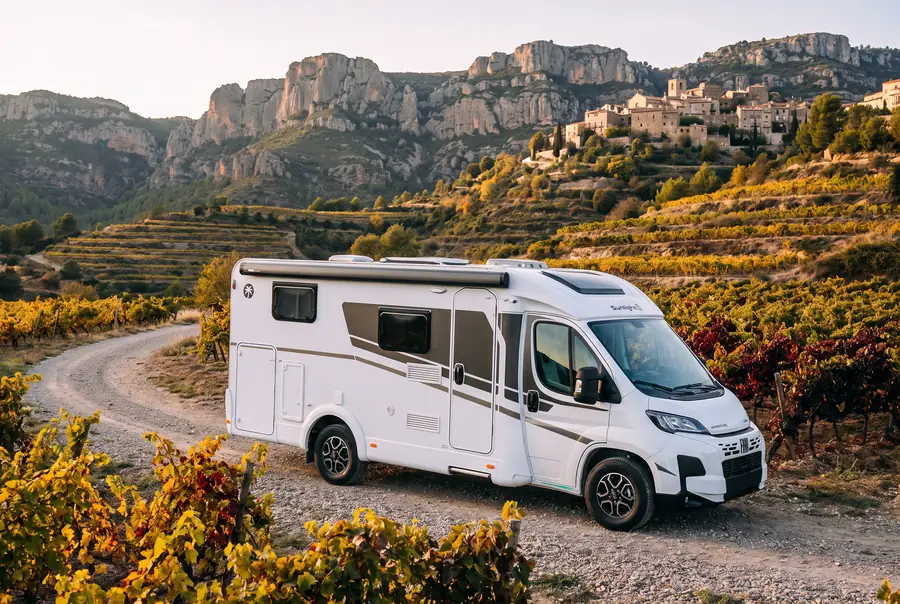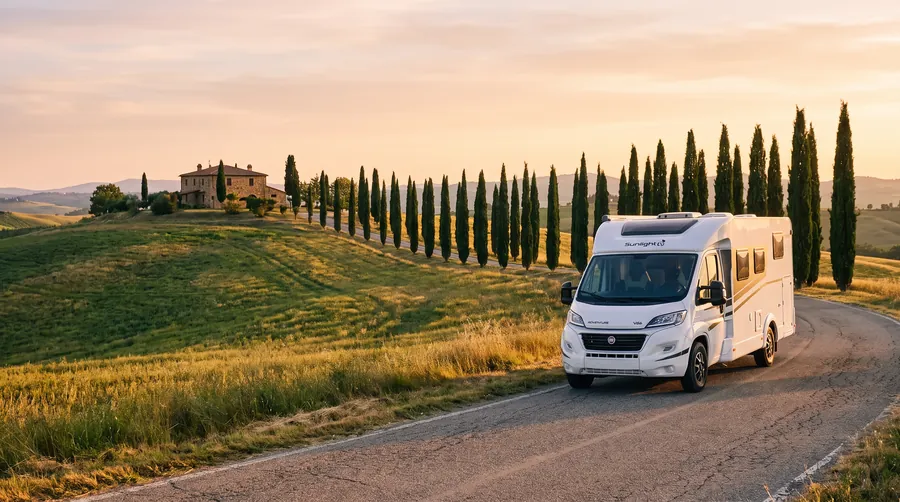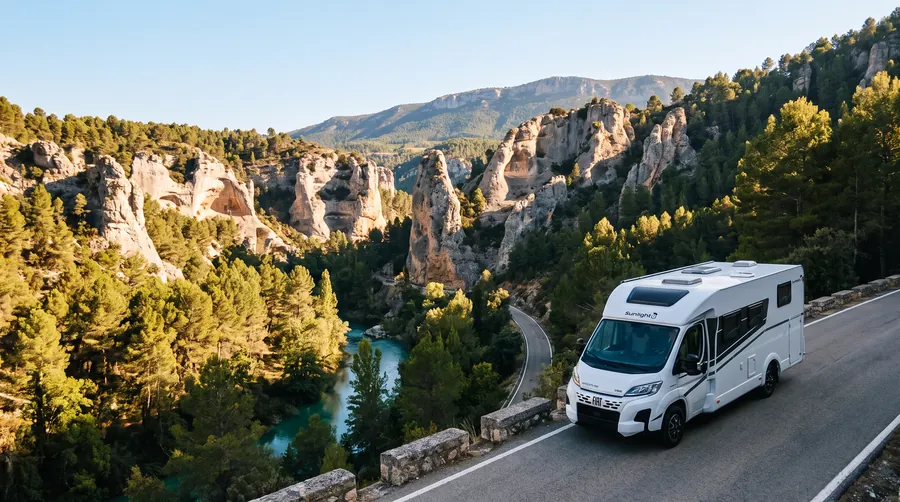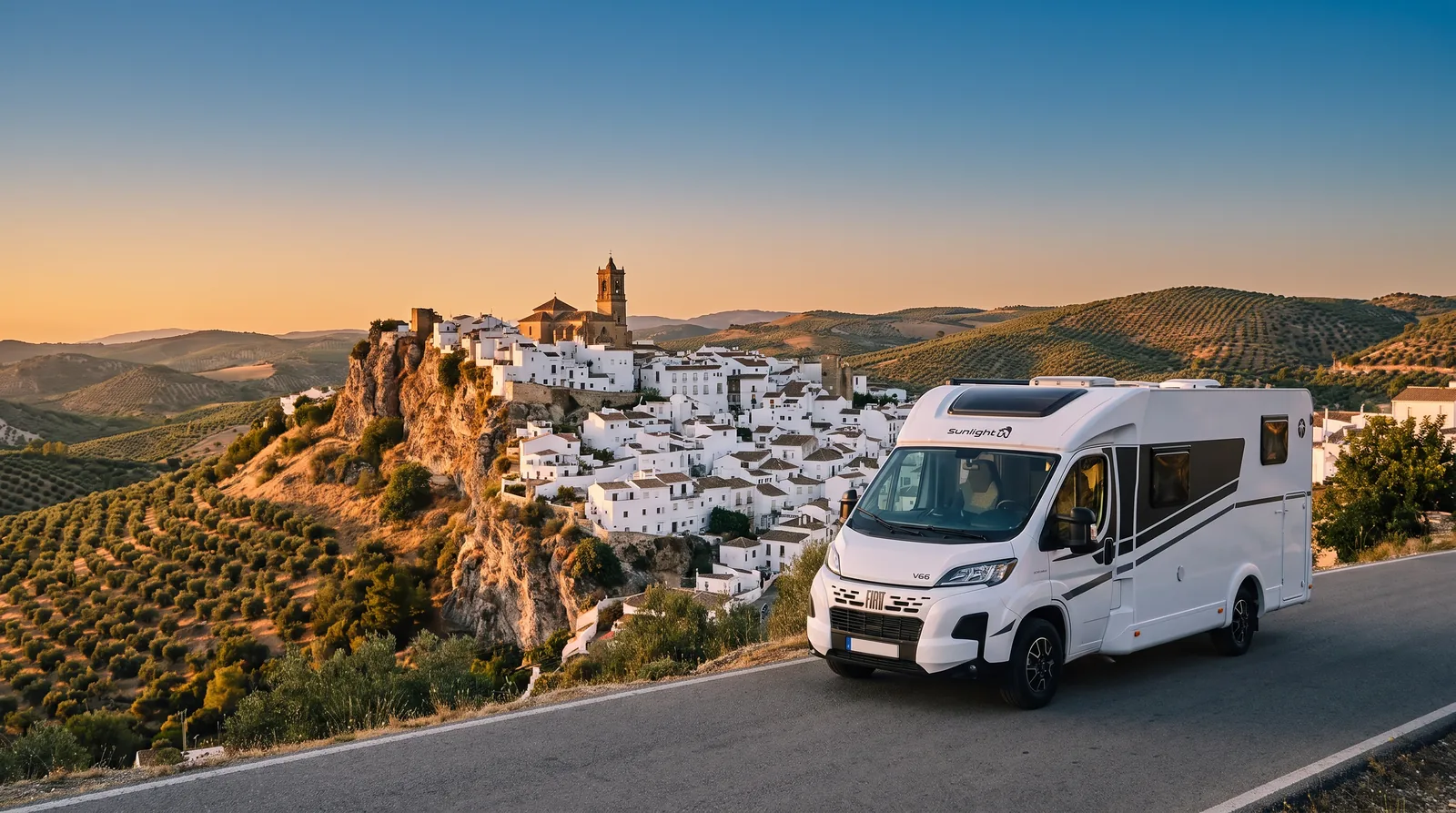
This belongs to our Adventure category and is the longest route we offer: down the Mediterranean to Cabo de Gata, through Andalusia's three great cities — Granada, Córdoba and Seville — on to Jerez, Cádiz and the white villages of the sierra, across Ronda and back via Úbeda, Baeza and Valencia. It is fourteen nights: you collect the motorhome on the afternoon of day 1 and return it on the morning of day 15.
To be clear from the start, this trip involves a lot of driving. It covers about 2,900 km, the first big highlight, Cabo de Gata, is around 9 hours' drive away, spread over three days, and two stages are roughly 400 km. The good news is that none of it counts: with Segimon Rental, rentals of 7 days or more come with unlimited mileage. Spring and autumn are the best seasons; in summer inland temperatures often top 40 °C, while winter is mild. Easter is high season with a 7-day minimum, which 14 nights easily covers.
Route plan
Route map
Tap a day or a stop to see it on the map, or press "Follow the route" to travel it stage by stage.
Approximate line between stops, not a navigation itinerary. Check road conditions and restrictions for large vehicles before you set off.
Day-by-day itinerary
Day 1 · Pick-up and a short leg to Peníscola
Collect the motorhome between 16:00 and 19:00 near Granollers and, after the vehicle handover, head south on the AP-7. In just under three hours (about 250 km) you reach Peníscola, its Templar castle standing over the sea. It is an easy first leg to get used to the V66 and start tomorrow's long transfer with a fresh head. A quiet dinner and a night at a campsite or authorised aire nearby.
Days 2-3 · Heading south: Murcia, Lorca and Cabo de Gata
Day 2 is long: about 380 km and around four hours of motorway past Valencia to Murcia. Stop every two hours and, once there, walk to the cathedral. On day 3, an hour takes you to Lorca, with the Fortaleza del Sol above its baroque centre, and a little over an hour and a half more to San José in the Cabo de Gata-Níjar Natural Park: volcanic, almost desert Andalusia. The dirt track to Genoveses and Mónsul beaches is not for the motorhome; walk or cycle, and note that vehicle access is usually limited in summer.
Days 4-5 · Granada: Albaicín and Alhambra
Via Almería and the A-92, about 190 km and two and a half hours to Granada. Sleep at a campsite or authorised aire on the outskirts and go in by bus: the Albaicín and the centre have restricted vehicle access and very narrow streets. At sunset, walk up to the Mirador de San Nicolás, with the Alhambra set against Sierra Nevada. Day 5 is for the Alhambra: the Nasrid Palaces, Alcazaba and Generalife. Tickets carry your name and a fixed entry time for the Nasrid Palaces, and they sell out weeks ahead in spring: book on the official website as soon as your dates are set.
Days 6-7 · Córdoba and the Mezquita-Cathedral
Granada to Córdoba is about two and a half hours. Leave the motorhome outside the historic centre and walk across the Roman Bridge. Spend the afternoon in the Jewish quarter and the Alcázar de los Reyes Cristianos, and the quieter morning of day 7 in the Mezquita-Cathedral, with its forest of columns and striped arches. In May, the Patios Festival usually opens private courtyards full of flowers: check the official calendar. After lunch, an hour and a half on the A-4 to Seville.
Day 8 · Seville: Alcázar, cathedral and Plaza de España
Sleep outside the centre and use public transport: central Seville has narrow streets and restricted-access areas, and the motorhome will not fit in underground car parks. Start with the Real Alcázar, ticket bought in advance, then the cathedral and the Giralda, and wander through the Santa Cruz quarter. In the afternoon, Plaza de España and María Luisa Park, and at dusk cross the river to Triana. During Holy Week and the April Fair the city fills up: book well ahead.
Days 9-10 · Jerez, Cádiz, Arcos and Zahara
A little over an hour takes you to Jerez de la Frontera: visit a sherry bodega and, if you like, the Royal Andalusian School of Equestrian Art. Whoever drives does not drink, so decide before the tasting. In the afternoon, half an hour to Cádiz; park at the entrance and walk to the cathedral, La Caleta and the Pópulo quarter. On day 10, Arcos de la Frontera, perched on a crag: do not drive up into the old town. Then about 55 km via Villamartín and Algodonales to Zahara de la Sierra, with its tower and reservoir below.
Day 11 · Grazalema and Ronda
Grazalema is about 15 km away over the Puerto de las Palomas, a narrow, steep road with very tight hairpins. If you are not comfortable with that, go to Ronda first and drive up to Grazalema on the A-372, inside the Sierra de Grazalema Natural Park, one of the rainiest places in Spain. In the afternoon, Ronda: the Puente Nuevo over the Tajo, a gorge almost a hundred metres deep, the bullring and the viewpoints over the mountains. Park outside the centre and walk.
Days 12-13 · Baeza, Úbeda and the long run back to Valencia
Leave early: Ronda to Baeza, via Antequera, Granada and Jaén, is about 310 km and around four hours through olive groves. Baeza and Úbeda, 9 km apart, are a UNESCO World Heritage Site for their Renaissance architecture: the cathedral and Plaza del Pópulo in Baeza, Plaza Vázquez de Molina and the Sacra Capilla del Salvador in Úbeda. Day 13 is the toughest of the trip: about 400 km and four and a half to five hours via Albacete to the Valencia area. If you can add a day to your rental, split it with an extra night.
Day 14 · Valencia and a last night in Peníscola
Spend the morning in Valencia, going in by metro or bus: the Mercat Central, the Silk Exchange (Llotja de la Seda) and a walk through the Turia gardens to the City of Arts and Sciences. In the afternoon, an hour and a half to Peníscola, or two hours to the Ebro Delta. From there it is two and a quarter to three hours to Granollers on the morning of day 15, with time to return between 9:00 and 12:00. If you liked this coast, our Costa Blanca winter route explores it at a slower pace.
Where to sleep
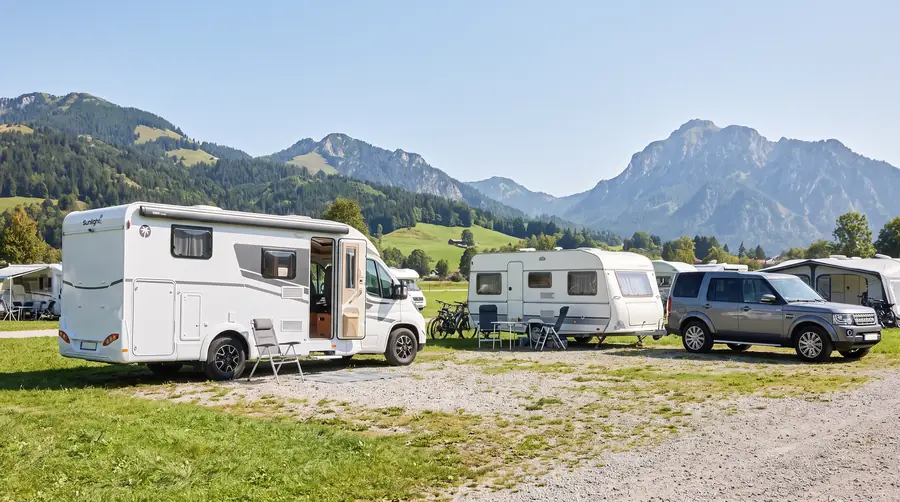
Peníscola, Cabo de Gata, Granada, Córdoba, Seville, the Cádiz coast, Ronda and Valencia all have campsites and authorised motorhome aires; in the cities, choose ones with public transport into the centre. In spring, at Easter and on bank holidays demand soars, especially in Seville and Granada, so book ahead. Park4Night and Campercontact help you find aires and services; see our guide to where to sleep in a motorhome for more.
You may park wherever any vehicle may park as long as you are not camping: no awning, chairs or levelling ramps, and no emptying of water (DGT instruction 08/V-74). In the Cabo de Gata-Níjar and Sierra de Grazalema natural parks the rules are stricter, so only sleep at campsites or authorised aires. Many towns also regulate motorhome parking; follow the signs.
Where to sleep with a motorhome in Catalonia
Practical tips
- Mileage: rentals of 3 to 6 days include 300 km a day; from 7 days mileage is unlimited. This route adds up to about 2,900 km and, with 14 nights, you pay for no extra kilometres.
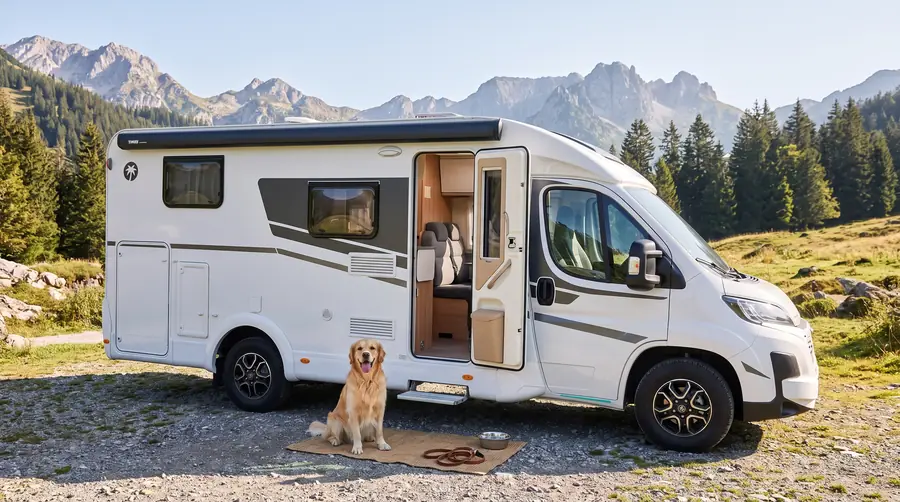
- Heat: from June to September, Córdoba and Seville often exceed 40 °C. In summer, sightsee early, rest at midday and look for shade. The V66 carries 116 L of water: top up whenever you can and carry plenty of drinking water.
- Old towns and white villages: Arcos, Zahara, Grazalema, the Albaicín and Cádiz have narrow, steep or restricted streets, and phone navigation apps may send you into them. At 6.66 m long and 2.74 m high, park at the edge and walk; more advice in our guide to driving a motorhome.
- Low-emission zones: Córdoba and Granada already restrict access to their centres for many non-local vehicles, and other cities, such as Seville and Valencia, have or are preparing their own. Rules change, so check each city council's website and the DGT environmental sticker; the easiest option is to sleep outside and use public transport.
- Tickets: book the Alhambra as soon as you have dates, and buy the Real Alcázar in Seville and the Mezquita-Cathedral in advance too if you travel in spring or on a bank holiday.
Frequently asked questions
How many days do I need for Andalusia by motorhome from Barcelona?
Two weeks, as here, is sensible: the outward and return drives alone add up to more than 16 hours. With 10 days you can focus on Granada, Córdoba and Seville and skip Cabo de Gata and the Cádiz sierra. From 7 rental days, mileage is unlimited.
When is the best time to tour Andalusia by motorhome?
Spring (March–May) and autumn (October–November). In summer inland temperatures often top 40 °C; winter is mild, though Granada has cold nights and the V66's Truma heating comes in handy. Easter is high season with a 7-day minimum; April–June and September–October require 4 days, and November to March 3.
Where can I park a motorhome to visit the Alhambra?
The practical option is to sleep at a campsite or authorised aire on the outskirts of Granada and take a city bus up. The Albaicín and the area around the Alhambra have controlled vehicle access and narrow streets. Remember that tickets are named and timed for the Nasrid Palaces.
Can you drive a motorhome into the white villages?
You can get there, but avoid their old centres: narrow lanes, steep slopes and tight turns. Park at the edge of Arcos, Zahara, Grazalema or Ronda and walk. Sierra roads are mountain roads: drive calmly and use low gears on the way down.