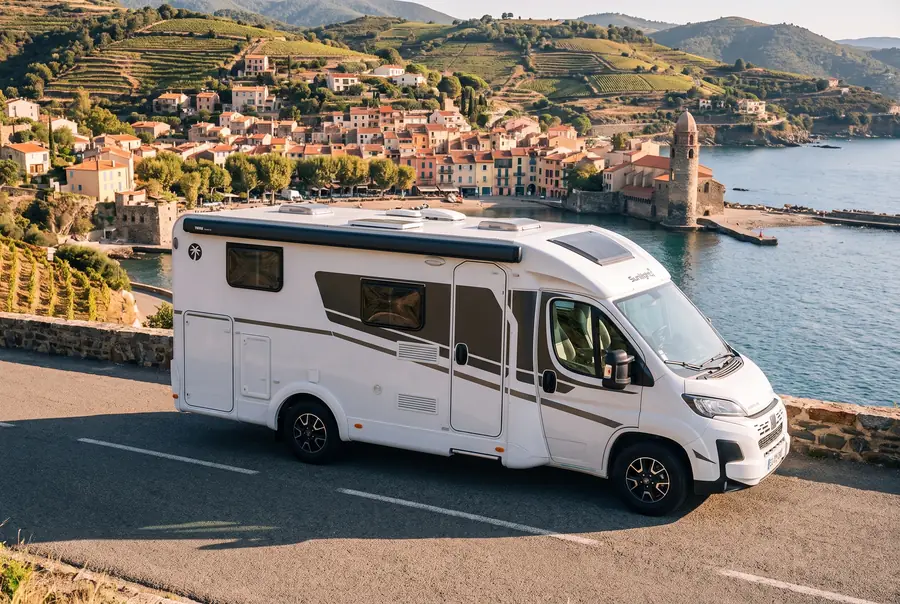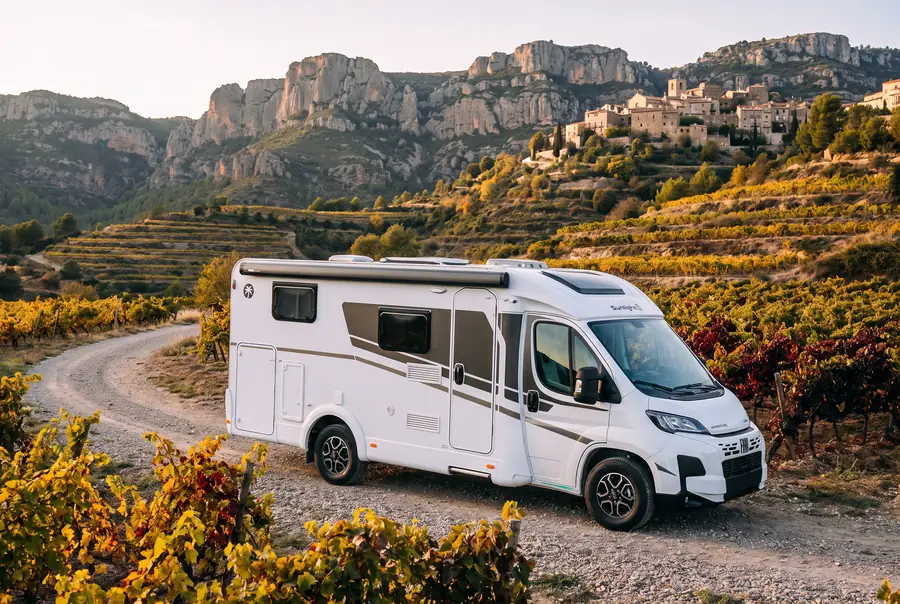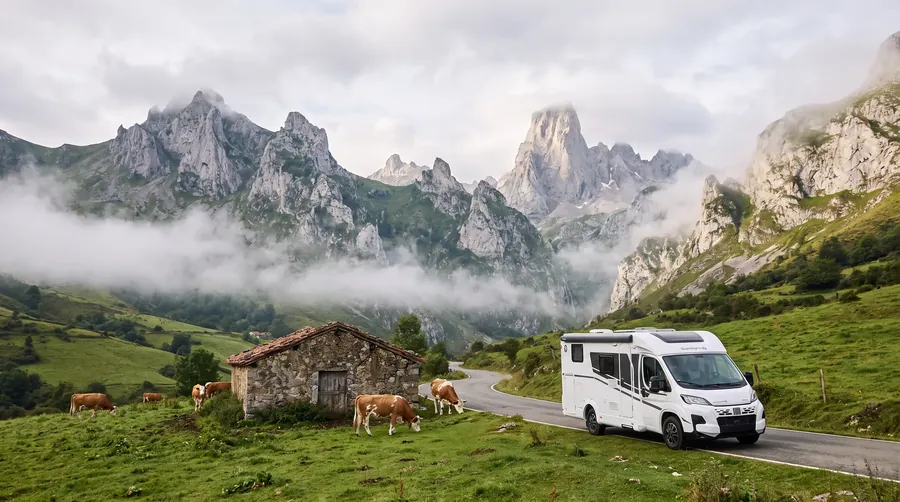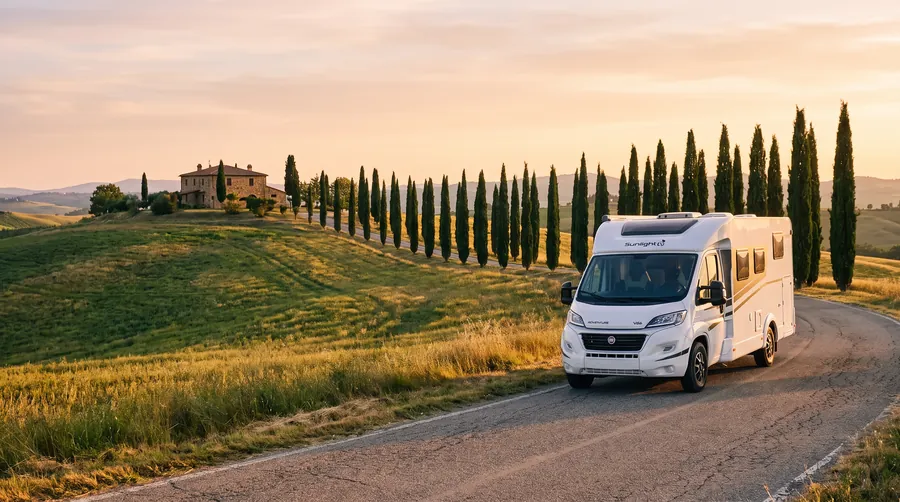
When frost grips inland Spain, the Costa Blanca often offers sunny days and mild temperatures, frequently 15 to 20 °C at midday, with cool nights. This route runs from our base near Granollers down to L'Albufera and Valencia, along the Marina Alta and Marina Baixa — Dénia, Xàbia (Jávea), Calp, Altea and Guadalest — and on to Alicante and the Elche palm grove before heading back north.
It is seven nights: you collect the motorhome on the afternoon of day 1 and return it on the morning of day 8. November to March is low season, with a 3-day minimum, but we chose 7 days on purpose: with Segimon Rental, rentals of 7 days or more have unlimited mileage, so the route's roughly 1,300 km add nothing to the bill. Being 7 days long, it also works over Christmas, which is high season (7-day minimum); for low-season rates, late November, early December or January are good options.
Route plan
Route map
Tap a day or a stop to see it on the map, or press "Follow the route" to travel it stage by stage.
Approximate line between stops, not a navigation itinerary. Check road conditions and restrictions for large vehicles before you set off.
Day-by-day itinerary
Day 1 · Pick-up and a short leg to Peníscola
Collect the motorhome between 16:00 and 19:00 and head south on the AP-7. In about three hours you reach Peníscola, its castle lit up above the sea. In winter it gets dark early, so this leg is simply about getting used to the V66 and a good night's sleep. If you would like more time in this area, our winter route through the Delta, Peníscola and Morella covers it at an easy pace.
Day 2 · L'Albufera and El Palmar
About two hours on the AP-7 bring you to L'Albufera Natural Park, south of Valencia. In winter many rice fields are flooded and fill with waterbirds. Have lunch in El Palmar, the fishing village where paella and all i pebre (eel stew) are close to a religion, and book a boat trip on the lake at sunset, the park's most famous view. Before that, walk through the dunes and pine woods of the Devesa del Saler.
Day 3 · Valencia: Mercat Central and the City of Arts and Sciences
Leave the motorhome at the campsite or aire where you are staying and go in by bus or bike: Valencia has or is introducing a low-emission zone, and the V66 will not fit in underground car parks. Start at the Mercat Central and the Silk Exchange (Llotja de la Seda), a World Heritage Site, climb the cathedral's Micalet tower and follow the old Turia riverbed, now a park several kilometres long, to Calatrava's City of Arts and Sciences.
Day 4 · Dénia, Montgó and Xàbia
Just over an hour south lies Dénia, at the foot of the Montgó. Climb up to the castle for views over the port and, if you fancy a walk, the Montgó Natural Park has trails overlooking the Marina Alta. In the afternoon, Xàbia: the old town, the harbour and the viewpoints at Cap de Sant Antoni and Cap de la Nau, above clear-water coves such as La Granadella and El Portitxol. Roads down to the coves are narrow with little parking: easier in winter, but do not force it.
Day 5 · Calp, Penyal d'Ifac and Altea
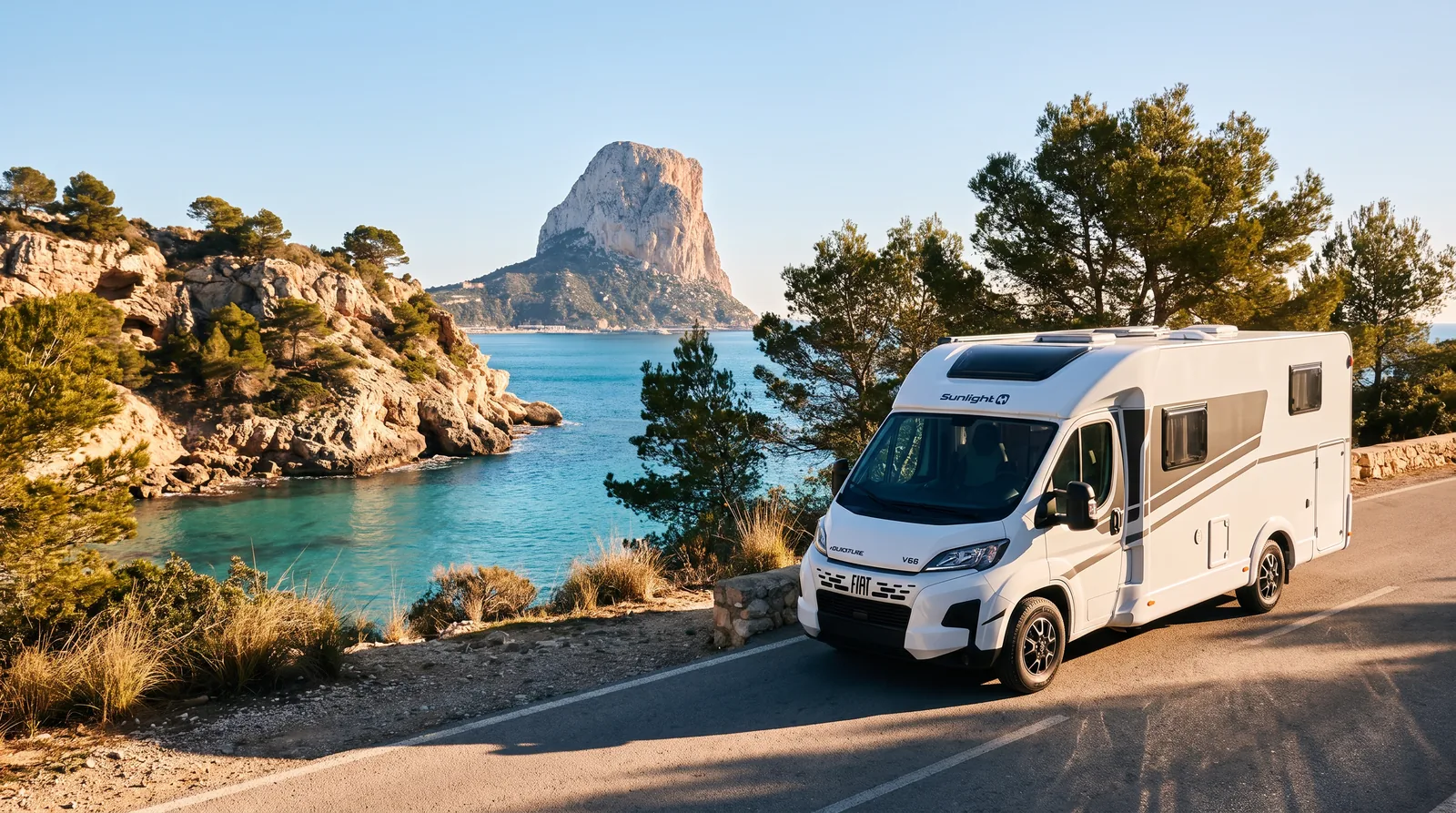
Half an hour takes you to Calp, where the Penyal d'Ifac, a rock over 300 m high joined to the mainland, is a natural park. The summit path goes through a tunnel and has sections of polished rock: wear good shoes and book ahead: numbers are capped each day and access requires advance booking on the Generalitat Valenciana natural parks website. In the afternoon, Altea: park below and walk up the white streets of the old town to the blue-domed church, with the bay below you at sunset.
Day 6 · Guadalest and Alicante
Drive up the valley to Guadalest, a village perched on the rock, with its castle and turquoise reservoir below; the road is winding but good. Park at the entrance and walk in through the tunnel cut into the rock. On the way down you pass Benidorm and the Serra Gelada, a natural park of sea cliffs. In the afternoon, Alicante: go up to Santa Bárbara Castle on Mount Benacantil (there is a lift from Postiguet beach) and stroll along the Explanada.
Day 7 · Elche palm grove and back to Peníscola
Half an hour from Alicante, the Elche palm grove is a World Heritage Site: thousands of palm trees in orchards inside the city, with the Hort del Cura the best-known garden to visit. Then the return begins: about 330 km and nearly four hours on the AP-7 to Peníscola. Sleeping there leaves about three hours to Granollers on the morning of day 8: set off around 8:00 and you will have time to return the motorhome between 9:00 and 12:00.
Where to sleep
The Costa Blanca has many campsites and authorised aires open all year round. In winter they are very popular with long-stay travellers, often from northern Europe, who spend weeks or months in one place: even in low season, book ahead, especially in the Marina Alta and Marina Baixa. Park4Night and Campercontact show facilities and recent reviews; if you are tempted to stay longer, see our long-stay motorhome guide.
You may park wherever any vehicle may park as long as you are not camping: no awning, chairs or levelling ramps, and no emptying of water (DGT instruction 08/V-74). Many coastal towns regulate motorhome parking, and natural parks such as L'Albufera and the Montgó have stricter rules: sleep at campsites or authorised aires and follow the signs.
Where to sleep with a motorhome in Catalonia
Practical tips
- Mileage: rentals of 3 to 6 days include 300 km a day; from 7 days mileage is unlimited. That is why this route has 7 nights: its roughly 1,300 km add nothing to the bill.
- Cool nights: even after a sunny day, nights get chilly. The V66 has Truma Combi 4 heating and a heated grey-water tank; there are more tips in our winter motorhome guide.
- Short days: in December and January it gets dark early. Plan legs so you arrive in daylight and keep longer visits for the middle of the day.
- Old towns: Altea, Xàbia, Dénia and Guadalest have narrow, steep streets. At 2.74 m high, the V66 will not fit in underground car parks: park at the edge and walk.
- Low-emission zones: Valencia and Alicante have or are introducing them. Check the rules for motorhomes and the DGT environmental sticker, or go in by public transport.
- Water and services: fill up with water and empty grey water only at campsites or aires with facilities, never in the street or in nature.
Frequently asked questions
Is the weather good enough for a Costa Blanca motorhome trip in winter?
Often, yes: there are plenty of sunny days, with 15 to 20 °C at midday. Nights are cool and there can be rainy or windy days, so pack warm clothes. The V66's heating keeps the inside comfortable.
How many days do I need for the Costa Blanca by motorhome?
Seven days is ideal from Granollers: it meets the minimum in any season and, from 7 days, mileage is unlimited. With 3 to 6 days (3-day minimum in low season) you get 300 km a day included: focus on L'Albufera, Valencia and the Marina Alta.
Do I need to book campsites on the Costa Blanca in winter?
Yes, it is wise. Many campsites fill with long-stay travellers spending the winter on the coast, and the best pitches are booked well in advance. For one or two nights there is usually more flexibility, but do not leave it to chance at Christmas or on bank holidays.
Can I take a motorhome to the Costa Blanca at Christmas?
Yes. Christmas dates are high season, with a 7-day minimum, exactly the length of this route. If you prefer low season (3-day minimum), late November, early December or January are good alternatives.