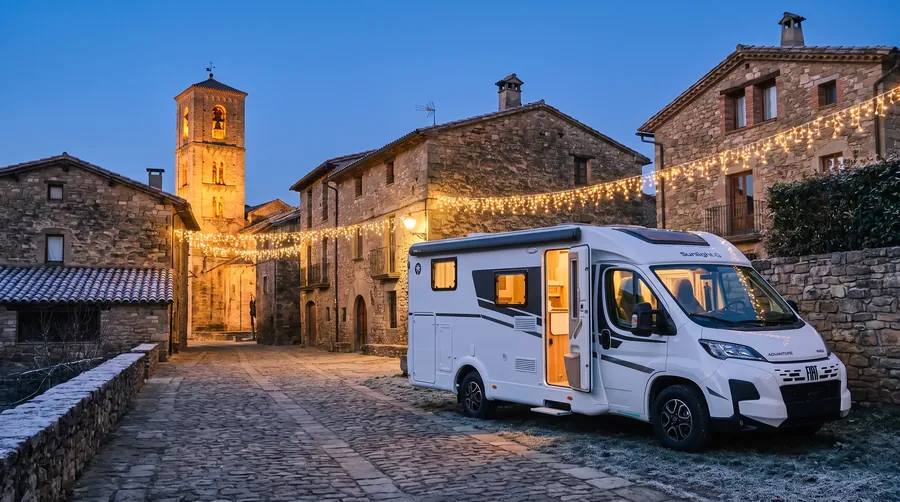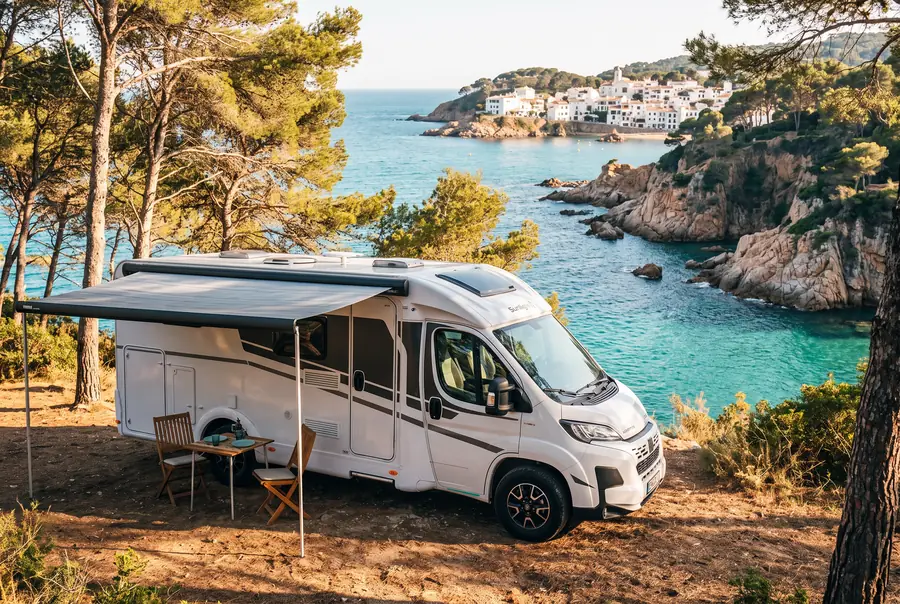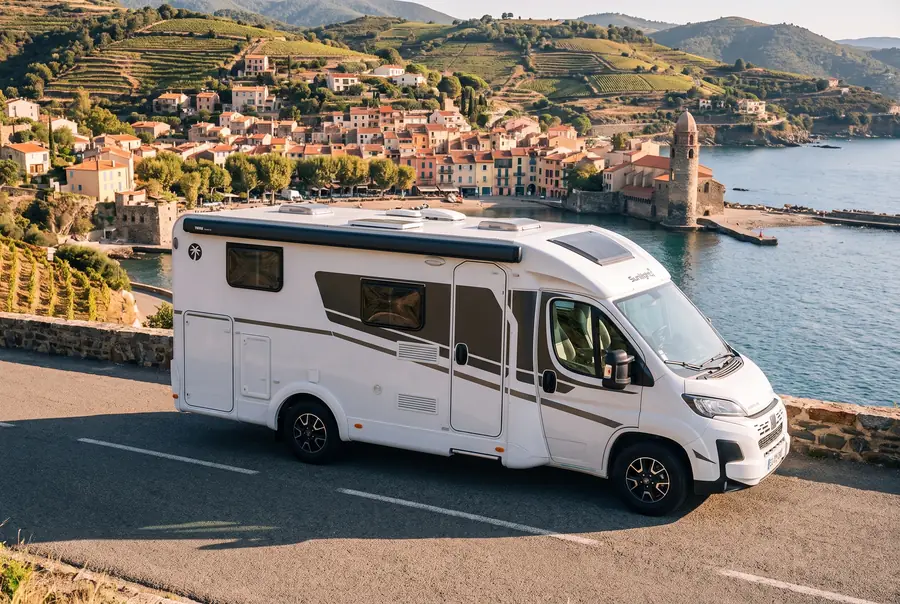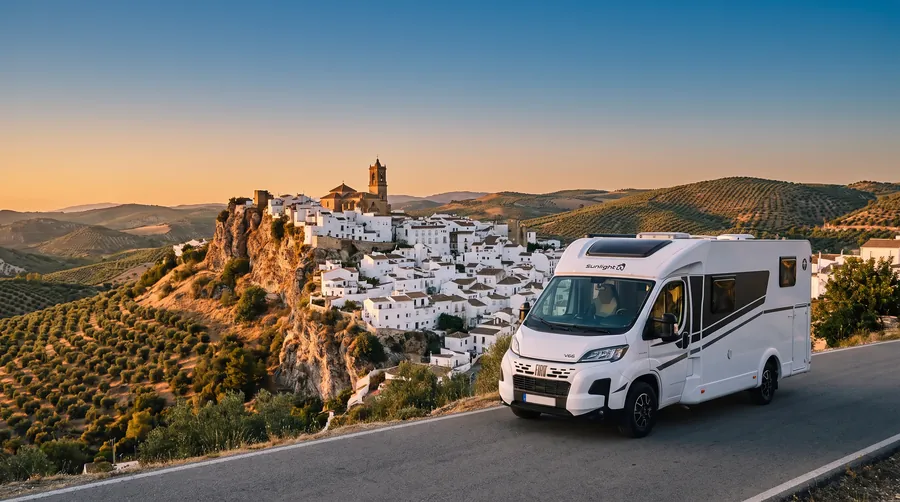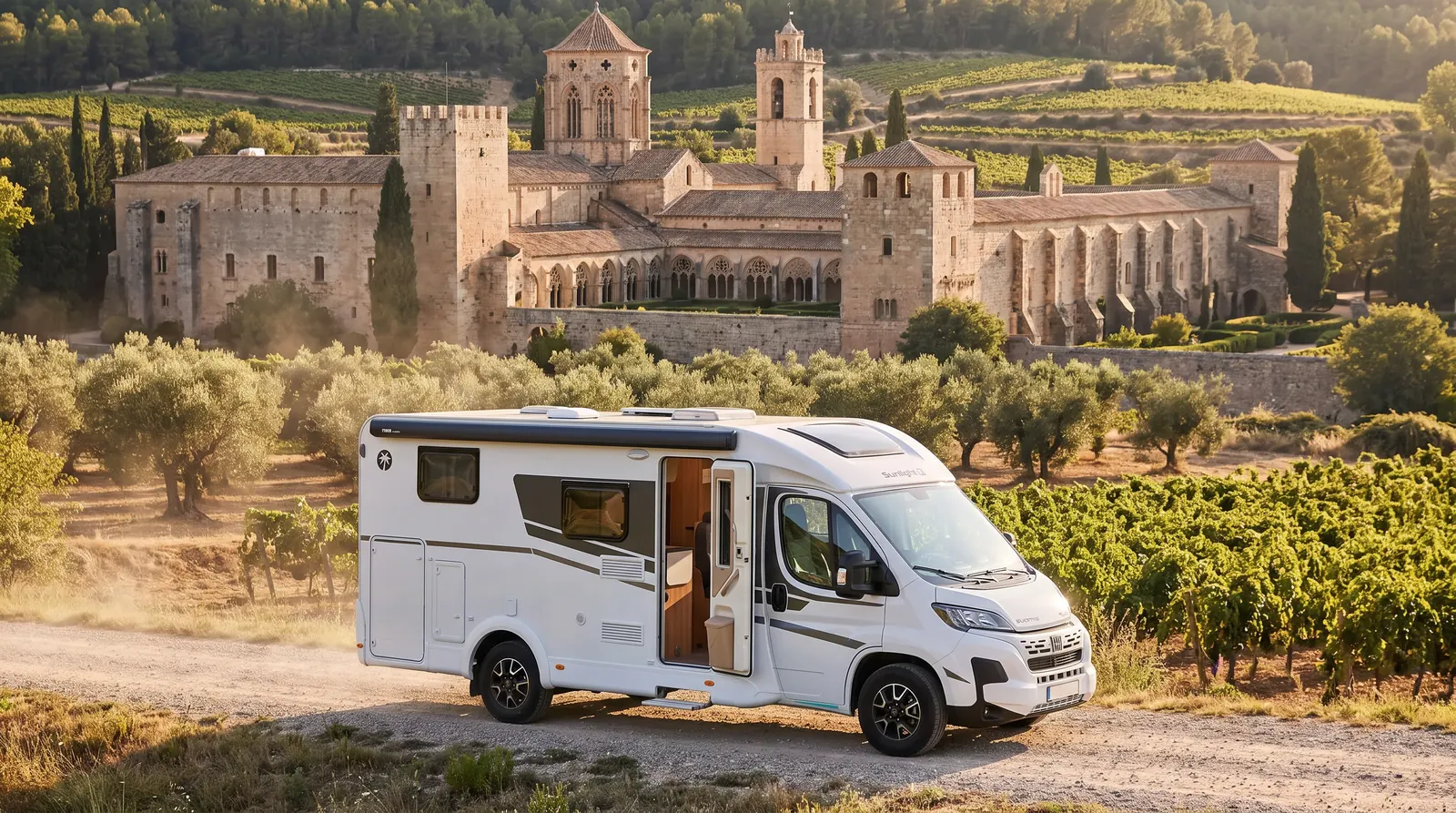
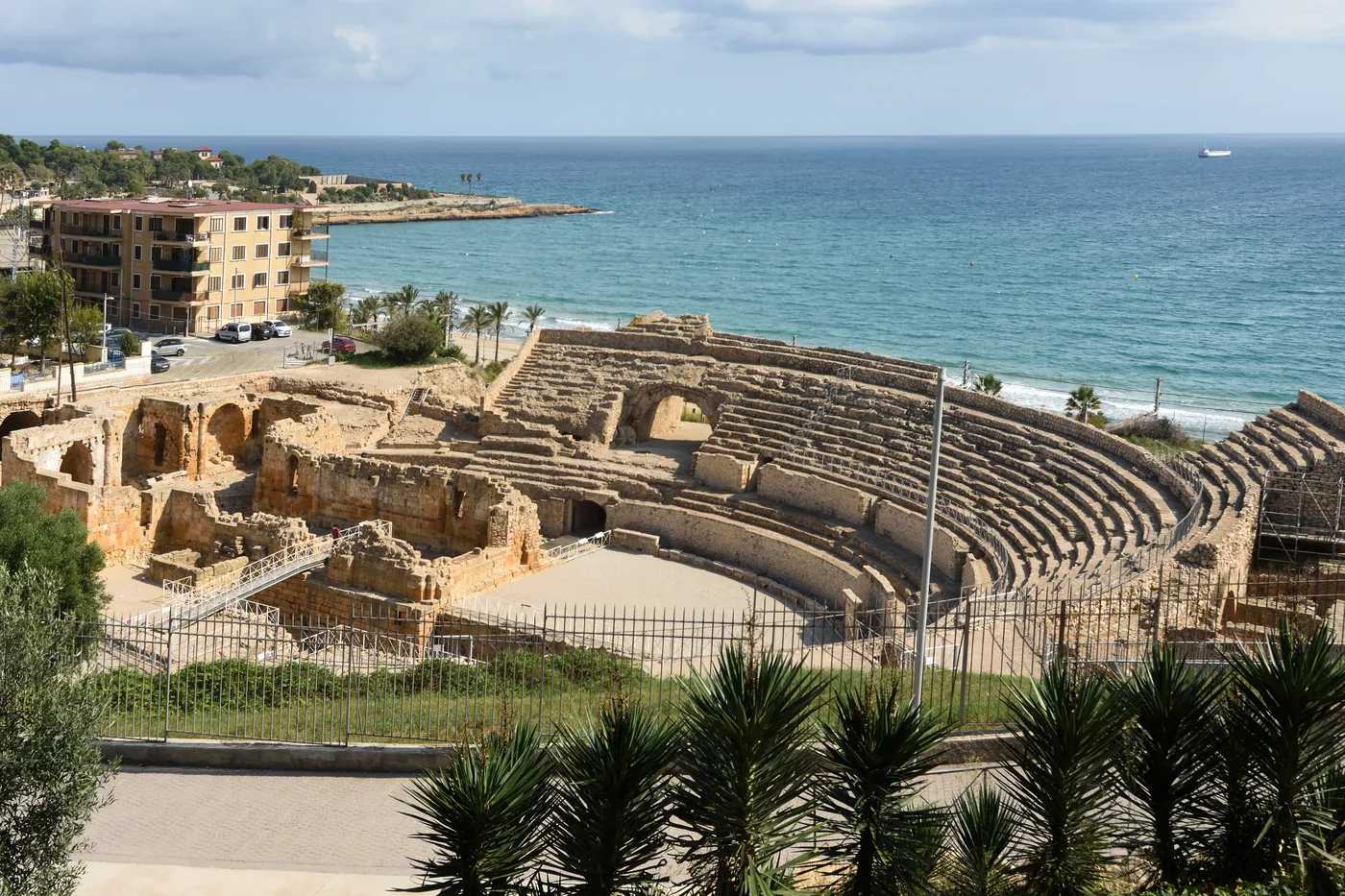
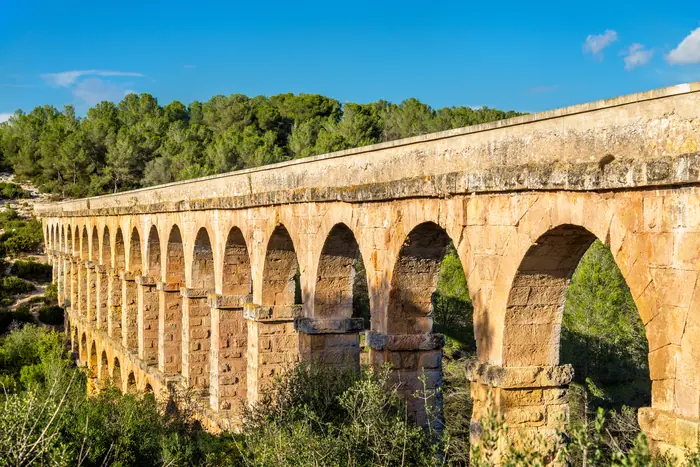
This route brings together two chapters of Catalan history less than an hour apart. On the coast, Tarragona preserves much of Tarraco, the Roman capital of Hispania Citerior: amphitheatre, circus, walls and the Pont del Diable aqueduct, all UNESCO World Heritage. Inland, the Cistercian Route links three medieval monasteries that are still lived in: Poblet, also World Heritage, Santes Creus and Vallbona de les Monges.
It is designed for 4 rental nights: collect on day 1 in the afternoon and return on the morning of day 5. It covers about 360 km in total, well under the 300 km a day included on 3 to 6 day rentals with Segimon Rental, and you reach Tarragona on the AP-7 without crossing Barcelona. In low season you can do it in 3 nights by leaving out Vallbona; from April to June and in September and October the minimum is 4 days, and in July, August, Christmas and Easter it is 7, so you could carry on south with our Ebro Delta route.
Route plan
Route map
Tap a day or a stop to see it on the map, or press "Follow the route" to travel it stage by stage.
Approximate line between stops, not a navigation itinerary. Check road conditions and restrictions for large vehicles before you set off.
What you will see
Day-by-day itinerary
Day 1 · Pick-up and drive to Tarragona
Collect the motorhome between 16:00 and 19:00 in Les Franqueses del Vallès and head south on the AP-7, bypassing Barcelona: in roughly 1 h 15 you are in the Camp de Tarragona. Sleep at a campsite or authorised area on the nearby coast. If you arrive in daylight, a stroll to the Balcó del Mediterrani, at the end of the Rambla Nova, is a good way to begin.
Day 2 · Roman Tarraco and the Pont del Diable
Start at the amphitheatre, right above the sea, where you can also see the remains of a Visigothic and a Romanesque church. Then climb into the Part Alta: the vaults of the Roman circus and the Pretori tower, followed by the Passeig Arqueològic, a path around the outside of the walls, with huge cyclopean blocks at its base. The cathedral, part Romanesque and part Gothic, crowns the old town. The Part Alta has narrow streets and many underground car parks cannot take a 2.74 m high vehicle, so leave the motorhome in an open-air car park outside the centre. In the afternoon, about 10 minutes north, the Pont del Diable, the Les Ferreres aqueduct, is a short walk from the signposted parking area.
Day 3 · Montblanc and Poblet
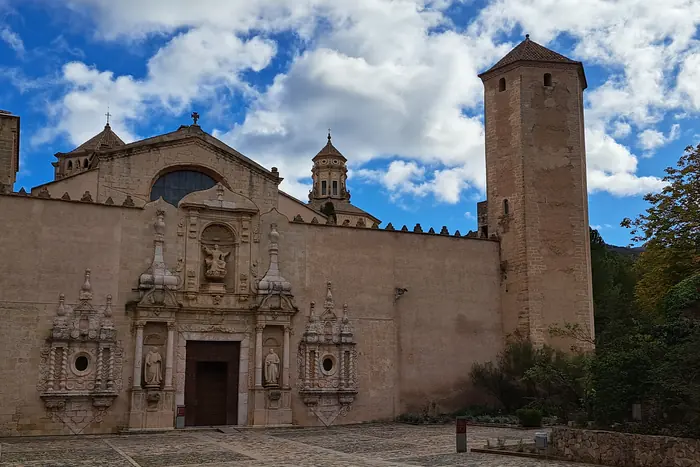
In about 40 minutes you reach Montblanc, in the Conca de Barberà. Its walled town is one of the best preserved in Catalonia; park outside the walls and walk in through one of the gateways. Tradition places the legend of Saint George and the dragon here, celebrated every April with the town's Medieval Week. Ten minutes away, the Royal Monastery of Poblet, a World Heritage Site, is the largest Cistercian monastery in Catalonia and holds the tombs of several kings of the Crown of Aragon; a community of monks still lives there. Check opening times and tickets, as there are periods when it cannot be visited. Spend the night in the area.
Day 4 · Vallbona de les Monges and Santes Creus
Drive about 25 minutes north on minor roads to Vallbona de les Monges, the most important Cistercian convent in Catalonia, home to a community of nuns since the Middle Ages; visits are guided, so check times. Then roughly an hour east takes you to Santes Creus, in the Gaià valley, with a Gothic cloister and the tombs of Peter the Great and James II. Spend the night in the Alt Camp or the Penedès: on day 5 the AP-2 and AP-7 get you to the Vallès in roughly an hour to return the motorhome between 9:00 and 12:00.
Where to sleep
The Tarragona coast has plenty of campsites and several motorhome areas, busier in summer. In the Conca de Barberà and the Alt Camp the choice is smaller, but you will still find campsites and some municipal areas: check them first on Park4Night or Campercontact and book ahead for bank holidays, Easter and Montblanc's Medieval Week.
Remember that wild camping is generally not permitted in Catalonia. Parking wherever any vehicle may park is legal in Spain (DGT instruction 08/V-74), but without putting out the awning, chairs or levelling ramps and without emptying any water. To fill up with water and empty grey water, use campsites or service areas.
Where to sleep with a motorhome in Catalonia
Practical tips
- In Tarragona, forget underground car parks: at 2.74 m high the V66 will not fit in most of them. Look for open-air car parks and walk up to the Part Alta.
- The monasteries keep their own hours and sometimes close for community life: check opening times and tickets for each one before planning your day.
- The roads between Poblet, Vallbona and Santes Creus are minor and narrow in places but easy enough taken slowly; avoid driving into the old town centres.
- Tarragona gets very hot at midday in summer: see the Roman sites first thing and save the cooler monasteries for the afternoon.
- If you have spare days, the Penedès is on your way home: see our Montserrat and Penedès route.
Frequently asked questions
How many days do you need for Tarragona and the Cistercian Route by motorhome?
Three full days cover Tarraco, Montblanc and the three monasteries: 4 rental nights. In low season, with a 3-day minimum, you can do a shorter version with Tarragona, Montblanc and Poblet.
Where can you park a motorhome in Tarragona?
Outside the old town, in open-air car parks: most underground ones have a height limit below the V66's 2.74 m. From the port area or Miracle beach you can walk up to the Part Alta.
Can you visit Poblet, Santes Creus and Vallbona on the same day?
It is possible but tight: there is more than an hour of driving between them and each visit takes time. Better to split them over two days and check opening times and tickets for each monastery.
Is it a good getaway from Barcelona?
Yes: it is just over an hour away and combines heritage, good food and small villages. More ideas in our motorhome getaways from Barcelona.