What you need
- The CEE cable and adaptors (included)
- Your phone with the Victron Connect app
- A pitch with an electric hook-up, if you want to plug in
Step by step
Understand where the power comes from
The lights, water pump, heater fan and USB sockets run on a 300 Ah LiFePO4 lithium battery. It recharges in three ways: while driving, thanks to the 50 A Victron Orion XS charger; from the 100 W solar panel; and from the mains via the CEE cable.
Check the battery on your phone
The Victron SmartShunt monitor measures what goes in and out of the battery. With the Victron Connect app and your phone's Bluetooth you can see the state of charge, real-time consumption and estimated time remaining. Check it morning and evening and you will soon know how much you use on a normal day.
Unwind the whole cable
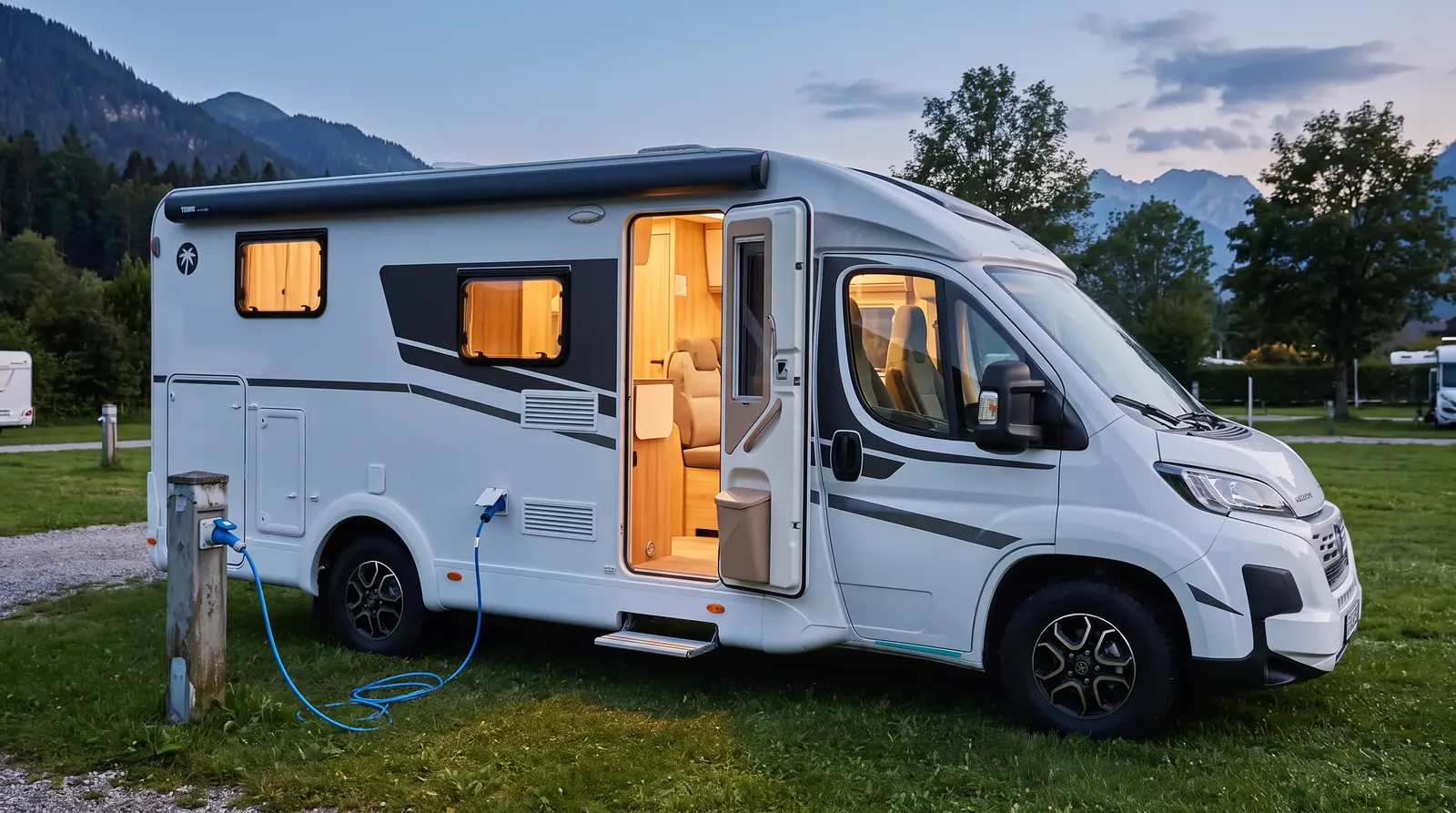
If you hook up at a campsite or service area, unwind the CEE cable completely even if there is length to spare: a coiled cable can overheat. Run it along the ground, away from where cars drive and without pulling it tight. If the bollard has a different socket, use the matching adaptor.
Connect in the right order
Plug the cable into the motorhome's outside socket first, then into the campsite bollard. Some bollards supply little power, so do not run several powerful appliances at once: if the bollard trips, switch something off and tell reception. When you leave, disconnect in reverse order: bollard first.
Use the inverter only when needed
The 2,000 W inverter turns battery power into 230 V for the sockets, even when you are not plugged in. It is ideal for charging laptops, cameras or an e-bike battery. Switch it on only when you use it, as it draws power itself, and avoid running high-power appliances such as hair dryers or kettles for long.
Make the most of sun and driving
Where possible, park with the roof in the sun and no shade over the panel. In summer the panel helps a lot; in winter, with short days, it contributes little. A drive of an hour or two puts a useful amount back into the battery through the DC-DC charger, so moving on also counts.
Save power when off-grid
Switch off lights and the inverter when you go out, charge phones while driving and set the heating to a moderate temperature at night. With 300 Ah of lithium you can spend several days without hook-up, but autonomy is not unlimited: it depends on use, sunshine and how much you drive.
Frequently asked questions
How many days can I go without hook-up?
It depends on use, sunshine and how much you drive. With sensible use, several days is common, especially in summer. In winter, with the heating on and less sun, it is worth hooking up more often.
Can I use a hair dryer?
With the CEE cable connected and enough power at the bollard, yes. On the inverter it is best avoided, or used very briefly, as it draws a lot of energy from the battery.
What should I bring to charge my devices?
Your usual USB cables and, if you like, an extension lead. See the full list in our motorhome packing guide.